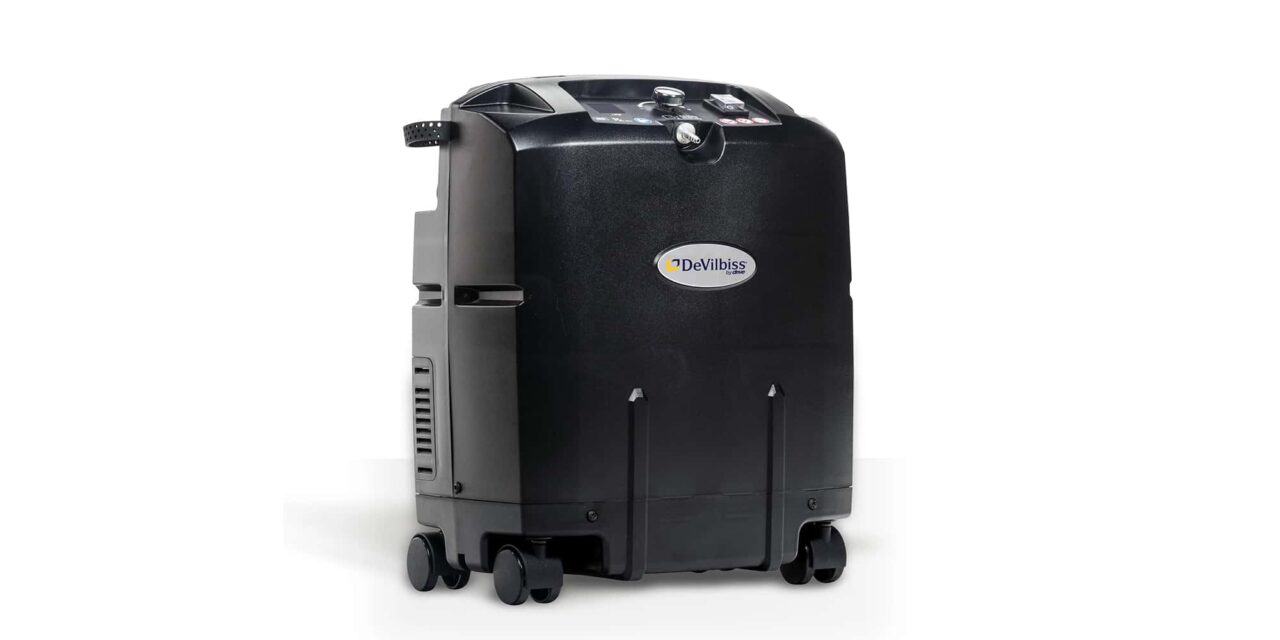
The DeVilbiss by Drive 555 model is designed to improve provider efficiency and reduce operating costs for patients.
RT’s Three Key Takeaways:
- Increased Efficiency: The 555 Compact Oxygen Concentrator is 33% smaller and weighs 29.9 pounds, allowing providers to transport 36 units per pallet to reduce freight costs.
- Reduced Operating Costs: Operating at 290 watts, the device offers a 17% reduction in energy consumption and features an internal design with 30% fewer component connections for easier maintenance.
- Enhanced Patient Experience: The unit operates at noise levels at or below 46 dBA and includes an intuitive digital display with built-in alarm troubleshooting to minimize downtime.
DeVilbiss by Drive announced the launch of the 555 Compact Oxygen Concentrator, a 5L platform designed to help respiratory providers improve operational efficiency and reduce long-term costs, according to a news release.
The device is the first in a line of respiratory products assembled in the US of domestic and foreign parts following the rebranding of Drive DeVilbiss healthcare to Drive Medical.
Building on the performance of the DeVilbiss 525DS, the 555 model is 33% more compact and weighs 29.9 pounds. This size reduction allows providers to fit 36 units per pallet rather than 27, which reduces freight expenses and simplifies logistics for delivery teams, according to the company.
The concentrator operates at 290 watts, representing a 17% decrease in energy consumption compared to its predecessor. A next-generation internal design featuring 30% fewer component connections, modular architecture, and a streamlined layout is intended to provide faster diagnostics and reduce labor time during service events.
For patients, the unit operates at noise levels of ≤46 dBA and features a compact profile suitable for various living spaces. The device also includes an intuitive digital display for status monitoring and built-in alarm troubleshooting to reduce support calls.
“The 555 is the result of the most experienced respiratory engineering team in the world asking hard questions about what providers and patients actually need and building the answer from the ground up,” said Frank Lazzaro, vice president of respiratory product management, in a news release. “The result is a concentrator that’s easier to warehouse, easier to service, and easier to live with, without compromising on the clinical performance and reliability our customers have trusted for decades.”