Research indicates that flexible stickers can accurately measure sweat chloride levels in cystic fibrosis patients in under an hour without specialized laboratory equipment.
RT’s Three Key Takeaways:
- Improved Diagnostic Access: The sticker technology is less expensive and simpler to use than traditional methods, which could expand testing in rural areas, and lower income countries.
- Proven Clinical Accuracy: Results from a study involving 55 participants demonstrated a high correlation between the new sticker technology and standard sweat testing methods used to diagnose cystic fibrosis.
- Streamlined Testing Protocol: The system utilizes a two-sticker process and a smartphone app to stimulate, collect, and analyze sweat chloride levels in less than one hour.
A pair of wearable stickers may “transform” diagnostic sweat testing for cystic fibrosis (CF), a genetic disorder that causes respiratory and digestive complications, according to a study published in npj Digital Medicine.
The flexible stickers are less expensive and simpler to use than standard sweat testing, which typically requires specialized laboratory equipment and technical expertise found primarily in accredited CF centers. This technology could provide greater access to diagnostic testing and timely treatment for infants in rural areas, or countries with limited healthcare resources.
“It has been estimated that about half of people with CF around the world have not been diagnosed. Without treatment, their life expectancy is less than 5 years of age. This is in stark contrast to 66 years, which is the projected median age of survival with treatment in the US currently,” said Susanna McColley, MD, CF expert at Ann & Robert H Lurie Children’s Hospital of Chicago and professor of pediatrics at Northwestern University Feinberg School of Medicine.
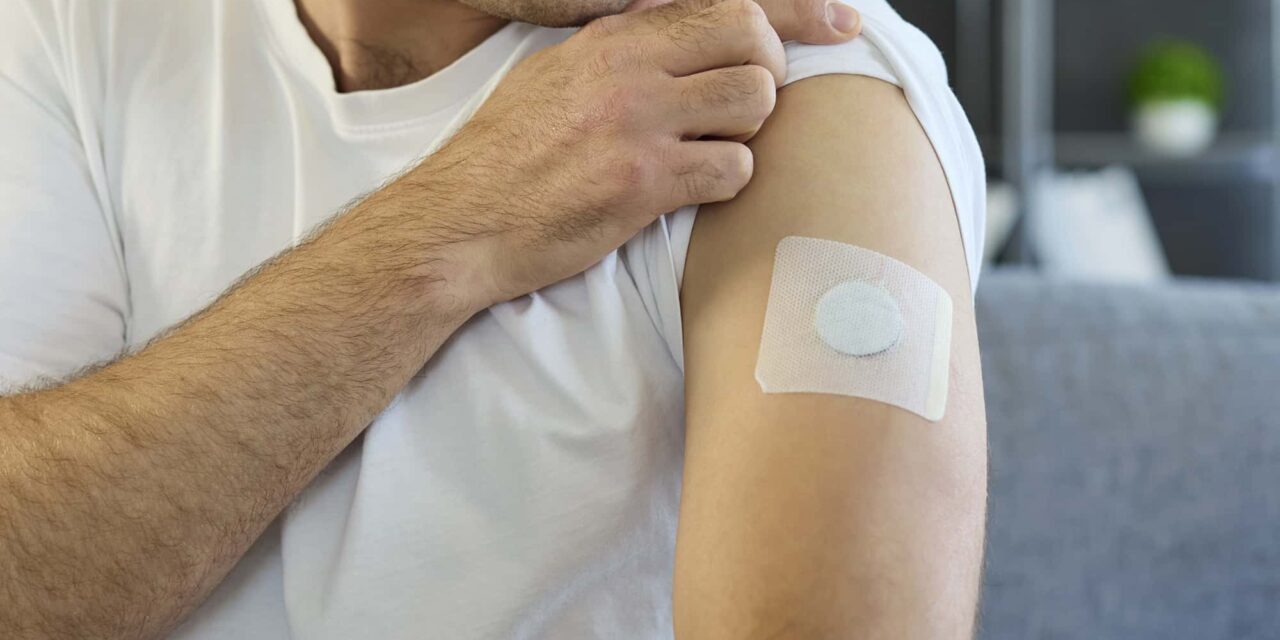
The diagnostic process for CF involves measuring sweat chloride. The new system uses a first sticker to stimulate sweat production via a chemical and a button battery. A second sticker is then applied to the same location to collect sweat. A smartphone app captures an image of the sticker to analyze chloride content by measuring changes in color density. The entire procedure is completed in less than an hour.
“The new technology, developed by the bioengineering team of John Rogers at Northwestern University’s Querrey Simpson Institute for Bioelectronics, in close collaboration with our cystic fibrosis center team, promises to make diagnostic testing for CF more readily available. This is critical, since earlier diagnosis is linked to better health outcomes and longer life,” said McColley, in a news release.
The study included 55 participants, consisting of three healthy volunteers and 52 individuals with CF or related conditions, ranging in age from infancy to 21 years. Researchers compared the results of traditional sweat testing to the new sticker technology.
“The new ‘CF SWIFT’ device is a complete self-contained system, including the soft stimulator unit, with a much larger population of children studied and proof of clinical accuracy in measuring chloride,” said John Rogers, co-senior author on the study, in a news release.
While the results showed a high correlation between the two methods, researchers noted that further validation is required before the technology can be used in clinical settings.
“Before these sweat testing stickers become clinically available, however, we need to validate our findings in a multicenter study with younger infants, since most sweat tests in the US are performed in the first weeks of life. Of course, [FDA] approval will be necessary for clinical use,” said McColley.