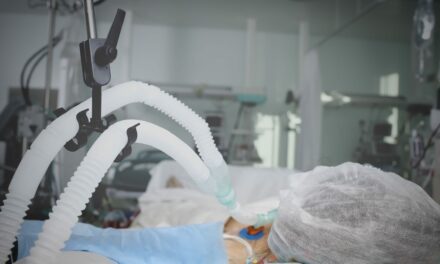
It’s important to liberate from mechanical ventilation in a timely manner while avoiding extubation failure and reintubation. This article will explore six considerations for weaning patients from mechanical ventilation and moving toward successful extubation, or planning for prolonged ventilatory support.
By Bill Pruitt, MBA, RRT, CPFT, FAARC
Mechanical ventilation (MV) is a critical lifesaving component for patients with respiratory failure. It allows time for the body to heal from issues like trauma or infection, but the time spent on mechanical ventilation can also introduce other unwanted issues (ie, muscle atrophy, ventilator-associated pneumonia, ventilator-induced lung injury, and ventilator dependence, to name a few).
Thus, while it is important to initiate MV when respiratory failure is present (or is impending), it is equally important to move toward liberation from MV and extubation in a timely manner while avoiding a failed attempt to liberate, resulting in reintubation and/or restarting MV. This article will explore six considerations for weaning/liberation from mechanical ventilation, moving toward successful extubation, or planning for the next steps to be taken in the event that prolonged ventilation is needed.
1. Assess Patient Readiness to Begin Weaning Daily
The patient assessment for readiness to wean should be guided by a protocol and can be performed by a nurse-therapist team. In situations where therapist staffing is scarce, the nurse should be able to perform the readiness assessment. This assessment should be utilized on all patients after the first 24 hours of starting MV. Specific items in the protocol may vary from hospital to hospital but generally the criteria includes the following:1-2
- The initial cause of respiratory failure has been reversed. Investigate all pulmonary and nonpulmonary issues that could contribute to the need for MV;
- Oxygenation is acceptable (PaO2/FiO2 ≥150 or SpO2 ≥90% on FiO2 ≤40% and PEEP ≤5 cmH2O) with a pH >7.25;
- An adequate hemoglobin level (>8g/dl);
- The patient is hemodynamically stable (using low or no-dose vasopressor medications);
- The patient has the capacity to follow commands and initiate an inspiratory effort.
Minimized sedation should also be included as part of the patient assessment. Referred to as a “sedation vacation,” a spontaneous awakening trial (SAT), or daily sedation interruption (DSI), this activity should use a protocol to minimize continuous sedation-analgesia infusion and allow the patient wake up in order to check their ability to follow commands, while maintaining comfort and avoiding agitation.3 Nurse-therapist patient assessment for readiness to wean (in conjunction with an SAT) using the respective protocols mentioned above should start on all patients after the first 24 hours of initiating MV.
2. Perform a Spontaneous Breathing Trial
An SBT is commonly defined as “a period of spontaneous breathing with minimal or no positive-pressure ventilatory assistance, usually 30–120 min in duration.”1 The SBT provides a formal assessment of the patient’s ability to breathe while receiving only minimal (or no) ventilatory support. According to the ACCP/ATS 2017 guidelines for SBTs, the initial SBT should be done after 24 hrs of MV. The ventilator should be set to a spontaneous mode with the addition of 5-8 cmH2O pressure support (PS) rather than using T-piece or a CPAP mode without PS.4
The SBT is considered the primary means of determining the likelihood of liberating the patient from MV and also requires the team to examine and correct the causes of failing the SBT.1 The idea behind this approach is to safely liberate the patient from mechanical ventilation as soon as possible. During the initial few minutes of an SBT, the patient should be closely monitored to ensure that there is no evidence of ventilatory muscle overload which generally occurs early in an SBT. If this condition is not present, the SBT can safely continue.5
Tolerance of an SBT is determined by six criteria:4,6
- Respiratory rate <35 breaths per min;
- Good tolerance to the SBT based on subjective opinion of the team;
- Heart rate <140 BPM or heart rate variability of <20% from baseline;
- Acceptable arterial oxygenation (SaO2 >90% or PaO2 >60 mmHg on FiO2 <0.4);
- Systolic blood pressure between 80 and 180 mmHg or <20% change from baseline;
- No signs of increased work of breathing (WOB) or distress (evidenced by use of accessory muscles, paradoxical or asynchronous breathing, intercostal retractions, nasal flaring, profuse diaphoresis, patient agitation).
The six criteria given above should be considered as a whole (in relation to each other) when evaluating the outcome of the SBT and not be used as rigid or absolute markers. A patient may cross the threshold in one or more categories and still continue the SBT—this is a clinical decision that is based on subjective evaluation and judgement by the ICU team during the SBT.5 Note that the use of the Rapid Shallow Breathing Index (RSBI) is no longer considered a way to predict successful completion of an SBT. The RSBI is the ratio of the spontaneous breath rate to spontaneous tidal volume without any MV support and is measured during a short time (<5 min) with a cutoff of RSBI <105. It has been shown that using this measurement as a defining criterion for success of the SBT has slowed the process of liberation from MV.1 The 2024 American Association for Respiratory Care (AARC) clinical practice guideline regarding SBTs has suggested that the “RSBI is not needed to determine readiness for an SBT.” 1
3. Successful SBT
Should the patient have a successful SBT within the acceptable 30-120-minute time period, MV support can be discontinued, supplemental oxygen (if needed) should be continued, and the patient should be evaluated for possible extubation (or moving toward decannulation if the patient has a tracheostomy).
Noninvasive ventilation (NIV) and/or a high-flow nasal cannula (HFNC) may be useful to support some patients as they are liberated from MV.7
4. For SBT Failure
When failure of an SBT occurs, the patient should be placed back on MV using a stable, non-fatiguing, comfortable form of support (often an assist/control mode using the pretrial settings for tidal volume, FiO2, PEEP, and adequate minute volume).
A failed SBT requires the team to determine and address the cause(s) of the failure. Once this has occurred, subsequent SBTs should be performed again the following day.
5. Extubation Evaluation
Once the patient has passed an SBT and has been liberated from MV, the healthcare team needs to consider if extubation is the appropriate next step. At times, patients experience stridor, which can cause upper airway obstruction after removal of an endotracheal tube. Assessing the amount of air leak during MV when the cuff is deflated can help predict if stridor may occur (described as cuff leak test).5,7 This test uses six consecutive breaths to measure the average value of cuff leak from three of the breaths. An average leak <110 mL indicates a high risk of post-extubation stridor. If present after extubation, stridor is treated with steroids and/or epinephrine—sometimes these medications are given prior to extubation as a prophylactic.5,7
An effective cough and the ability to clear secretions are needed for protection of the airway. Cough and secretion clearance can be assessed during suctioning. If these actions are inadequate or absent, the artificial airway should be left in place. Mental status may also be a consideration when evaluating the patient for extubation. From a review of the literature, it has been suggested extubation can proceed if the Glascow Coma score is greater than 8, along with evidence that the patient can protect their airway (by gag reflex and effective cough).5
6. Prolonged Ventilation
If a patient has failed multiple SBTs they can be considered a prolonged MV and likely have a slowly resolving disease state that requires more time to correct. In this situation, there is no need to continue daily SBTs. The most common situations that are associated with prolonged mechanical ventilation include:8
- Complications of acute respiratory failure (ARF) and/or acute respiratory distress syndrome (ARDS);
- Chronic respiratory diseases;
- Uncontrolled diabetes mellitus;
- Neuromuscular diseases, post-cerebrovascular accident, and/or spinal cord injuries;
- Malnutrition and/or morbid obesity; or
- Chronic heart failure.
According to the Center for Medicare Services (CMS), prolonged MV is defined as having >21 consecutive days of ventilatory support for at least six hours a day.8 In prolonged MV, tracheostomies are almost always used to facilitate weaning, with benefits reported in a large meta-analysis, as well as reports that frequent assessments lead to fewer ventilator days and more successful outcomes.8 The patient may be a candidate for transfer from acute care to specialized weaning units (SWUs), LTACHs, or skilled nursing facilities for continued care and rehab.5,8
Conclusion
The process of removing MV support and possible extubation requires a skilled team of professionals (primarily physicians, nurses, and respiratory therapists) to carefully assess the patient and utilize protocols to guide their actions. Many pieces of information need to be gathered and considered in the process, with a mixture of objective and subjective findings/evaluations providing a basis for making decisions and determining the next step. MV provides life-saving support but liberation can sometimes be very challenging. Research continues to find the best approaches and new findings will bring changes to how weaning is done.
RT
Bill Pruitt, MBA, RRT, CPFT, FAARC, is a writer, lecturer, and consultant. Bill has over 40 years of experience in respiratory care in a wide variety of settings and has over 20 years teaching at the University of South Alabama in Cardiorespiratory Care. Now retired from teaching, Bill continues to provide guest lectures, participates in podcasts, and writes professionally. For more info, contact [email protected].
References
- Roberts KJ, et. al. AARC clinical practice guideline: spontaneous breathing trials for liberation from adult mechanical ventilation. Respiratory Care. 2024 Jul 1;69(7):891-901.
- Epstein S. Weaning from mechanical ventilation: Readiness testing. UpToDate. Updated Aug. 2025.
- Fuchs B. Sedative-analgesia in ventilated adults: Management strategies, agent selection, monitoring, and withdrawal. UpToDate. Updated Nov. 2025.
- Ouellette DR, et al. Liberation from mechanical ventilation in critically ill adults: an official ACCP/ATS clinical practice guideline: inspiratory pressure augmentation during spontaneous breathing trials, protocols minimizing sedation, and noninvasive ventilation immediately after extubation. Chest 2017;151(1):166-180.
- MacIntyre NR. The ventilator discontinuation process: an expanding evidence base. Respiratory care. 2013 Jun 1;58(6):1074-86.
- Penuelas O, et al. Discontinuation of ventilatory support: new solutions to old dilemmas. Current Opinion in Critical Care. 2015;21(1):74-81.
- Zein H, et al. Ventilator Weaning and Spontaneous Breathing Trials; an Educational Review. Emerg (Tehran). 2016 Spring;4(2):65-71.
- Dolinay T, et al. Ventilator weaning in prolonged mechanical ventilation—a narrative review. Journal of Clinical Medicine. 2024 Mar 26;13(7):1909.