Tele-ICU Program Reduced Hospital LOS
A study found that remote ICU support lowered hospital length of stay, but did not increase ventilator utilization.


A study found that remote ICU support lowered hospital length of stay, but did not increase ventilator utilization.

A study found that remote ICU support lowered hospital length of stay, but did not increase ventilator utilization.
Read More
Ai identified intubated patients who pass standard extubation readiness tests but remain at twice the risk of returning to a ventilator.
Read More
The FDA granted 510(k) clearance to Getinge’s 6Fr/48 cm Edi catheter designed for premature infants weighing between 500 and 1,000 grams.
Read More
RT’s September-October 2026 Digital Edition discusses bronchiectasis care, bubble CPAP for chronic/acute neonatal conditions and standardizing asthma care.
Read More
Ventec Life (React Health) issued updated use instructions and inspection procedures for certain VOCSN ventilator devices, according to an FDA early alert.
Read More
Researchers are developing an automated tool to identify respiratory discomfort when ventilated patients are unable to communicate.
Read More
Hamilton Medical issued a recall for certain coaxial breathing circuit sets used with C1, T-1, and MR1 ventilators, ordering them removed from where they are used or sold, according to an FDA alert.
Read More
Half of patients with invasive mold infections require mechanical ventilation, with significantly higher mortality observed in those with recent COVID-19.
Read More
A New Jersey hospital reversed an upward trend of unplanned extubation rates and maintained the improvement for five years.
Read More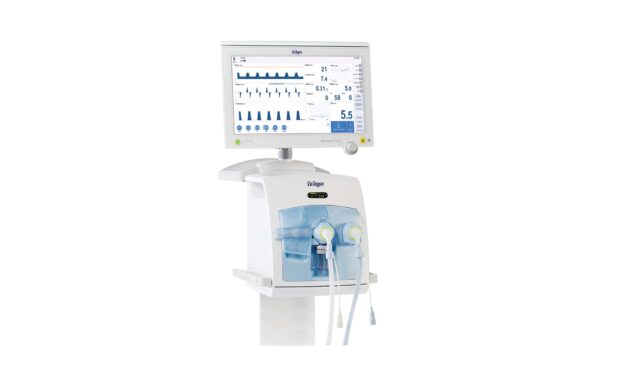
RT looks at the latest ventilation products from Breas, Draeger, Hamilton, Nihon Kohden, Solutions in Critical Care, and Sunset Healthcare.
Read More
Pressure control-volume guarantee (PCV-VG) ventilation improved intraoperative respiratory mechanics but did not significantly reduce postoperative pulmonary complications compared with conventional volume control ventilation in patients undergoing emergency abdominal surgery.
Read More
Resmed has recommended corrections to certain Astral 100 and Astral 150 ventilators due to an issue that may result in interrupted therapy.
Read More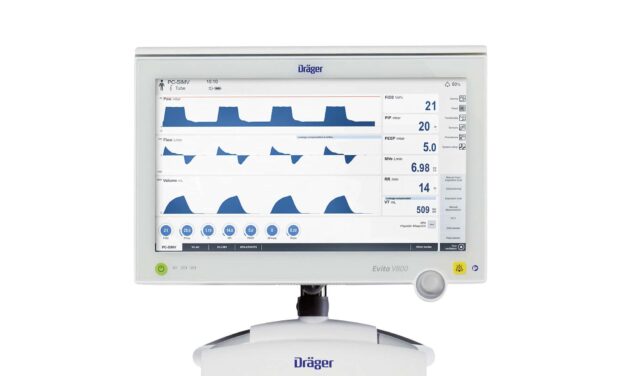
Draeger Inc has received 510(k) clearance from the USFDA to market its 3.10 software for the Evita V800 ventilator, according to a company news release.
Read More
Hamilton Medical issued updated use instructions for certain coaxial breathing circuit sets used with Hamilton-C1, Hamilton T-1, and Hamilton-MR1 ventilators, according to an FDA alert.
Read More
React Health is removing certain VOCSN V+Pro units due to a potential oxygen leak condition prior to or during ventilation.
Read More
A manufacturing error in the ventilator motor assembly may cause mechanical ventilation to fail before or during use, according to an FDA early alert.
Read More
Mechanical ventilation is one of the most common ICU interventions, and understanding and accurately interpreting ventilator graphics may reduce risks and improve patient outcomes.
Read More
The Draeger Evita V800 is designed to improve clinical workflows and support lung protection for patients of all ages.
Read More
Researchers identified specific milestones that help clinicians determine when infants with bronchopulmonary dysplasia (BPD) will no longer require respiratory support.
Read More
The INSPIRE study will examine whether seriously ill patients being intubated should receive sedation alone or with the addition of a neuromuscular blocker.
Read More
It’s important to liberate from mechanical ventilation in a timely manner while avoiding extubation failure and reintubation. This article will explore six considerations for weaning patients from mechanical ventilation and moving toward successful extubation, or planning for prolonged ventilatory support.
Read More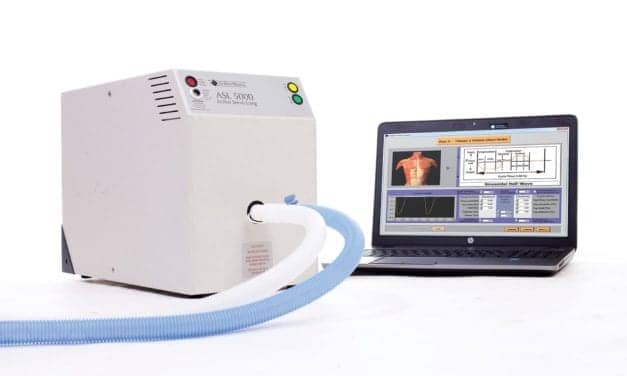
The ASL 5000 simulates spontaneous breathing for patients ranging from neonatal to adult to accelerate respiratory device development.
Read More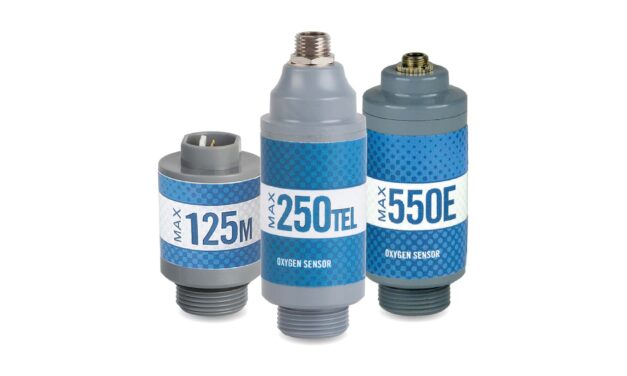
Salaera provides replacement sensors for respiratory devices designed to stabilize readings and extend operational life.
Read More
The Vision system and weaning application use real-time data to identify emergent conditions and help clinicians reduce ventilator time.
Read More