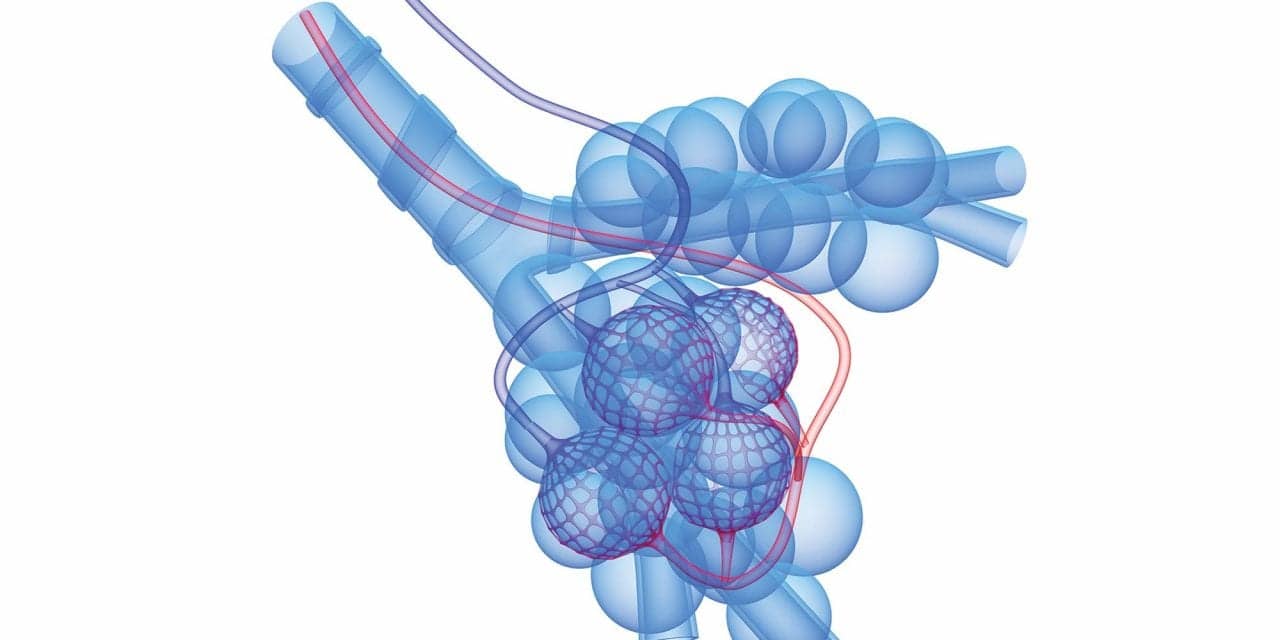
Microscopic tissue damage in the alveoli during mechanical ventilation can lead to ventilator-induced lung injury (VILI).
RT’s Three Key Takeaways:
- Alveolar Collapse Causes Microscopic Lung Damage: A Tulane University study reveals that repeated collapse and reopening of tiny alveoli during mechanical ventilation can cause microscopic tissue damage, contributing to ventilator-induced lung injury.
- Energy Dissipation Drives Injury: The study found that while alveolar recruitment/derecruitment accounts for just 2-5% of total energy dissipation during ventilation, it is directly linked to lung injury, creating a damaging “explosion-like” effect on the delicate lung surface.
- Potential for Improved Ventilation Strategies: Adjusting ventilation settings to minimize these repetitive collapse-and-reopening cycles may reduce lung injury in critically ill patients, leading to better outcomes in intensive care units.
A new study from Tulane University suggests that repeated collapse and reopening of tiny alveoli—air sacs in the lungs essential for breathing—during mechanical ventilation may cause microscopic tissue damage, playing a key role in ventilator-related injuries that contribute to thousands of deaths annually.
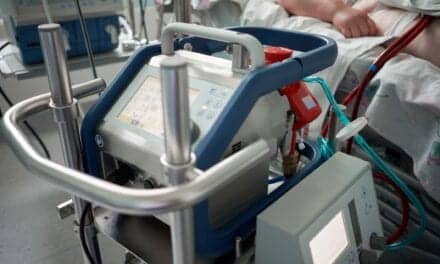
Published in the Proceedings of the National Academy of Sciences (PNAS), the study sheds light on ventilator-induced lung injury, a complication that gained increased attention during the COVID-19 pandemic, which led to a surge in patients requiring mechanical ventilation. These devices pump oxygen-rich air into a patient’s airways when they are unable to breathe adequately on their own.
The study identified that alveolar recruitment/derecruitment — when collapsed air sacs in the lungs repeatedly open and close — accounts for only 2-5% of energy dissipation during ventilation but correlates directly with lung injury in a model of acute respiratory distress syndrome (ARDS).
“It’s like a tiny explosion at the delicate lung surface,” said lead author Donald P. Gaver, a biomedical engineering professor at Tulane University School of Science and Engineering. “Though small in magnitude, it creates a power intensity of about 100 watts per square meter — comparable to sunlight exposure.”
ARDS is a severe lung condition that affects roughly 10% of intensive care unit patients and carries a mortality rate of 30-40%, even with modern ventilation techniques. Using a pig model of ARDS, the team examined how ventilator energy is transferred and dissipated in the lungs.
The researchers found that reducing this type of energy dissipation led to rapid recovery, while patients continued to deteriorate when 5-10% of alveoli underwent repetitive recruitment/derecruitment.
The study suggests that minimizing these repetitive collapse-and-reopening cycles could significantly reduce ventilator-induced lung injury. Researchers noted that adjusting ventilation strategies to prevent such events may improve outcomes for critically ill patients.
The study’s findings could also help inform the development of new ventilation protocols aimed at reducing lung injury and improving patient care in intensive care units worldwide.
“Follow-up steps should include developing real-time monitoring devices to quantify reopening events and integrating this data into treatment strategies to optimize ventilation and improve patient outcomes,” Gaver said.