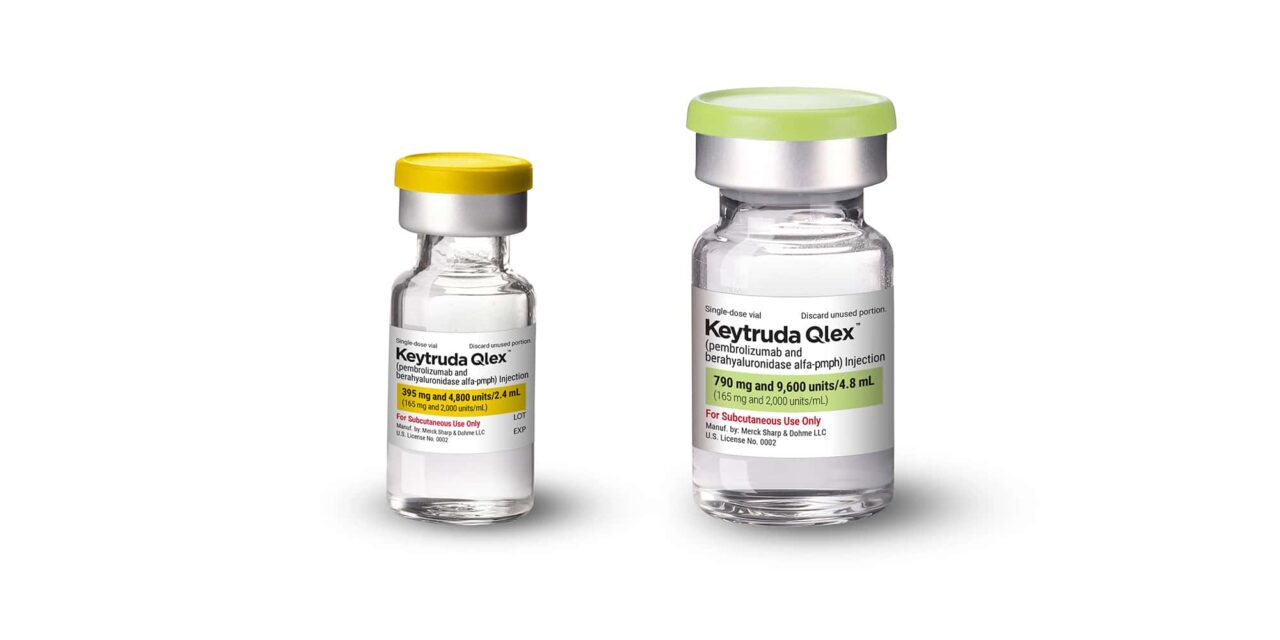
As a subcutaneous injection, Keytruda Qlex may provide added convenience compared to IV Keytruda because it can be administered by HCPs in multiple settings, providing more options where patients can receive their treatment.
The US FDA approved Keytruda Qlex (pembrolizumab and berahyaluronidase alfa-pmph, Merck) for subcutaneous injection for adult and pediatric (12 years and older) solid tumor indications approved for the intravenous formulation of Keytruda (pembrolizumab, Merck).
Intravenous Keytruda was approved by the FDA in October 2015 to treat patients with advanced (metastatic) non-small cell lung cancer (NSCLC) whose disease has progressed after other treatments and with tumors that express a protein called PD-L1.
“This approval is significant for patients and healthcare providers like me who have been using immunotherapies for years to treat certain cancers. We now have a new option with a broad set of indications that has demonstrated comparability with intravenous (IV) pembrolizumab but in a subcutaneous injection that can be administered in one minute every three weeks or two minutes every six weeks,” said Dr. J. Thaddeus Beck, oncologist and Medical Director of the Highlands’ Clinical Trials Office. “Subcutaneous pembrolizumab provides faster administration than IV pembrolizumab, offers two dosing options and gives patients more choices of health care settings in which they can receive their therapy.”
The pivotal trial comparing subcutaneous Keytruda Qlex to IV Keytruda administered every six weeks, each with chemotherapy, was conducted in patients with treatment-naïve metastatic non-small cell lung cancer (NSCLC) with no EGFR, ALK or ROS1 genomic tumor aberrations. This trial demonstrated comparable pharmacokinetic exposure levels to pembrolizumab [assessed as Cycle 1 AUC0-6 weeks (area under the curve from 0 to 6 weeks) and Cycle 3 (i.e. Steady State) Ctrough]. In descriptive efficacy analyses, overall response rates (ORR) were similar between Keytruda Qlex and Keytruda (45% [95% CI: 39, 52] vs 42% [95% CI: 33, 51]). Additionally, no notable differences were observed in progression-free survival (PFS) and overall survival (OS). Effectiveness of Keytruda Qlex for its approved indications was established based on these data and pivotal trial data demonstrating comparable safety with Keytruda, as well as evidence from adequate and well-controlled studies conducted with Keytruda.
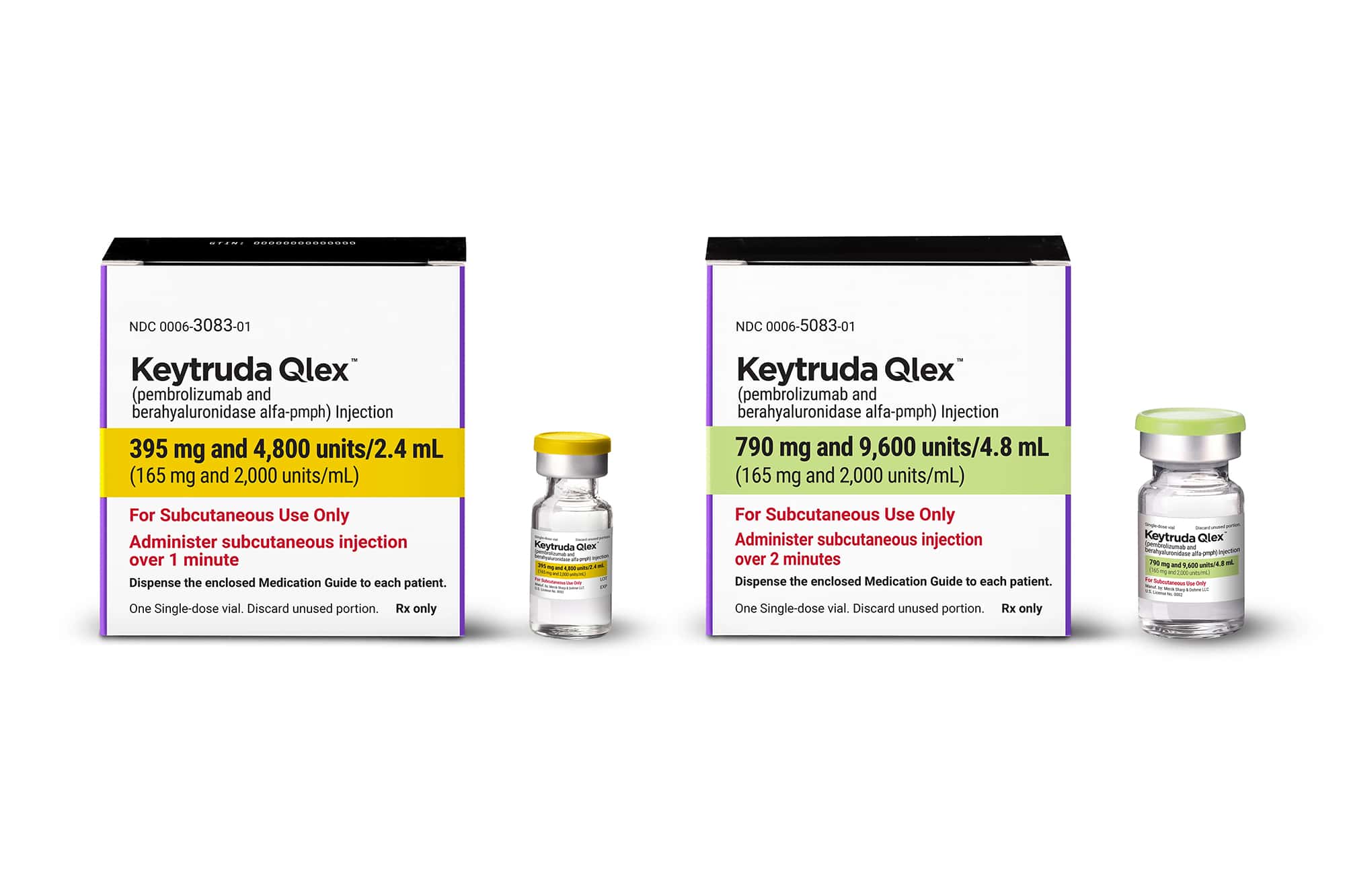
Keytruda Qlex is contraindicated in patients with known hypersensitivity to berahyaluronidase alfa, hyaluronidase or to any of its excipients. Additionally, immune-mediated adverse reactions, which may be severe or fatal, can occur in any organ system or tissue and can affect more than one body system simultaneously. Immune-mediated adverse reactions can occur at any time after starting treatment with a PD-1/PD-L1 blocking antibody, including pneumonitis, colitis, hepatitis, endocrinopathies, nephritis, dermatologic reactions, solid organ transplant rejection and other transplant (including corneal graft) rejection. Additionally, fatal and other serious complications can occur in patients who receive allogeneic hematopoietic stem cell transplantation (HSCT) before or after treatment. Consider the benefit versus risks for these patients. Treatment of patients with multiple myeloma with a PD-1 or PD-L1 blocking antibody in combination with a thalidomide analogue plus dexamethasone is not recommended outside of controlled trials due to the potential for increased mortality. Important immune-mediated adverse reactions listed here may not include all possible severe and fatal immune-mediated adverse reactions. Early identification and management of immune-mediated adverse reactions are essential to ensure safe use of Keytruda Qlex. Based on the severity of the adverse reaction, Keytruda Qlex should be withheld or permanently discontinued and corticosteroids administered if appropriate. Keytruda Qlex can also cause severe or life-threatening administration-related reactions. Based on its mechanism of action, Keytruda Qlex can cause fetal harm when administered to a pregnant woman. For more information, see “Selected Important Safety Information” below.
As a subcutaneous injection, Keytruda Qlex may provide added convenience compared to IV Keytruda because it can be administered by HCPs in multiple settings from an infusion center to a doctor’s office or a local community-based clinic, providing more options where patients can receive their treatment. Keytruda Qlex also provides flexibility in treatment administration. It can be given in one minute every three weeks or in two minutes every six weeks, requiring substantially less time to administer than a 30-minute IV infusion of Keytruda, and also offers a choice of injection site in the thigh or abdomen avoiding the 5 cm area around the navel. For patients who do not require a port or whose veins are difficult to access, subcutaneous administration may simplify treatment administration.
“At Merck, we are committed to putting patients first, as we work relentlessly to discover new options that may help patients manage their treatment in a way that fits their needs,” said Dr. Marjorie Green, senior vice president and head of oncology, global clinical development, Merck Research Laboratories. “We are honored to build on the foundation of Keytruda with Keytruda Qlex, a new injectable immunotherapy option that has similar results to Keytruda and can be administered in as little as one minute.”
“As part of supporting patients and families through their cancer journeys, we are excited to see patient-focused developments in subcutaneous cancer treatment that shorten administration time and may allow for more patients to receive treatment in multiple health care settings,” said Sally Werner, Chief Executive Officer, Cancer Support Community.
Keytruda Qlex must be administered by a healthcare provider (HCP).
Merck expects to have Keytruda Qlex available in the US in late September.
A full list of the 38 indications for which Keytruda Qlex is approved is available at the Merck website.