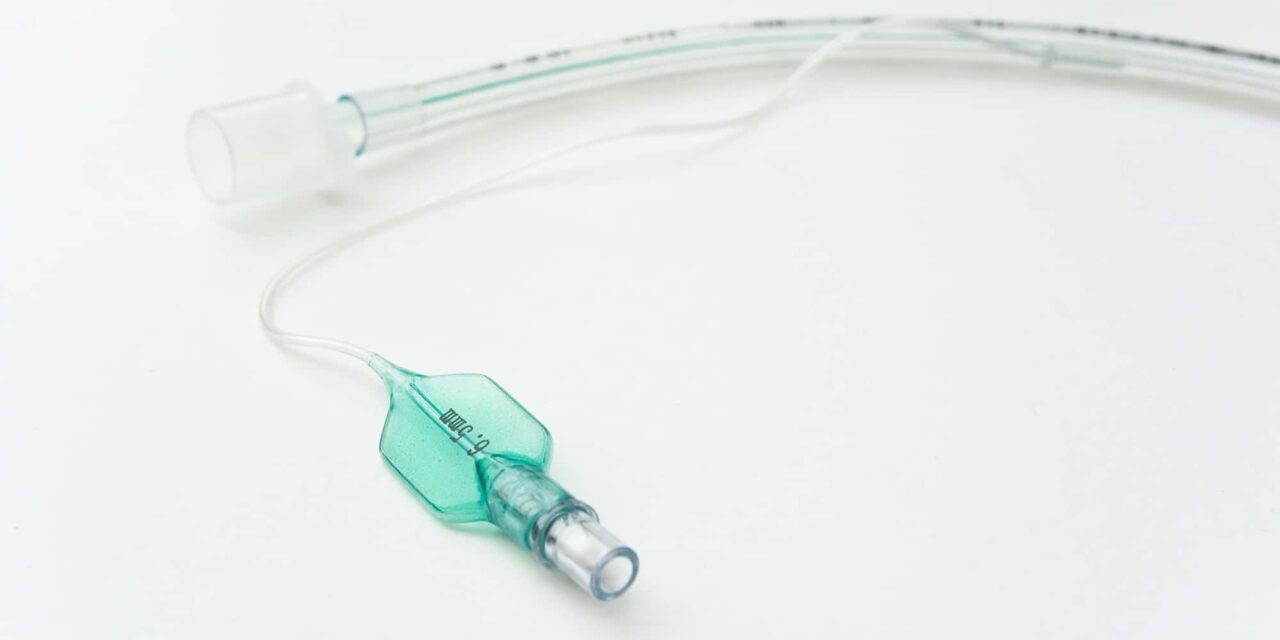
Modified endotracheal tubes designed to reduce patient pneumonia risk failed to improve outcomes compared to standard breathing tubes, new Lancet research reports.
Polyurethane-cuffed endotracheal tubes with subglottic suction (PU-EVAC) did not reduce incidence of IVAC or possible VAP compared with a standard PVC endotracheal tube with no subglottic drainage, according to results of the randomized controlled phase 2 trial called PreVent2 published in Lancet Respiratory Medicine.
Ventilator-associated pneumonia (VAP) is a dangerous lung infection associated with worse quality of life, cognitive function, and general health outcomes. The tubes examined in this study, called PU-EVAC, attempt to reduce pneumonia risk by replacing conventional polyvinylchloride (PVC) cuffs with more leakproof polyurethane cuffs, and adding a built-in suction port to keep fluids from leaking into patients’ airways.
In the trial, 1,068 adult patients with acute respiratory failure were intubated either with the specialized PU-EVAC tube, or with a standard, PVC endotracheal tube.
Researchers found similar rates of suspected pneumonia (6% in the PU-EVAC group vs. 5% in the PVC group) and overall infections (8% in the PU-EVAC group vs. 6% in the PVC group),and reported no significant differences in throat injury risk or long-term recovery.
“Patients requiring emergency intubation for respiratory failure are at risk of several complications, including ventilator associated pneumonia” said Miriam Treggiari, MD, professor of anesthesiology at Duke University School of Medicine and principal investigator of the study. “Preventing these potentially serious complications is a high management priority,” Treggiari adds, “but it is clear from this trial that the answer does not lie with polyurethane cuffs and subglottic secretion drainage.
Polyurethane-cuffed endotracheal tubes with subglottic suction (PU-EVAC) did not reduce incidence of IVAC or possible VAP compared with a standard PVC endotracheal tube with no subglottic drainage. At 6-month follow-up, neither quality of life, cognitive function, nor laryngeal injury differed between groups. However, the small number of survivors who provided information on their physical and mental status limits the conclusions that can be drawn regarding long-term outcome differences.1
The study represents the most in-depth trial of the specialized breathing tubes to date, as guidelines continue to evolve. “The CDC and the Society for Healthcare Epidemiology of America were recommending PU-EVAC on the basis of prior trials and meta-analyses to reduce pneumonia, duration of ICU stay and ventilation,” said Emily Sharp, PhD, Associate Professor of Neurology at Yale School of Medicine, was the trial’s site principal investigator at Yale.
“While recent guidelines downgraded the recommendation in 2022, this study affirms the lack of benefit of PU-EVAC endotracheal tubes and underscores the high morbidity, mortality, and long-term cognitive challenges among patients requiring emergency intubation for acute respiratory failure.”