The American Lung Association’s annual report indicates that 33.5 million children live in communities with failing grades for ozone or particle pollution.
RT’s Three Key Takeaways:
- Pediatric Respiratory Risk: Nearly 46% of US children live in areas with unhealthy air, which can cause reduced lung growth, new asthma cases, and increased risk of respiratory diseases.
- Ozone Pollution Trends: More than 129 million people live in counties with failing grades for ozone, an increase of 4 million people since the previous year.
- Environmental Inequity: People of color are over twice as likely as white individuals to live in communities with failing grades for ozone, short-term particle pollution, and year-round particle pollution.
Nearly half of the children in the US are breathing unhealthy levels of air pollution, according to the 27th annual “State of the Air” report released by the American Lung Association (ALA). The report found that 152 million people live in areas with unhealthy levels of ozone or particle pollution, including 33.5 million children.
The analysis, which used quality-assured air quality data from 2022-2024, found that 46% of people under 18 years old live in a county that received a failing grade for at least one measure of air pollution. Furthermore, more than 7 million children live in communities with failing grades for all three measures: ozone, short-term particle pollution, and year-round particle pollution.
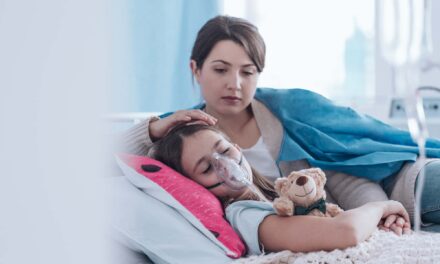
Infants, children, and teens are more susceptible to the health impacts of air pollution because their lungs are still developing, they breathe more air for their body size than adults, and they are frequently exposed to outdoor air, the report noted. Exposure during childhood can cause long-term harm, including reduced lung growth, new asthma cases, and impaired cognitive functioning later in life.
“Clean air is not something we can take for granted. It takes work. For decades, people in the US have breathed cleaner air thanks to the Clean Air Act. Unfortunately, that progress is now at risk due to extreme heat and wildfires, fueled by climate change, and policy changes that are making the problem worse,” said Harold Wimmer, president and CEO of the American Lung Association, in a news release.
Ground-level ozone, or smog, remains a powerful respiratory irritant that can cause shortness of breath, trigger coughing, and cause premature death. The report found that more than 129 million people lived in counties earning failing grades for ozone, which is nearly 4 million more than in the previous year’s report.
Particle pollution, or soot, also continues to impact communities. The report revealed that 75.9 million people lived in a county with a failing grade for year-round levels of particle pollution, representing the third-highest number in the report’s history. These fine particles come from sources such as wildfires, coal-fired power plants, and diesel engines.
The report also highlighted significant racial disparities in pollution exposure. A person of color in the US is more than twice as likely as a white individual to live in a community with failing grades for all three pollution measures. Hispanic individuals are more than three times as likely as white individuals to live in such communities, according to the report.
The ALA expressed concern over recent actions by the Environmental Protection Agency (EPA). The report noted that the EPA has weakened enforcement and rolled back rules that would have protected children from power plant and vehicle pollution.
“Now is the time to strengthen air pollution standards, but EPA is doing the opposite. In the last year, EPA has weakened enforcement and rolled back rules that would have protected kids from power plant and vehicle pollution,” said Wimmer.
Reflecting an overall worsening of air quality, only one city—Bangor, Maine—made the cleanest cities list for all three pollution measures this year, compared to five cities in 2024. The ALA is calling on the public to urge the EPA to prioritize pediatric healthcare and the health of all communities by strengthening air quality standards.