
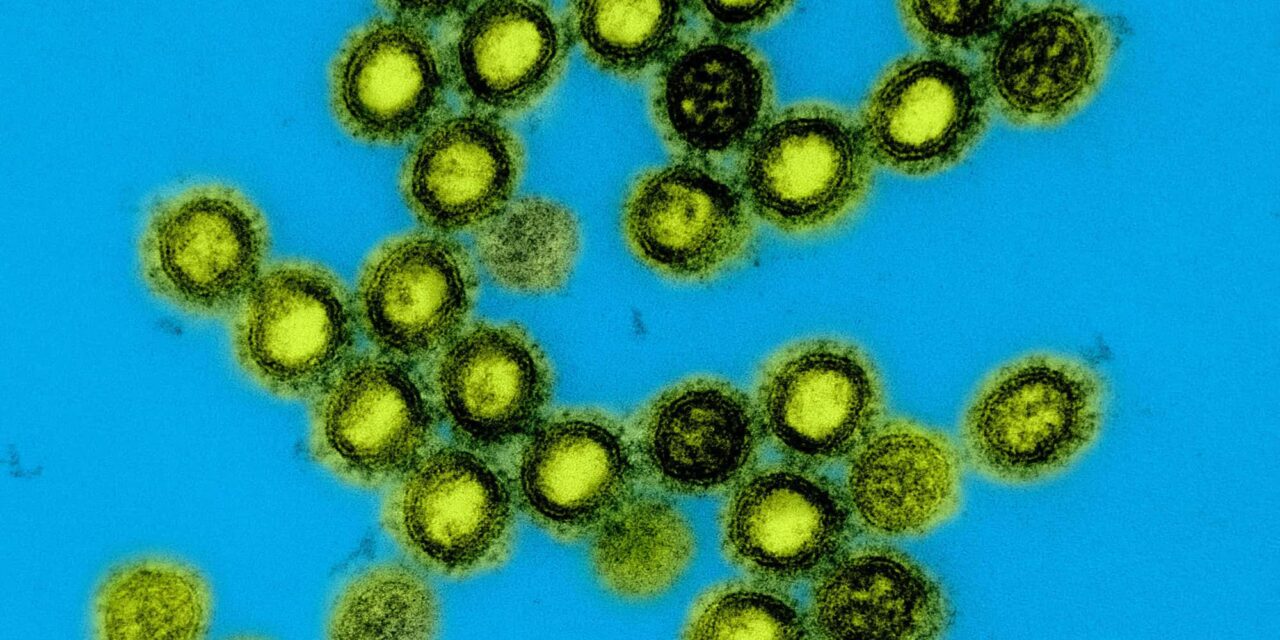
New research suggests certain individuals may act as evolutionary accelerators, causing influenza viruses to become more dangerous more quickly.
RT’s Three Key Takeaways:
- Evolutionary Accelerators: Researchers identified that specific host genotypes and sexes can cause influenza A viruses to gain virulence faster, potentially impacting the severity of outbreaks for the entire population.
- Sex-Based Differences: The study found that influenza evolved differently in male and female mice at the protein-protein interaction level, with certain female hosts selecting for mutations that increased the virus’s deadliness.
- Public Healthcare Strategy: Understanding these host-driven effects could eventually allow public healthcare officials to model outbreaks more accurately and prioritize vaccinations for individuals most likely to drive viral virulence.
University of Utah biologists found that host genetics and sex influence the evolution of influenza viruses, suggesting some individuals act as “evolutionary accelerators” that increase viral virulence, according to a study published in Nature Communications.
The research, funded by the National Institutes of Health (NIH), used mouse models to simulate the early stages of a pandemic. The findings demonstrate that host-driven effects may explain why some viruses become more dangerous in certain populations as they evolve.
“Some hosts seem to select for virulence-associated mutations, virulence traits that affect other hosts as well,” said Rodrigo Costa, a postdoctoral researcher in the University of Utah School of Biological Sciences. “This supports the idea that if a virus infects them, then it’ll become worse for the entire population. We don’t know this yet, but it’s what our work indicates that could be happening.”
Host-Driven Viral Evolution
The research team evolved influenza A virus separately in male and female mice from two different laboratory strains—BALB/c and C57BL/6—creating 28 different viral lineages. They simulated early pandemic waves by infecting the mice with the original H3N2 strain responsible for the 1968 Hong Kong flu pandemic.
After observing the pathogen’s evolution over 10 passages, the researchers discovered that the virus became significantly more virulent in female BALB/c mice. In contrast, the virus in C57BL/6 mice did not become as deadly and produced more defective copies of its genome, which muted the self-destruct mechanisms cells typically activate when infected.
The study also found that the virus evolved differently in males and females at the level of protein-protein interactions. In the NS1 protein, which helps the virus evade the immune system, mutations in female-adapted viruses were concentrated at a specific site, while mutations in male-adapted viruses were spread across the region.
Predicting Pandemic Patterns
The experiments revealed that when a virus infects a naïve host, it retains the virulence gained from previous host encounters. This suggests that specific individuals within a population could drive the rapid escalation of a virus’s deadliness.
“Our favored hypothesis was that increased viral genetic diversity—via inoculations of viruses collected and mixed from multiple infected hosts—would be a major factor influencing virulence evolution,” said Wayne Potts, a University of Utah professor of biology, in a news release. “There was some support for this hypothesis, but it was minor compared to the influence of host sex and genotype and the observation that more resistant hosts select for greater viral virulence.”
While the study was conducted in mice, the researchers noted that the findings could eventually inform human disease control strategies. If these interactions are mirrored in humans, sequencing data could help healthcare officials predict which hosts are more likely to make a virus more virulent, allowing for prioritized immunization of those groups to mitigate the severity of an outbreak.