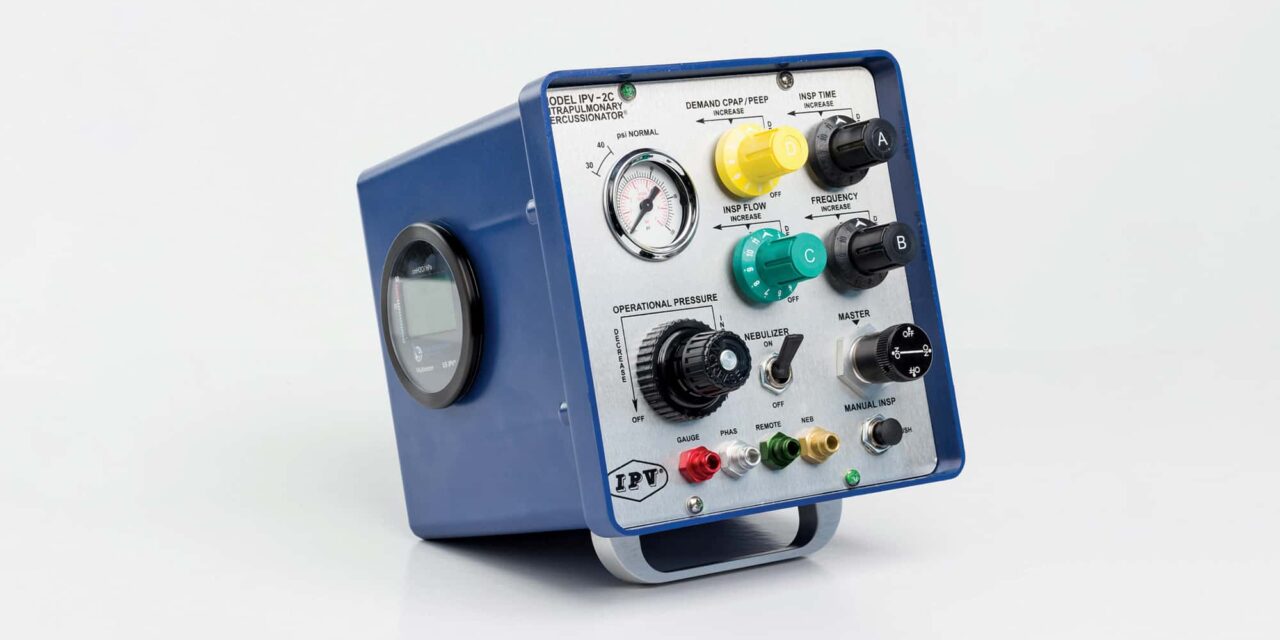
The Sentec IPV-2C provides tailored treatments for neonatal and adult patients in hospital environments.
RT’s Three Key Takeaways:
- Customized Percussive Therapy: The IPV-2C delivers high-frequency pulses between 60 and 330 cycles per minute to help mobilize secretions and improve lung recruitment.
- Broad Patient Application: The device is indicated for use across neonatal, pediatric, and adult populations for the treatment and prevention of pulmonary atelectasis.
- Integrated Medication Delivery: The system features high-volume aerosol generation for the topical delivery of saline, sterile water, and bronchodilators during treatment.
Sentec offers the IPV-2C, a pressure-limited and time-cycled ventilator designed for non-continuous institutional use to deliver intrapulmonary percussive ventilation (IPV) therapy, according to the company. The device provides high-frequency percussive pulses that ramify through the airways to improve functional residual capacity (FRC), remove carbon dioxide, and clear airways.
The system combines high-velocity flow, percussion, and entrainment to create a powerfully effective treatment, said Sentec. Healthcare teams can use a variety of controls, including demand continuous positive airway pressure (CPAP), to provide customized treatments for patients in hospital settings.
The device uses the Phasitron 5 breathing circuit, which acts as a physical-physiological interface. This component uses a unique venturi mechanism to protect the lung from over-pressure by automatically adjusting to the resistance of the lung. The Phasitron 5 delivers the optimal flow of air required by the alveolar space while maintaining a safe air pressure.
Clinical indications for the IPV-2C include the mobilization of secretions, lung expansion therapy, and the prevention of pulmonary atelectasis. It is also capable of providing supplemental oxygen when used with compressed oxygen sources.
For neonatal populations, the device requires specific protocols, including the use of an oral gastric tube as a vent and continuous monitoring for signs of hyperventilation. The manual noted that it is easy to lower carbon dioxide levels and remove the respiratory drive due to the effectiveness of the treatment, requiring clinicians to titrate the therapy to the patient.
The IPV-2C also includes a percussionaire digital multimeter (PDM) that displays pulse frequency rate, mean airway pressure, and session usage time. This multimeter allows healthcare teams to monitor therapy parameters in real time and perform pre-use checks to ensure the device is functioning within specified ranges.
Absolute contraindications for the device include untreated tension pneumothorax or use by an untrained operator. Relative contraindications include a history of pneumothorax, myocardial infarction, vomiting, or pulmonary hemorrhage, according to the company.
Source
- https://respiratory-therapy.com/products-treatment/monitoring-treatment/therapy-devices/products-2024-secretion-clearance-suction/
- [PDF] https://www.sentec.com/fileadmin/2023/10/IPV-2C-User-Manual-P20046-A.pdf