
The multicenter study will evaluate an artificial intelligence module designed for rapid tissue assessment during bronchoscopic procedures.
RT’s Three Key Takeaways:
- Pivotal Study Enrollment: Invenio Imaging completed enrollment of 1,006 patients across seven medical centers for its ON-SITE study evaluating AI-based image analysis for lung cancer.
- Rapid Tissue Assessment: The technology aims to provide immediate feedback on biopsy specimens in the procedure suite, addressing the limited availability of traditional rapid on-site evaluation.
- Investigational Status: The NIO Lung Cancer Reveal module has received Breakthrough Device Designation from the Food and Drug Administration (FDA) but remains investigational and is not yet cleared for clinical use in the US.
Invenio Imaging announced the completion of patient enrollment in the ON-SITE study, a pivotal US trial evaluating an artificial intelligence-based image analysis module for the rapid assessment of lung biopsy specimens, according to the company.
The study enrolled 1,006 patients across seven medical centers, making it one of the largest prospective studies conducted in interventional pulmonology. Participating physicians collected more than 3,250 fresh biopsy specimens using techniques including transbronchial forceps biopsy, cryobiopsy, and endobronchial ultrasound-guided transbronchial needle aspiration.
Determining whether a biopsy contains the tissue needed for diagnosis during a procedure remains a significant challenge in bronchoscopy. While rapid on-site evaluation (ROSE) can provide immediate feedback, the process requires specialized pathology personnel and is not consistently available.
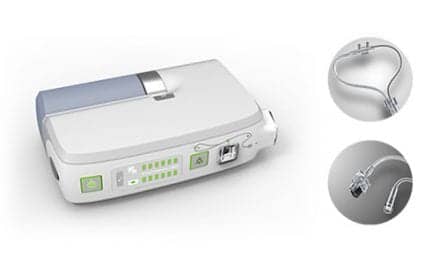
The NIO Imaging System is designed to image fresh, unprocessed biopsy tissue without traditional freezing, sectioning, or staining. The NIO Lung Cancer Reveal module applies artificial intelligence to these images to assist physicians in evaluating specimens for morphology suspicious for cancer.
“Completing enrollment in ON-SITE is a major milestone for Invenio and for our Lung Cancer Reveal program,” said Jay Trautman, co-founder and CEO of Invenio Imaging. “Their dedication and collaboration made a clinical effort of this scale possible and have brought us an important step closer to providing rapid, Ai-enabled tissue assessment in the bronchoscopy room.”
Gustavo Cumbo-Nacheli, interventional pulmonologist and a principal investigator for the study, noted that tissue assessment capabilities have not generally kept pace with advances in bronchoscopic procedures.
“There is an urgent clinical need for rapid feedback that can help physicians evaluate tissue in the procedure suite,” said Cumbo-Nacheli, interventional pulmonologist. “A practical, in-room approach to tissue assessment could have a meaningful impact on bronchoscopy workflows.”
George Cheng, another principal investigator for the study, highlighted the collaborative effort required to collect thousands of specimens across multiple biopsy techniques. “We are proud to have contributed to a prospective study of this scope and importance,” said Cheng, interventional pulmonologist.
The NIO Lung Cancer Reveal module received Breakthrough Device Designation from the FDA. The module detects cell morphology suspicious for cancer, but the company noted its output should not be used as the primary diagnosis. Invenio Imaging will analyze the validation data to support a future regulatory submission, as the device remains investigational and has not been cleared for clinical use in the US.