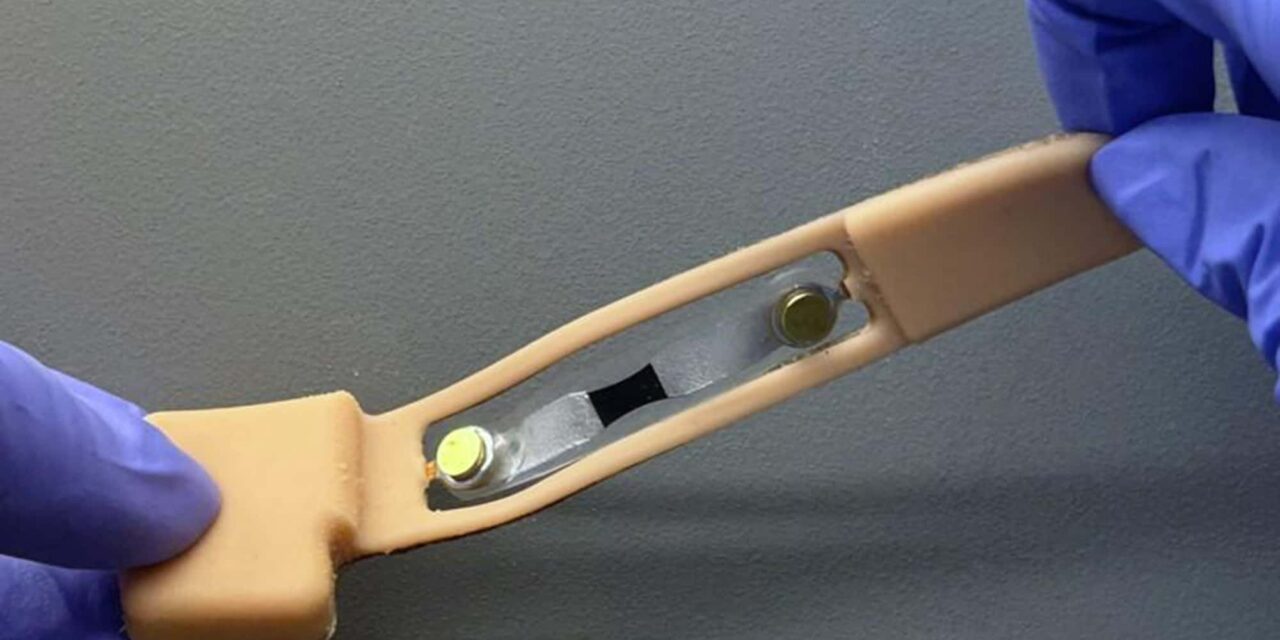
Researchers developed a soft, skin-like nasal patch to track sleep apnea breathing patterns without the need for bulky tubes or wires.
RT’s Three Key Takeaways:
- Wearable Electronics Integration: Researchers developed an ultrathin, wireless nasal patch that uses skin-like electronics to monitor breathing patterns during sleep without the need for tubes or wires.
- Addressing Diagnostic Barriers: The technology aims to overcome the discomfort and intrusiveness associated with traditional nasal cannulas and bulky equipment, which often hinder the diagnosis of sleep-related breathing disorders.
- Motion-Based Detection: The system identifies respiratory issues by detecting subtle nasal movements caused by airflow rather than using direct measurements from traditional tubes, according to a study published in Proceedings of the National Academy of Sciences.
Researchers have developed a soft, wireless nasal patch that could offer a more comfortable alternative for monitoring breathing during sleep, according to a study published in the Proceedings of the National Academy of Sciences (PNAS).
Sleep-related breathing disorders, including sleep apnea, affect millions of people worldwide but frequently go undiagnosed. One major barrier to diagnosis is the test itself, which often relies on bulky equipment and nasal cannulas—small tubes inserted into the nostrils to measure airflow. While effective, these systems can be uncomfortable, intrusive, and difficult to tolerate overnight, limiting their use for long-term monitoring at home, according to the research team.
The technology uses ultrathin, skin-like wearable electronics to detect subtle movements of the nose caused by breathing. This allows for the collection of data without tubes, wires, or direct airflow measurements, according to researchers led by W. Hong Yeo, Peterson professor in Pediatric Research at the George W. Woodruff School of Mechanical Engineering.
The soft, skin-like nasal patch could “transform sleep monitoring” by providing a less intrusive interface for patients in home healthcare settings, according to the researchers.
Credit: Georgia Institute of Technology