
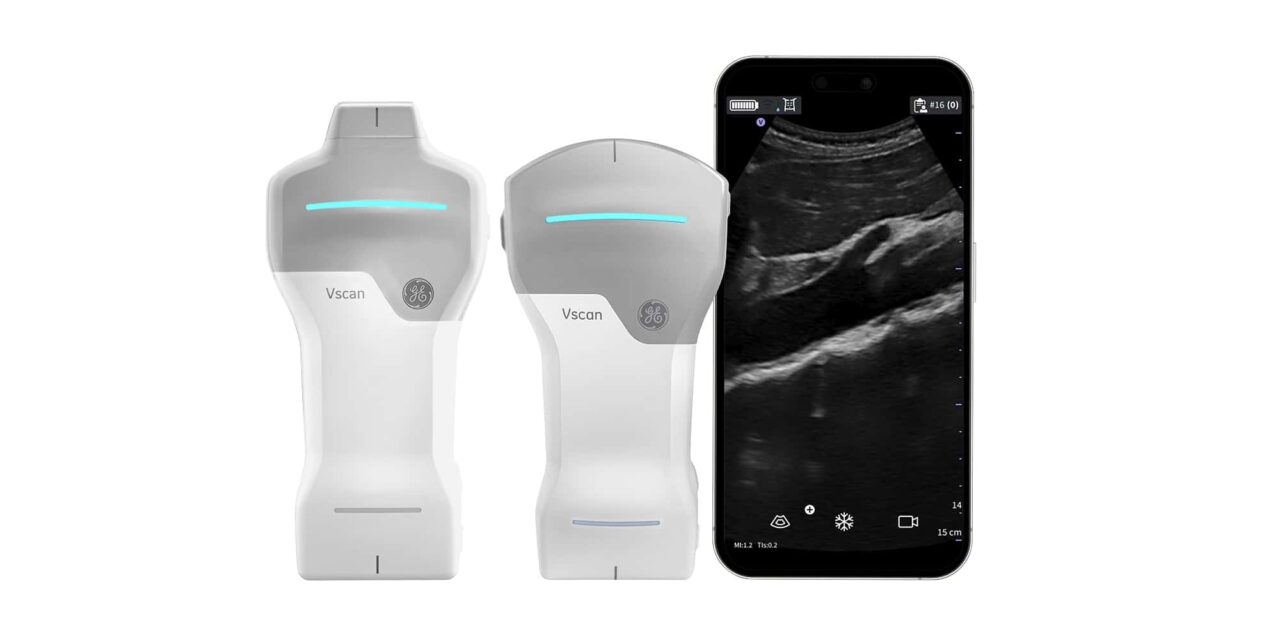
New software features help bedside clinicians assess shortness of breath and evaluate lung and heart conditions.
RT’s Three Key Takeaways:
- Lung Ultrasound Guidance: The new Lung Guidance feature provides real-time guidance to help clinicians locate anatomical landmarks, verify image quality, and detect B-lines during bedside lung examinations.
- Aortic Stenosis Detection: The AutoAS tool delivers automated visual estimates and confidence scores to assist clinicians in evaluating suspected moderate-to-severe aortic stenosis when formal imaging is delayed.
- Regulatory Clearance: Both artificial intelligence tools have received 510(k) clearance from the Food and Drug Administration (FDA) and CE mark certification for commercial release.
GE HealthCare has introduced two artificial intelligence-assisted capabilities for its Vscan Air handheld ultrasound system: Lung Guidance and AutoAS, according to the company. The tools are designed to support clinicians evaluating patients presenting with respiratory and cardiac symptoms at the point of care.
According to the company, patients presenting with acute shortness of breath frequently present diagnostic challenges, requiring clinicians to distinguish between pulmonary, cardiac, or combined causes in time-sensitive clinical environments where specialist interpretation may not be immediately accessible. The new features expand the Vscan Air cardiopulmonary portfolio, which already features cardiac guidance and ejection fraction interpretation tools.
“Clinicians at the point of care are often working with limited time and incomplete information, and a symptom like shortness of breath rarely announces if it’s coming from the heart, the lungs, or both,” said Karley Yoder, chief executive officer, ultrasound solutions, advanced imaging solutions, GE HealthCare. “Lung Guidance and AutoAS are designed to shorten the distance between the initial physical assessment and a clear next step, putting AI-enabled tools in the hands of the clinician who is already with the patient.”
Standardizing Lung Ultrasound Acquisition
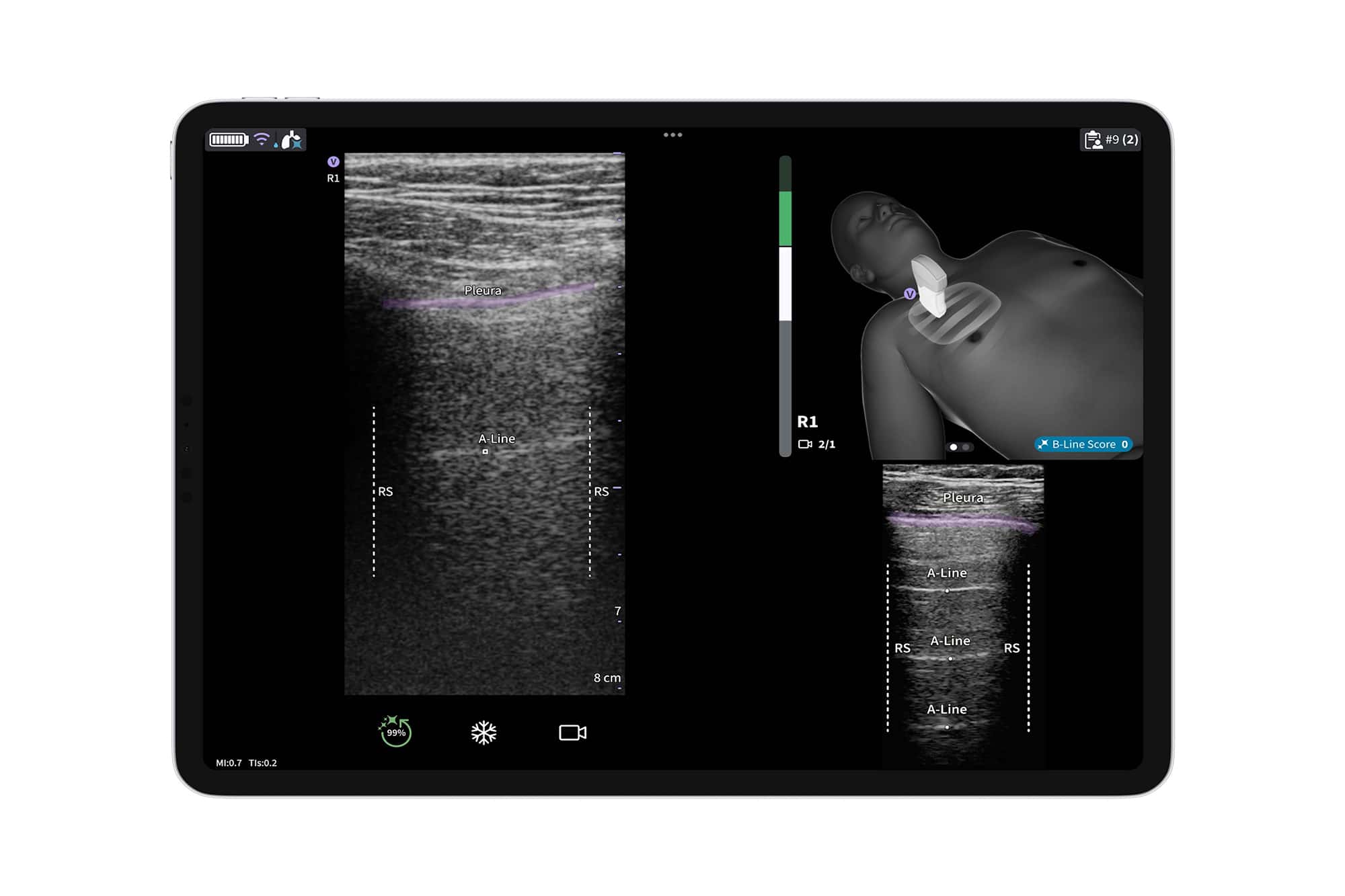
Lung Guidance offers real-time scan feedback to assist clinicians in optimizing probe positioning and capturing diagnostic-quality pulmonary views across the standard eight-zone lung protocol, GE HealthCare reported. The software identifies key anatomical landmarks, including the pleural line, A-lines, rib shadows, the diaphragm, and the abdomen.
The system incorporates an AutoCapture function that automatically records clips once predefined image-quality and landmark metrics are reached, alongside a manual feature to preserve the highest quality image obtained if automatic thresholds are not satisfied. The application also facilitates B-line detection, scoring, and automated reporting to assist healthcare providers in organizing examination findings.
In validation assessments cited by GE HealthCare, non-expert ultrasound users achieved diagnostic-quality lung examinations with a 95.2% success rate, compared to a 96.8% success rate among expert users.
Assessing Aortic Stenosis at the Bedside
For cardiac assessment, AutoAS provides an automated visual estimate of the presence or absence of moderate-to-severe aortic stenosis (AS) using standard two-dimensional cardiac images obtained on the Vscan Air SL, according to the announcement. Using at least two compatible standard views—parasternal long-axis, parasternal short-axis at the aortic valve, or apical five-chamber—the algorithm evaluates the views, delivers an assessment of valvular disease, and generates an associated confidence score.
GE HealthCare noted that AutoAS was trained and validated against an expert panel of cardiologists to reduce visual interpretation variability and assist initial clinical decision-making when formal echocardiography is delayed.
Both Lung Guidance and AutoAS have received 510(k) clearance from the FDA and CE marking, according to the company. The features are available through Vscan Air Innovation Packages in the US and selected international markets, with software updates rolling out to existing eligible subscribers by late November 2026.
References
1 Only available on Vscan Air SL.
2 Lung Guidance, validation data – UM DOC3172170
3 AutoAS is intended as a diagnostic aid and not as a standalone diagnostic tool. Final clinical decisions remain the responsibility of the interpreting clinician and should be informed by comprehensive echocardiographic assessment and clinical judgment.
4 AutoAS, validation data – UM DOC3275253