FDA Clears GE HealthCare Mobile X-Ray Ai for Feeding Tube Assessment
GE's Critical Care Suite 3.0 adds pediatric capabilities and provides bedside feeding tube placement detection without requiring cloud connectivity.

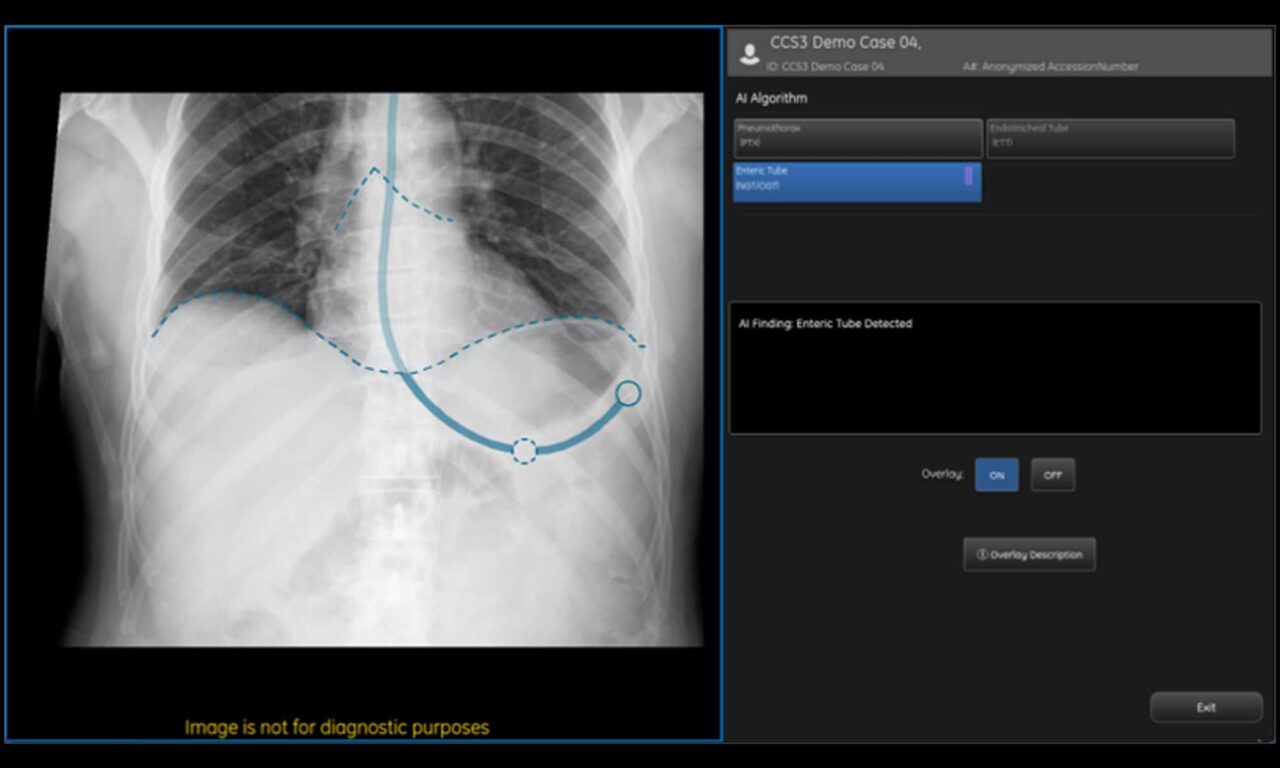
GE's Critical Care Suite 3.0 adds pediatric capabilities and provides bedside feeding tube placement detection without requiring cloud connectivity.

GE’s Critical Care Suite 3.0 adds pediatric capabilities and provides bedside feeding tube placement detection without requiring cloud connectivity.
Read More
Only about 18% of eligible US adults underwent lung cancer screening in 2022, lagging far behind rates for breast and colorectal cancer screenings.
Read More
UCLA Health combines biopsy, staging, and surgery into a single session to reduce delays and improve lung cancer patient outcomes.
Read More
The AIR CARE for Vets Act proposes a five-year pilot program to implement 4D imaging technology within the Department of Veterans Affairs.
Read More
A study of more than 32,000 CTPA scans found that artificial intelligence and physicians agreed on pulmonary embolism results nearly 98% of the time, though human review caught cases the software missed.
Read More
Investigators have developed a new method to improve radiation dose estimation in computed tomography called the size specific dose estimate slice averaged image.
Read More
New data published in JAMA reveal only 1-in-5 eligible US adults receive lung cancer screening.
Read More
GE HealthCare’s floor-mounted digital X-ray system, Definium Pace Select ET is now available commercially.
Read More
A new study suggests that telemedicine may reduce unnecessary imaging, supporting its use in virtual care models without increasing healthcare overuse.
Read More
The first pediatric Care Innovation Hub from GE Healthcare and Cincinnati Children’s will create diagnostic imaging technologies—MRI, CT, ultrasound, and molecular imaging—specifically designed for children.
Read More
The majority of diagnoses of radiographic pneumonias were not suspected by general practitioners on clinical grounds in a study from The Netherlands.
Read More