The inventors of the pressure metered dose inhaler (pMDI) will be posthumously inducted into the National Inventors Hall of Fame on May 7, 2026, according to the organization.
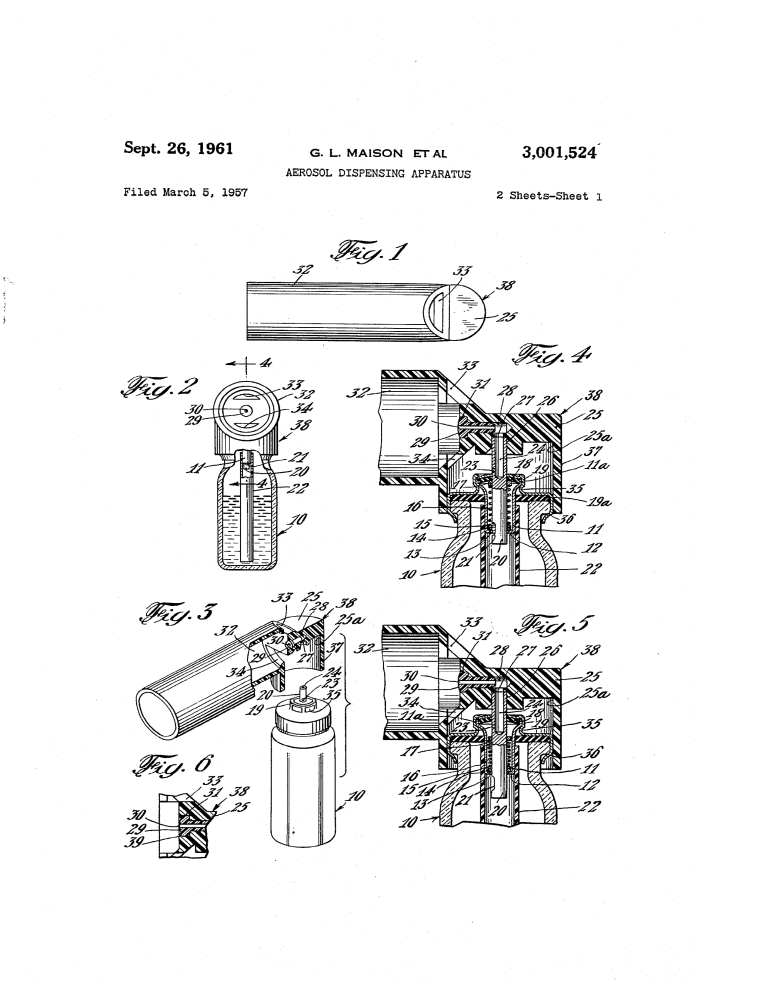
George Maison, Irving Porush and Charles Thiel invented the pMDI, which was first approved by the FDA in March 1956. According to the NIHF, the device was the first portable inhaler that effectively delivered medicine to the lungs and has saved lives and improved the quality of life for hundreds of millions of respiratory patients.
Maison, Porush, and Thiel — who all served in the US Army Air Forces during the 1940s or 1950s — worked together on their pMDI design at Riker Laboratories, which was later acquired by 3M Corp in 1970 and is now part of Kindeva Drug Delivery. The device was marketed as the Medihaler, with two versions available: Medihaler Epi containing epinephrine and Medihaler Iso containing isoproterenol, NIHF reports.
The trio join 12 other inventors in the 2026 Class of the National Inventors Hall of Fame, including the inventors of WiFi, broadband communications, Spanx, and CRISPR gene editing technology.
Invented by Feng Zhang, CRISPR-Cas9 systems are used for genome editing in human cells and are being investigated for use in treating cystic fibrosis. According to the CF Foundation, the technology makes changes to specific DNA sequences inside cells and researchers have used it to correct CF-causing mutations in lab.
Maison, Porush, and Thiel: pMDI
George Maison (1911-1993) was director of research and development and later president of Riker Labs, where he developed the device. His concept for the device was inspired by his asthmatic daughter Susie Maison, who asked if medication could be delivered in a spray, like aerosol cans of hairspray, according to NIHF.
He collaborated with Riker’s head chemist Irving Porush (1917-2012), who developed a prototype using soda bottles and chlorofluorocarbon refrigerants and formulated solutions using epinephrine or isoproterenol, rapidly acting drugs that open the airways and make it easier for patients with asthma to breathe. Charles Thiel (1928-2023), another of the company’s chemists, then created an innovative suspension of the medication in a liquefied gas propellant, increasing the amount of the drug that would be delivered to the lung, according to NIHF.
In June 1955, the MDI was tested for safety, and in early 1956, clinical research was published that highlighted its effectiveness, with the majority of patients experiencing excellent symptom relief. The product, described as a rescue inhaler, was approved by the Food and Drug Administration in March 1956, making it the first such device to receive approval for use by asthma patients.
According to NIHF, in 2014, it was reported that more than 2,000 people were taking doses from an MDI every second. In 2020, in the US alone, an estimated 144 million MDIs were sold, and in 2021, the global MDI industry was valued at $16.3 billion. Its value was expected to increase to $22.1 billion by 2031.
Feng Zhang: CRISPR Gene Editing
Feng Zhang has invented transformative technologies to improve human health, including first demonstrating the use of engineered CRISPR-Cas9 systems for genome editing in human cells. He has co-founded several companies to commercialize these technologies.
Zhang began researching CRISPR (Clustered Regularly Interspaced Short Palindromic Repeats) in 2011 and immediately recognized its potential to be engineered for genome editing. “CRISPR is a naturally occurring system in bacteria,” Zhang explained. “And bacteria use it to defend against virus infections. What was exciting about it to me, though, was the way that it targets DNA. If we could take the components of CRISPR systems and engineer them and adapt them to work in human, animal or plant cells, then that would allow us to edit the genome.”
In 2013, Zhang published a groundbreaking paper in the journal Science demonstrating the first use of engineered CRISPR-Cas9 systems to edit genomes in living mouse and human cells. Later, comparing the simplicity of CRISPR-Cas9 genome editing to using the search function in a digital document, Zhang said, “CRISPR is one of these search functions, where if you give it a piece of RNA that matches a sequence in the genome you want to target, then Cas9 will go right to that spot and allow you to start to make changes.”
The Full Class of 2026
In partnership with the United States Patent and Trademark Office (USPTO), the Hall of Fame will honor these Inductees on May 7 at one of the innovation industry’s most highly anticipated events—“The Greatest Celebration of American Innovation.”
“America’s Innovation Agency —the USPTO—is profoundly honored to recognize both the inspiration and the perspiration that are the very stories of these amazing visionaries the National Inventors Hall of Fame inducts into their 2026 class — and a very special class indeed as they will be enshrined 250 years from the birth of our nation,” said John A. Squires, Under Secretary of Commerce for Intellectual Property and Director of the USPTO. “The onrush of technology knows no bounds — and who knows what tomorrow will bring? For one, this remarkable class does because their breakthroughs and advances brought the possibility of better tomorrows just that much closer for all of us, improving our lives, fueling economic growth, creating new jobs and advancing the very American freedoms our founders declared 250 years ago. Welcome.”
“The National Inventors Hall of Fame is committed to illuminating the legacies of world-changing inventors and creating opportunities for the next generation to learn from these innovative role models,” said Monica Jones, Chief Executive Officer of the National Inventors Hall of Fame. “The inventors in our 2026 class have made contributions in fields as varied as semiconductor technology and portable inhalers. Induction into the Hall of Fame honors the significance of these advances, which have enhanced our daily lives and well-being.
- George Maison, Irving Porush and Charles Thiel: Metered Dose Inhaler (MDI) (Posthumous)
- Feng Zhang: CRISPR Gene Editing
- Louis Argenta and Michael Morykwas: Vacuum Assisted Closure (VAC)
Louis Argenta and Michael Morykwas co-invented Vacuum Assisted Closure (VAC), a medical device that uses controlled suction to draw excess fluid from a wound while promoting its closure. VAC therapy has been used to help millions of patients worldwide by treating a wide range of difficult-to-heal wounds, from surgical wounds to diabetic ulcers and burns.
- Sara Blakely: Spanx Shapewear
Sara Blakely invented footless control top pantyhose and created the Spanx brand, which has revolutionized and become synonymous with shapewear. Founded with a $5,000 personal investment, Spanx Inc. grew into a billion-dollar company. Blakely became the youngest self-made woman billionaire and a role model for aspiring entrepreneurs.
- Gebisa Ejeta: Sorghum Hybrids
Plant geneticist Gebisa Ejeta developed higher-quality sorghum hybrids that are resistant to drought and disease. By increasing the production and availability of sorghum, a versatile and important cereal grain, Ejeta’s efforts have helped feed millions of people across Africa and around the world.
- Teresa Meng: CMOS Wi-Fi
Teresa Meng’s groundbreaking research, engineering expertise and entrepreneurial leadership revolutionized Wi-Fi, making it faster, more energy-efficient and more affordable. As the founder of Atheros Communications, she pioneered the integration of all communication functions onto a single CMOS chip, laying the technical foundation that drove the widespread adoption of Wi-Fi.
- Henry Samueli: Broadband Communications
Electrical engineer Henry Samueli advanced broadband communications, creating solutions that enabled affordable, high-speed digital data transmission to homes and businesses. He is the co-founder of Broadcom Inc., a global leader in wired and wireless communications.
- Donald Alstadt: Chemlok Rubber-to-Metal Adhesive System (Posthumous)
Chemist Donald Alstadt invented Chemlok, a revolutionary rubber-to-metal adhesive system that is used across many industries, including the automotive, aerospace, agriculture, off-highway, defense and energy markets. Today, Chemlok and Chemlok-derived technologies are used in almost every vehicle in the world.
- Olive Dennis: Railroad Passenger Car Improvements (Posthumous)
Olive Dennis, a civil engineer for the Baltimore and Ohio (B&O) Railroad Co., made travel vastly more comfortable for rail passengers. Traveling tens of thousands of miles annually for nearly 30 years, Dennis applied both her expertise and her experience to develop many significant innovations for railroad passenger cars.
- Frank S. Greene Jr.: Semiconductor Memory Technology (Posthumous)
Frank S. Greene Jr. was a pioneering electrical engineer, inventor and entrepreneur in Silicon Valley. He developed high-speed semiconductor memory systems, including the fastest microchip then available for the ILLIAC IV supercomputer. Recognizing the need for greater participation in STEM fields, Greene also was dedicated to mentoring the next generation.
- Maurus Logan: Ty-Rap Cable Ties (Posthumous)
Electrical engineer Maurus Logan invented cable ties to address worker safety and wiring installation inefficiencies in the aviation industry. Now a billion-dollar market segment, cable ties are a fastening solution used in a wide variety of industries and projects, from aerospace to agriculture to electrical applications and DIY home improvement.
- Reuben Trane: Lightweight Convector Radiator (Posthumous)
Mechanical engineer Reuben Trane began making advancements to heating and cooling technologies early in the 20th century, providing reliable comfort for homes and commercial buildings around the world. With his innovations and business leadership, The Trane Co. became an industry giant. Over a century later, the brand remains a leader.
For biographies of each Inductee, visit https://www.invent.org/inductees/new-inductees.
Source: National Inventors Hall of Fame