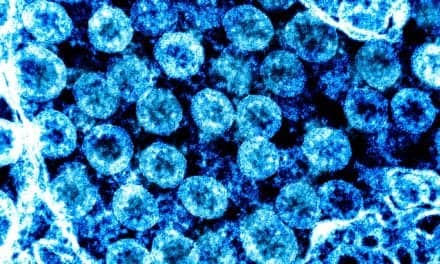
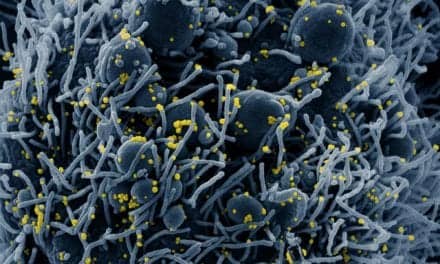
CDC surveillance is monitoring a highly divergent COVID-19 viral lineage BA.3.2 with mutations that may enhance immune evasion.
RT’s Three Key Takeaways:
- Significant Genetic Divergence: The BA.3.2 variant possesses 70 to 75 mutations in its spike protein compared to the antigens used in current vaccines, which may increase its ability to evade immune responses.
- Early Detection via Wastewater: Surveillance data shows that wastewater monitoring identified the variant in various US locations weeks before it was found in clinical samples from patients.
- Limited Dominance: Although BA.3.2 has spread to 23 countries and accounts for up to 40% of cases in parts of Europe, it has not yet replaced existing lineages as the dominant global strain.
The CDC is tracking the global emergence of BA.3.2, a highly divergent SARS-CoV-2 variant that has been detected in 29 US states and Puerto Rico, according to a report in Morbidity and Mortality Weekly Report (MMWR).
The variant was first identified in South Africa in November 2024 and has since spread to at least 23 countries. It is characterized by approximately 70 to 75 substitutions and deletions in the spike protein gene sequence relative to LP.8.1 and JN.1, which are the antigens used in the 2025–2026 COVID-19 vaccines. Laboratory studies suggest BA.3.2 efficiently evades antibodies, potentially reducing the protection provided by previous infections or vaccinations.
In the US, the first detection of the variant occurred in June 2025 through the Traveler-Based Genomic Surveillance (TGS) program in a participant traveling from the Netherlands. Clinical detections in patients were first reported in December 2025. As of March 12, 2026, the variant has been identified in 29 patients and 260 wastewater samples across the country.
Wastewater surveillance has served as an effective early warning system for healthcare providers and public health officials. In most states, detections of BA.3.2 in wastewater occurred many weeks before the variant was identified in clinical specimens. The CDC integrates data from the National Wastewater Surveillance System (NWSS) and other programs to monitor these trends.
Internationally, BA.3.2 detections began to increase in September 2025. In Denmark, Germany, and the Netherlands, the variant reached approximately 30% of reported sequences between November 2025 and January 2026. However, researchers noted that BA.3.2 has not rapidly overtaken other variants. Instead, it has cocirculated with various JN.1 descendant lineages.
Laboratory studies found that BA.3.2.1 and BA.3.2.2 sublineages had reduced lung cell entry compared to other strains, which may constrain the ability of the variant to become dominant. Nevertheless, further evolution or seasonal increases in transmission could enable broader circulation.
While some hospitalized patients with comorbidities have tested positive for BA.3.2, the CDC stated that these cases do not necessarily indicate that the variant causes more severe disease. The public health impact of COVID-19 remains significant, with an estimated 390,000 to 550,000 hospitalizations and 45,000 to 64,000 deaths occurring during the 2024–2025 respiratory virus season.
“Monitoring the spread of BA.3.2 provides valuable information about the potential for this new SARS-CoV-2 lineage to evade immunity from a previous infection or vaccination,” said researchers in the report.
The CDC continues to recommend the 2025–2026 COVID-19 vaccines, including the LP.8.1-adapted mRNA formulation and the JN.1-adapted protein formulation, which currently provide protection against predominant US variants. Ongoing genomic surveillance will guide future decisions regarding vaccine composition and healthcare preparedness.
Reference
Shakya M, Ma KC, Hughes LJ, et al. Early Detection and Surveillance of the SARS-CoV-2 Variant BA.3.2 — Worldwide, November 2024–February 2026. MMWR Morb Mortal Wkly Rep 2026;75:130–137. DOI: http://dx.doi.org/10.15585/mmwr.mm7510a1.