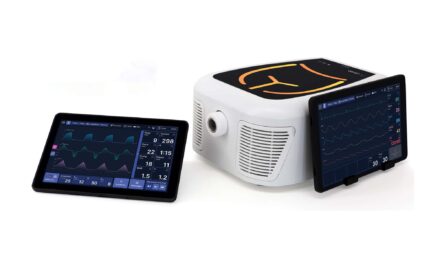
Werfen has expanded commercialization for the Gem Premier 7000 with iQM3 blood gas testing system to Europe. The system has been available in North America since 2024.
The Gem Premier 7000 is the first and only blood gas testing system to integrate hemolysis detection at the point of care, addressing the most common preanalytical error in blood gas testing, accounting for up to 70% of all such errors, according to Werfen.1
In just 45 seconds, the Gem Premier 7000 detects hemolysis, while delivering a complete menu of results, including: pH, pCO2, pO2, sodium, potassium, chloride, ionized calcium, glucose, lactate, hematocrit, total bilirubin and CO-oximetry (tHb, O2Hb, COHb, MetHb, HHb, sO2).
“As a breakthrough in blood gas testing, the Gem Premier 7000 with iQM3 has seen tremendous success in North America, where it has been embraced by clinicians and honored with several prestigious awards,” said Remo Tazzi, Vice President of Worldwide Marketing and Service at Werfen. “By expanding commercialization across Europe, this transformative solution will shine a light on the hidden problem of hemolysis, and advance care for many more patients.”
Despite its prevalence throughout different areas of the hospital, hemolysis is not visible in whole blood and can go unrecognized. Hemolysis occurs when red blood cell membranes rupture, causing cellular contents to leak into the surrounding fluid, which can elevate potassium results up to 152%.2 In samples impacted by hemolysis, low potassium levels can appear normal and normal levels can appear high. Consequences of in vitro hemolysis can include inappropriate patient management, longer length of stay, and increased costs, among others.3-7
The Gem Premier 7000 with iQM3 has received six major awards, underscoring its impact on diagnostic medicine:
- 2025 Edison Award—Silver Winner in Emergency and On-Site Health Solutions The Edison Awards honor excellence in innovation, recognizing the Gem Premier 7000 for its pioneering integration of hemolysis detection and its potential to transform point-of-care diagnostics.
- 2024 Medical Device Network Excellence Awards (3):
- Innovation Award—For being the first system to integrate hemolysis detection, improving diagnostic accuracy.
- Research & Development Award—Honoring its advanced features, including the all-in-one Gem Pak cartridge and continuous quality management.
- Product Launch Award—Celebrating its successful US market introduction and its impact on efficiency and patient care.
- 2024 R&D 100 Award This award recognizes the Gem Premier 7000 as one of the 100 most technologically significant new products and technologies introduced in 2024. Highlighting groundbreaking advancements across various fields, this award is a mark of excellence in the scientific and technological community.
- 2025 Premier Inc. Supplier Innovation Celebration Award Presented by one of North America’s largest integrated delivery networks, this award recognizes the Gem Premier 7000 for its lab quality hemolysis detection at the point of care and its contribution to supporting accurate results and streamlined workflows.
Werfen Unveils Hemostasis Testing Systems
Werfen will unveil the next generation of market-leading ACL Top testing systems at the ADLM Annual Meeting 2025, reinforcing the Company’s commitment to innovation in Specialized Diagnostics. Building upon the company’s established legacy of quality and innovation in Hemostasis testing, ACL Top Family 70 Series Hemostasis Testing Systems optimize workflow with a powerful combination of quality and efficiency, and connectivity across an entire laboratory network.
To streamline and optimize workflow, ACL Top Family 70 Series systems offer centralized QC and automated performance verification management. When connected to HemoHub Intelligent Data Manager, synergistic integration allows uniform application of a laboratory’s Quality Management System, across multiple instruments and sites, from one centralized location; transcription errors are eliminated, and report generation and storage automated. Performance verification studies that previously involved several manual processes are reduced to two automated steps, saving significant staff time, improving quality and reducing costs.
References from Werfen
- Lippi G, Salvagno GL, Favaloro EJ, Guidi GC. Survey on the prevalence of hemolytic specimens in an academic hospital according to collection facility: opportunities for quality improvement. Clin Chem Lab Med. 2009;47(5):616–618. doi:10.1515/CCLM.2009.132.
- Lippi G, Plebani M, Di Somma S, Cervellin G. Hemolyzed specimens: a major challenge for emergency departments and clinical laboratories. Crit Rev Clin Lab Sci. 2011;48(3):143–153. doi:10.3109/10408363.2011.600228.
- O’Hara M, Wheatley EG, Kazmierczak SC. The impact of undetected in vitro hemolysis or sample contamination on patient care and outcomes in point-of-care testing: a retrospective study. J Appl Lab Med. 2020;5(2):332- 341. doi:10.1093/jalm/jfz020.
- Phelan MP, Ramos C, Walker LE, et al. The hidden cost of hemolyzed blood samples in the emergency department. J Appl Lab Med. 2021;6(6):1607–1610. doi:10.1093/jalm/jfab035.
- Phelan MP, Hustey FM, Good DM, Reineks EZ. Seeing red: blood sample hemolysis is associated with prolonged emergency department throughput. J Appl Lab Med. 2020;5(4):732–737. doi:10.1093/jalm/jfaa073.
- Wilson M, Adelman S, Maitre JB, et al. Accuracy of hemolyzed potassium levels in the emergency department. West J Emerg Med. 2020;21(6):272–275. doi:10.5811/westjem.2020.8.46812.
- Milutinović D, Andrijević I, Ličina M, Andrijević L. Confidence level in venipuncture and knowledge on causes of in vitro hemolysis among healthcare professionals. Biochem Med. 2015;25(3):401–409. doi:10.11613/BM.2015.040.