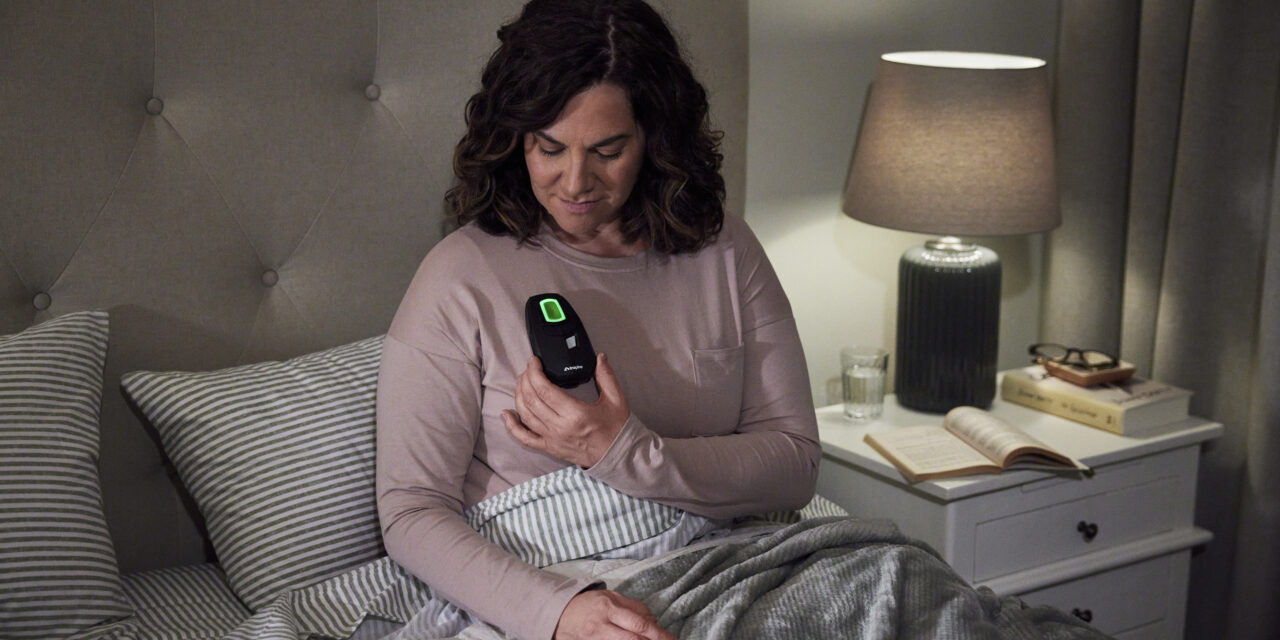
Data on the Inspire V system demonstrated reduced surgical times, superior respiratory sensing, and significant improvements in sleep apnea severity.
RT’s Three Key Takeaways:
- Clinical performance: The Inspire V system demonstrated strong outcomes in the Singapore study with a 20% reduction in surgical times, superior respiratory sensing (IPOP 87.1% vs. 79.4%), and significant improvements in sleep apnea severity.
- US limited market release: In 101 US patients, all Inspire V implants were completed successfully with no serious adverse events, showing consistent adherence of about 6.7 hours per night and a median reduction in AHI from 30 to 4.5 events per hour.
- Advancement in therapy and efficiency: The Inspire V system’s design improvements—such as internal respiratory sensing and shorter implant times—enhanced both clinical efficiency and patient experience, marking a major advancement in Inspire’s sleep apnea therapy.
Inspire Medical Systems has published Inspire V clinical outcomes data from its Singapore clinical study as well as the company’s limited market release in the United States including single site experience at two leading centers. These data will be presented at the American Otolaryngology-Head and Neck Surgery (AAO-HNS) and International Surgical Sleep Society (ISSS) meetings being conducted in Indianapolis between October 9 and October 14.
“We are incredibly excited to publish first-time clinical evidence on the Inspire V system. The design of the Inspire V system captures experience built over 25 years with Inspire therapy including over 100,000 patients implanted, and we are proud to provide the initial data from this advanced platform,” stated Tim Herbert, Chairman and Chief Executive Officer of Inspire Medical Systems. “Our initial experience raises the bar for what a successful therapy needs to achieve for both safety and efficacy. The data show that the Inspire V system provides very high and consistent patient adherence of over six hours per night which a patient’s physician can monitor with our SleepSync™ patient management platform.”
“The data presented at the ISSS/AAO-HNS meetings in Indianapolis this weekend demonstrate the benefits that Inspire therapy brings to the many patients struggling with OSA,” stated Paul Hoff, M.D., M.S., Inspire Vice President, Senior Medical Director. “The strong safety, superior respiratory sensing, and increased adherence, combined with a 20% reduction in surgical times and features designed to enhance patient comfort, demonstrate a truly significant advancement with the Inspire V system.”
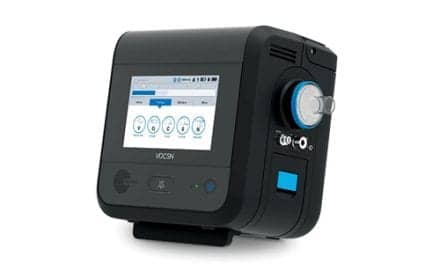
The Inspire V system trial conducted in Singapore at two centers was the initial experience with the new device. The study included 44 patients who received the Inspire V system and are being followed for six months post implant. The surgeons demonstrated a 20% reduction in surgical times as compared to their Inspire IV case times and 100% of the procedures were completed successfully. A key feature of the Inspire V system is that the respiratory sensing is internal to the neurostimulator, eliminating the need for the pressure sensing lead required with prior generations. The Inspire design provides for closed-loop stimulation to optimize therapy outcomes, and the primary endpoint of this Inspire V study was to measure the inspiratory phase overlap percentage (IPOP), which measures how well inspiration is covered by stimulation. The results showed the Inspire V device to be superior to the Inspire IV device (Inspire V IPOP of 87.1% vs 79.4% for Inspire IV with a non-inferiority margin of 4.6%). Important secondary measures included patient adherence to therapy of all 44 patients averaged 5.5±1.7 hours/night at a mean of 246 days post-implant, as well as the median reduction in the Apnea Hypopnea Index (AHI), as measured by overnight polysomnography (PSG), to be 34.4 events/hour at baseline to 8.3 events/hour at month six for the 37 patients who have completed this clinical visit to date. The safety profile was equally strong with only two patients requiring post-operative antibiotics for wound care that resolved within two weeks following the procedure. Once the remaining patients complete their six-month visit, these data will be submitted for publication.
In the United States, the Company conducted a limited market release evaluation of the Inspire V system at 10 leading centers with 101 patients. All device procedures were completed successfully with no serious adverse events, and all patients continue to use their Inspire therapy. At the 60-day check, all 101 patients were using their therapy with an average stimulation amplitude of 1.7 volts and an average usage of 6.8 hours/night. At the subsequent sleep study, data on the first 34 patients demonstrated a median reduction in AHI from 30 to 4.5 events/hours, noting that these are therapeutic values. With these 34 patients, the average amplitude remained steady at 1.7 volts and therapy adherence remained consistent at 6.7 hours/night.
The limited market release also provided single-site results from two of the centers. Dr. Phil Huyett from the Massachusetts Eye and Ear Infirmary in Boston reported that for his first nine patients, all procedures were completed successfully with an average surgical implant time of 34.5 minutes for a standard Inspire placement, and slightly longer for revised techniques. Dr. Nic Beckmann at Colorado ENT and Allergy in Colorado Springs reported an increase in implant volume with Inspire V due to the shorter procedure times averaging 12 implants per surgery day compared to an average of 9 cases per surgery day with Inspire IV. Dr. Beckmann also discussed the current reimbursement levels as well as the proposed 2026 Medicare reimbursement for the Inspire V CPT code.