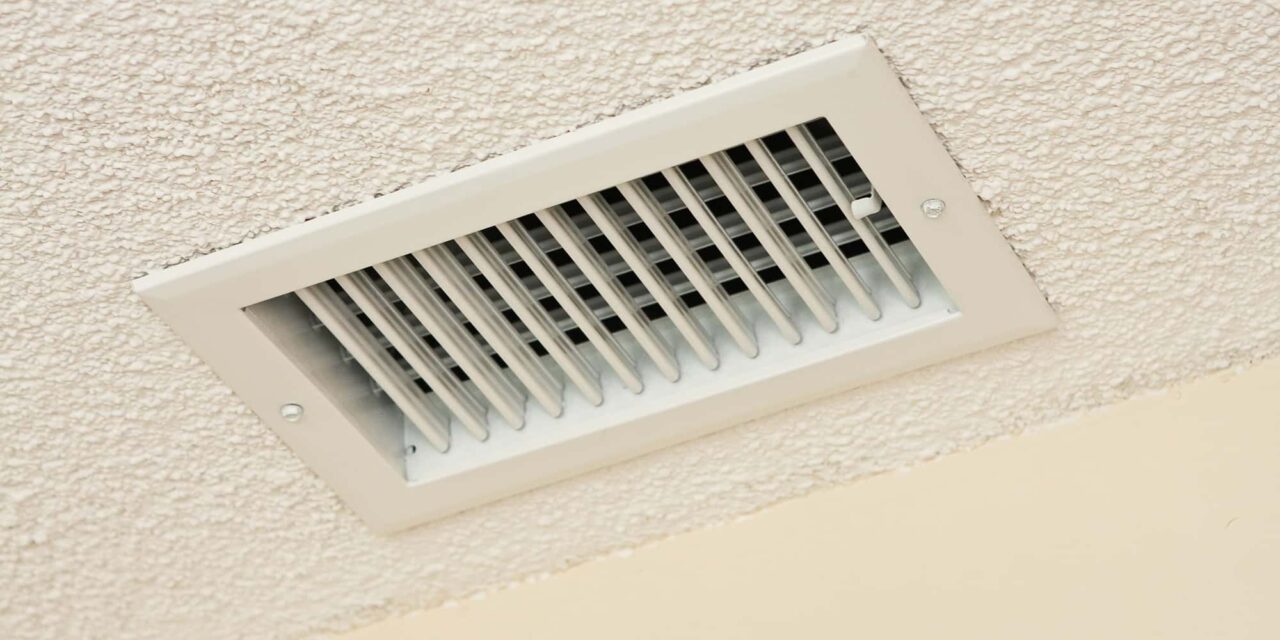
Vertical ventilation ducts in residential buildings can facilitate the spread of infectious respiratory aerosols in multi-family buildings.1
RT’s Three Key Takeaways:
- Vertical Transmission Pathway: Researchers identified shared bathroom ventilation ducts as a primary route for the spread of SARS-CoV-2 between vertically stacked homes in a multi-family building.1
- Exhaust Fan Impact: The operation of kitchen exhaust hoods and bathroom fans can disrupt pressure differentials and increase the transport of infectious aerosols to neighboring units.1
- Engineering Solutions: Installing forced air exhaust fans equipped with non-return flaps in bathroom ducts can effectively mitigate the risk of cross-home contamination.1
Shared vertical bathroom ventilation ducts can serve as a conduit for the transmission of SARS-CoV-2 between homes in multi-family residential buildings, according to a study published in PLOS One.1
A multidisciplinary team of researchers investigated a 2020 outbreak in a seven-story residential building in Santander, Spain. During a period of low community transmission, 15 cases emerged in four vertically stacked homes.1 The study used field measurements, computational fluid dynamics (CFD) simulations, and multi-zone airflow modeling to evaluate the potential for disease transmission within the building.1
The building, constructed in 1969, featured single interior bathrooms without windows in each unit. These bathrooms were ventilated by a shared vertical duct system designed for natural convection, also known as the stack effect.1 However, the researchers found that various factors can disrupt this intended airflow, causing “reverse flow” where air from the duct re-enters a bathroom instead of being expelled through the roof.1
Genetic sequencing of the virus from building residents showed high similarity, with only one or two nucleotide differences among samples. This indicated a recent shared ancestry, supporting the conclusion of an internal transmission pathway.1
“Epidemiological and genetic data combined with the field-collected data and modeling indicated that the most plausible transmission route was the bathroom vertical ventilation duct system, which facilitated movement of infectious aerosol between vertically connected homes,” the authors stated in the study.1
The research also highlighted how residents’ daily activities impact aerosol movement.1 Simulations showed that operating a kitchen exhaust hood or a bathroom fan can alter pressure differentials, drawing air—and potentially infectious aerosols—from neighboring apartments.1 For example, activating a kitchen hood on a higher floor increased the movement of aerosols to that level by creating localized negative pressure.1
The study noted that occupants in four homes connected to the same duct did not become infected because they had either blocked the exhaust vent or installed individual extraction fans with non-return flaps prior to the outbreak.1
To mitigate future risks in similar built environments, the researchers recommended several engineering controls. These include the installation of forced air exhaust fans equipped with non-return flaps in bathroom ducts to prevent backflow.1 Additionally, the study suggested that providing sufficient makeup air, such as by opening a street-facing window, is necessary to prevent kitchen exhaust systems from drawing air from adjacent units.1
The findings underscore the necessity of integrating scientific knowledge regarding airborne transmission into building inspection protocols and healthcare management strategies for infectious diseases.1 Early detection of outbreaks should include identifying clusters that share common architectural elements like ventilation ducts or drainage pipes.1
By recognizing the role of shared infrastructure in the propagation of respiratory pathogens, building managers and authorities can implement targeted interventions to protect occupant health in high-density housing.1
Reference
- Miller SL, et al. Potential airborne transmission of SARS-COV-2 through bathroom ventilation ducts associated with an outbreak in a residential building in Santander, Spain, 2020. PLoS One. 2026:21(5): e0345041. https://doi.org/10.1371/journal.pone.0345041