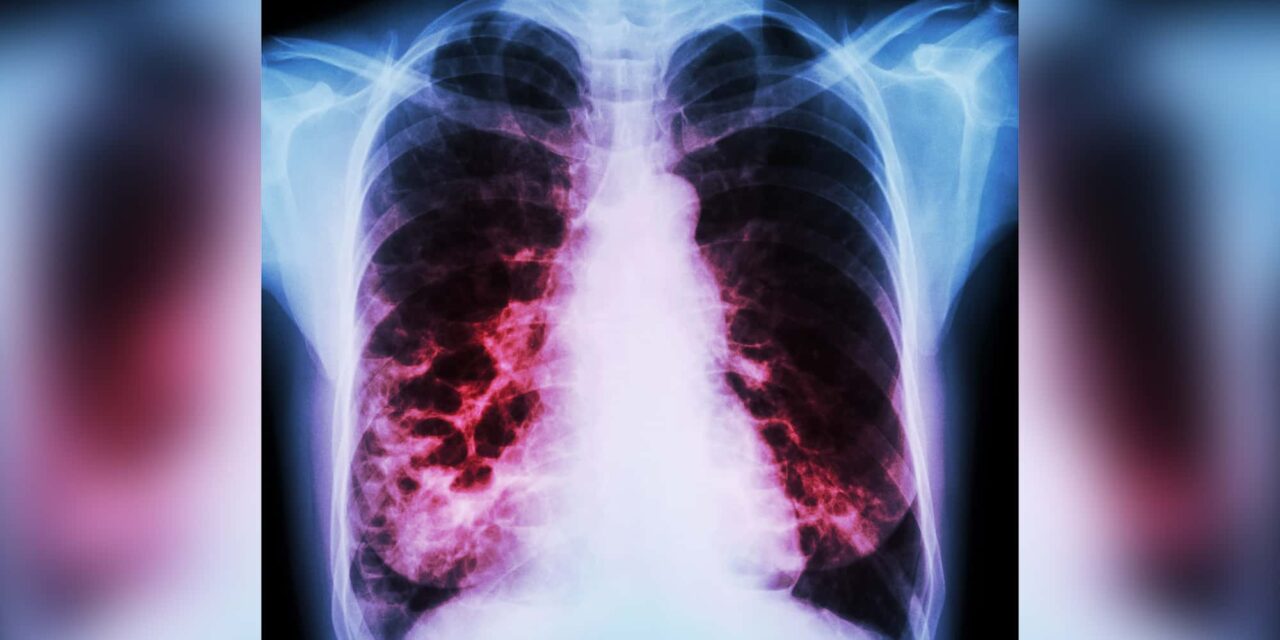
A large-scale international study found that comorbid bronchiectasis and diabetes is associated with higher mortality, increased hospitalizations, and more frequent exacerbations.
RT’s Three Key Takeaways:
- Increased Mortality Risk: Patients with both bronchiectasis and diabetes faced a significantly higher all-cause 5-year mortality rate compared to those without diabetes.
- Disease Severity: Comorbid diabetes was linked to higher Bronchiectasis Severity Index scores, lower lung function, and a greater frequency of hospital admissions and exacerbations.
- Microbial and Biological Changes: The presence of diabetes was associated with altered sputum microbiome composition and distinct inflammatory markers, suggesting a unique biological profile for this high-risk group.
Patients with both bronchiectasis and diabetes faced a significantly higher all-cause 5-year mortality rate compared to those without diabetes, according to a combined analysis of 30,263 patients with CT-confirmed bronchiectasis across four international registries.
The analysis, published in Lancet Respiratory Medicine, included data from EMBARC, EMBARC-India, the Australian Bronchiectasis Registry, and BE-China. Overall, 2,487 patients, or 8.2%, had diabetes. Compared with those without diabetes, patients with bronchiectasis and diabetes had a higher burden of comorbid disease, including cardiovascular disorders, asthma, chronic obstructive pulmonary disease (COPD), chronic renal failure, osteoporosis, and neoplastic disease.
Disease severity was also consistently worse in this population. Patients with diabetes had higher Bronchiectasis Severity Index scores, more hospital admissions in the previous year, higher Medical Research Council dyspnea scores, and lower FEV1% predicted. They were also more likely to have had three or more exacerbations in the previous year.
These findings were not explained by obesity alone. In a subanalysis of patients with a body mass index (BMI) of 30 kg/m2 or higher, patterns of comorbidity and disease severity remained broadly consistent with the full cohort.
Long-term outcomes were assessed in 11,153 patients with follow-up data. Patients with diabetes had more frequent exacerbations than those without diabetes, with an incidence rate ratio of 1.18. Hospital admission rates were also higher, with an incidence rate ratio of 1.57.
The clearest signal was mortality. Among ,1077 deaths during follow-up, diabetes was associated with markedly increased all-cause 5-year mortality, with a hazard ratio of 1.80. This association persisted after adjustment for baseline characteristics, including BMI, lung function, Pseudomonas aeruginosa infection, and cardiovascular comorbidities.
The study also found that metformin use was not significantly associated with differences in exacerbation frequency, hospital admission, or mortality. Outcomes also did not differ significantly between patients with Type 1 versus Type 2 diabetes in registries where diabetes type was recorded.
Routine sputum microbiology showed increased isolation of Enterobacteriaceae, Moraxella catarrhalis, and Haemophilus influenzae in patients with diabetes. In a sputum microbiome subcohort, diabetes was associated with significantly altered overall microbiome composition, alongside reductions in the commensal genera Fusobacterium and Granulicatella.
Inflammatory profiling also suggested a distinct biological signal. Serum Gal-4 and GDF-15 were significantly increased in patients with bronchiectasis and diabetes, while common neutrophilic markers linked to bronchiectasis severity were unchanged.
The findings support diabetes as a risk factor in individualized bronchiectasis assessment and point to the need for closer monitoring, multidisciplinary management, and further research into treatment strategies for this high-risk population, according to the researchers.
Reference
Hull R et al. Comorbid diabetes disease severity and microbial changes in patients with bronchiectasis: a combined analysis of data from the EMBARC, EMBARC-India, Australian, and BE-China registries. Lancet Respir Med. 2026;DOI:10.1016/S2213-2600(26)00057-3.
This article was originally published by AMJ and was made available under the terms of the Creative Commons Attribution-Non Commercial 4.0 License.