UCLA Health combines biopsy, staging, and surgery into a single session to reduce delays and improve lung cancer patient outcomes.
RT’s Three Key Takeaways:
- Integrated Care Model: UCLA Health has adopted a streamlined approach that combines diagnosis, staging, localization, and treatment into a single operating room session under one anesthetic event.
- Time-Sensitive Outcomes: Clinical data show that delays exceeding eight weeks between the identification of a suspicious lung nodule and surgery are linked to lower survival and higher recurrence rates.
- Robotic Precision: The procedure utilizes robotic bronchoscopy and robotic surgery to condense a process that typically takes weeks or months into a three- to four-hour episode of care.
UCLA Health has adopted a streamlined approach that combines the diagnosis, staging, localization, and treatment of early-stage lung cancer into a single operating room session under one anesthetic event.
This method addresses clinical delays that can negatively impact patient outcomes. Research led by a UCLA surgery resident found that the median time from the identification of a suspicious lung nodule to surgery was 57 days. Separate data from the Veterans Affairs healthcare system showed that when the interval from diagnosis to surgery exceeded 12 weeks, patients experienced lower overall survival and higher rates of recurrence.
“Our goal is to eliminate unnecessary delays and bring those steps together whenever it is appropriate for the patient,” said Bryan Burt, MD, professor and chief of thoracic surgery at UCLA, in a news release.
A Four-Step Procedural Framework
The precision approach involves four primary steps conducted within a three- to four-hour window:
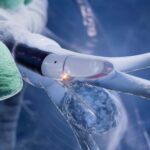
- Biopsy: Using robotic bronchoscopy, a suspicious nodule is biopsied and evaluated in real time by pathologists.
- Staging: Endobronchial ultrasound (EBUS) is used to biopsy lymph nodes to determine if the cancer has spread.
- Localization: A small marker, known as a fiducial, is placed near the nodule to help the surgeon precisely locate the tumor.
- Resection: If the cancer is confirmed as early-stage, the surgeon proceeds with robotic resection to remove the tumor.
“From the time a nodule or spot is detected in the lung to the time it is treated, patients can often feel like they are playing ‘ping pong’ between different specialists,” said Reza Ronaghi, MD, an interventional pulmonologist and critical care physician at UCLA Health, in a news release. Ronaghi noted that the single-episode approach can reduce patient anxiety by condensing multiple procedures into a few hours.
Patient Selection and Efficiency
While the approach offers significant time savings, it is reserved for select patients. Eligibility is determined through preoperative evaluations, including computed tomography (CT) and positron emission tomography (PET) scans.
If staging during the procedure reveals that the cancer has already spread to the lymph nodes, surgeons may choose not to proceed with resection during that session. Burt explained that the model allows the healthcare team to use resources more efficiently and increases the capacity to care for more patients.
“Advances in robotic bronchoscopy and robotic surgery have allowed us to combine these procedures while keeping the approach minimally invasive,” said Ronaghi.