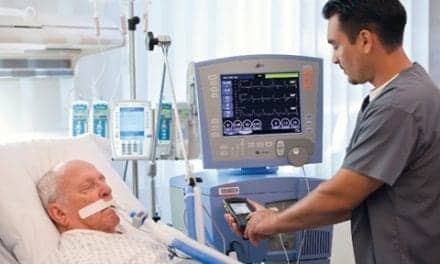
A New Jersey hospital reversed an upward trend of unplanned extubation rates and maintained the improvement for five years.
RT’s Three Key Takeaways:
- Risk-Based Algorithm: The project team implemented a three-level assessment tool to identify patients at high risk for self-extubation and targeted the specific moments that trigger those attempts.
- Enhanced Communication: New protocols included room signage to alert staff of high-risk patients, family education talking points, and the inclusion of risk status in all interprofessional handoff reports.
- Restraint Strategy: An analysis of unit data led clinicians to prioritize the use of mitten restraints, which were associated with significantly fewer accidental tube removals than other restraint types.
A nurse-led initiative at St. Joseph’s University Medical Center (Paterson, NJ) successfully reversed an upward trend of unplanned extubation rates and maintained the improvement for five years, according to an article published in Critical Care Nurse (CCN).
The rate of unplanned extubations in the 28-bed adult medical intensive care unit (MICU) peaked in the last quarter of 2018 at 2.0 per 100 ventilator days, nearly double the internal benchmark of 1.06. After implementing the initiative, the MICU brought the rate below 0.7 per 100 ventilator days and sustained that level through 2023.
Alyson Triolo, an advanced practice nurse, and Jennifer Ricker, a nurse manager in the MICU, led the development of the initiative with an interprofessional project team that included nurses, respiratory therapists, intensivists, and safety improvement coordinators.
“Our three-level algorithm of associated risk factors helped us identify which patients were at the highest risk for unplanned extubation, as well as the high-risk moments that may trigger an attempt to self-extubate,” said Triolo. “We also revised our standards of care for all patients receiving mechanical ventilation to mitigate ongoing risk factors and reinforce prevention.”
Staff awareness efforts included education on proper patient positioning and daily rounds by nurse leaders for all patients on mechanical ventilation. The team also placed signs outside patient rooms to alert staff of high-risk status and added that information to all handoff and interprofessional team reports.
The project team created talking points to help clinicians teach families what to do if a patient tries to remove an endotracheal tube. Bedside signs served as reminders for visitors to intervene and alert staff if a patient attempted to self-extubate.
Additional staff education on ventilator weaning, including spontaneous awakening and breathing trials, focused on liberating patients from the ventilator as quickly as possible. Of the 343 unplanned extubations recorded between 2018 and 2023, only 24% of patients required reintubation, which the authors noted underscores the importance of timely ventilator liberation.
A review of unit data also led to a decision to increase the use of mitten restraints, either alone or with wrist restraints. During the study period, 251 unplanned extubations occurred in patients using restraints, but only 12 of those events involved patients wearing mitten restraints.
The team treated every event as a learning opportunity, utilizing frontline team reviews, postevent huddles with feedback forms, and regular distribution of data.
“The focus on proper patient assessment for unplanned extubation risk has become ingrained in the unit’s culture, and the signs are now a visible part of the environment,” said Ricker. “This initiative integrated evidence-based interventions, communication, teamwork, and education to foster a culture of safety throughout the care we provide.”