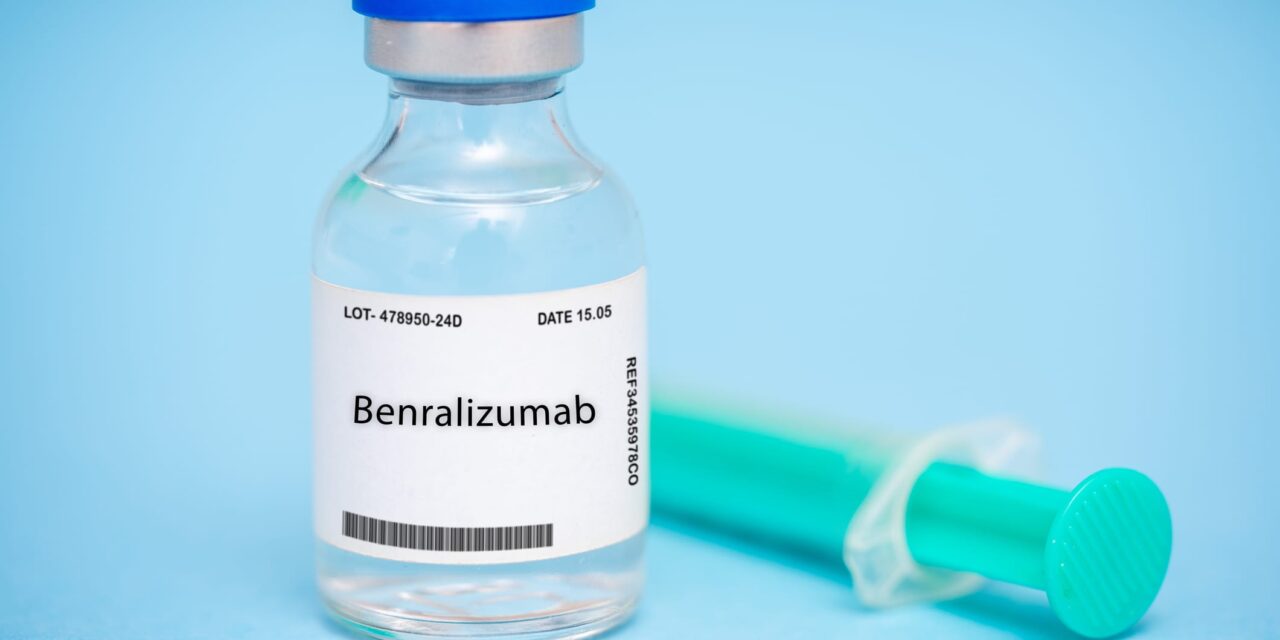
Benralizumab (Fasenra) is now indicated for adult and pediatric patients with hypereosinophilic syndrome to help reduce the risk of disease flares.
RT’s Three Key Takeaways:
- FDA Approval: The Food and Drug Administration (FDA) approved benralizumab for patients aged 12 and older with hypereosinophilic syndrome (HES) without an identifiable non-hematologic secondary cause.
- Flare Reduction: Data from the NATRON Phase III trial showed that treatment with benralizumab significantly reduced the risk of a first HES flare by 65% compared to a placebo.
- Clinical Administration: For the treatment of HES, the recommended dosage of the therapy is 30 mg administered via subcutaneous injection once every 4 weeks.
The US FDA has approved AstraZeneca’s benralizumab (Fasenra) for the treatment of adult and pediatric patients aged 12 years and older with hypereosinophilic syndrome (HES), according to the company.
The indication specifically covers patients with HES without an identifiable non-hematologic secondary cause. HES is a group of rare disorders characterized by persistently elevated levels of eosinophils, a type of white blood cell, in the blood. This elevation can lead to progressive organ or tissue damage and, if left untreated, may be fatal.
The FDA approval was based on results from the NATRON Phase III trial, which evaluated the efficacy and safety of the medication in patients with HES. In the trial, treatment with benralizumab delayed the time to the first HES flare and significantly reduced the risk of a first flare by 65% compared to placebo (HR 0.35; 95% CI: 0.18-0.69; P=0.0024).
“The approval of benralizumab for the treatment of HES is an important step forward for patients, providing an additional treatment option,” said Princess U. Ogbogu, division chief of pediatric allergy, immunology, and rheumatology at University Hospitals Rainbow Babies and Children’s Hospital and principal investigator of the NATRON trial, in a news release. “The study demonstrated meaningful reduction in flares while addressing fatigue, a symptom that may impact patients.”
For the treatment of HES, the recommended dosage of benralizumab is 30 mg administered subcutaneously once every 4 weeks. The most common adverse reactions reported in the NATRON study included headache, hypersensitivity reactions such as rash or urticaria, and influenza-like illness.
“People living with hypereosinophilic syndrome struggle every single day. Debilitating fatigue, risk of organ damage, skin manifestations, and other symptoms adversely impact patients’ lives, making it difficult to maintain normal daily activities, including work,” said Mary Jo Strobel, executive director of the American Partnership for Eosinophilic Disorders, in a news release. “Today’s news brings hope to these people and their families.”
The therapy targets eosinophilic-driven diseases and is already approved in the US as an add-on maintenance treatment for severe eosinophilic asthma in patients aged 6 years and older, as well as for the treatment of adults with eosinophilic granulomatosis with polyangiitis.
“This approval builds on Fasenra’s foundation in targeting eosinophilic-driven diseases,” said James Teague, vice president, US respiratory & immunology and vaccine & immune therapies, AstraZeneca, in a news release. “[It] has been shown to reduce flares in hypereosinophilic syndrome, addressing an important need in a population with significant disease burden and few targeted therapies.”