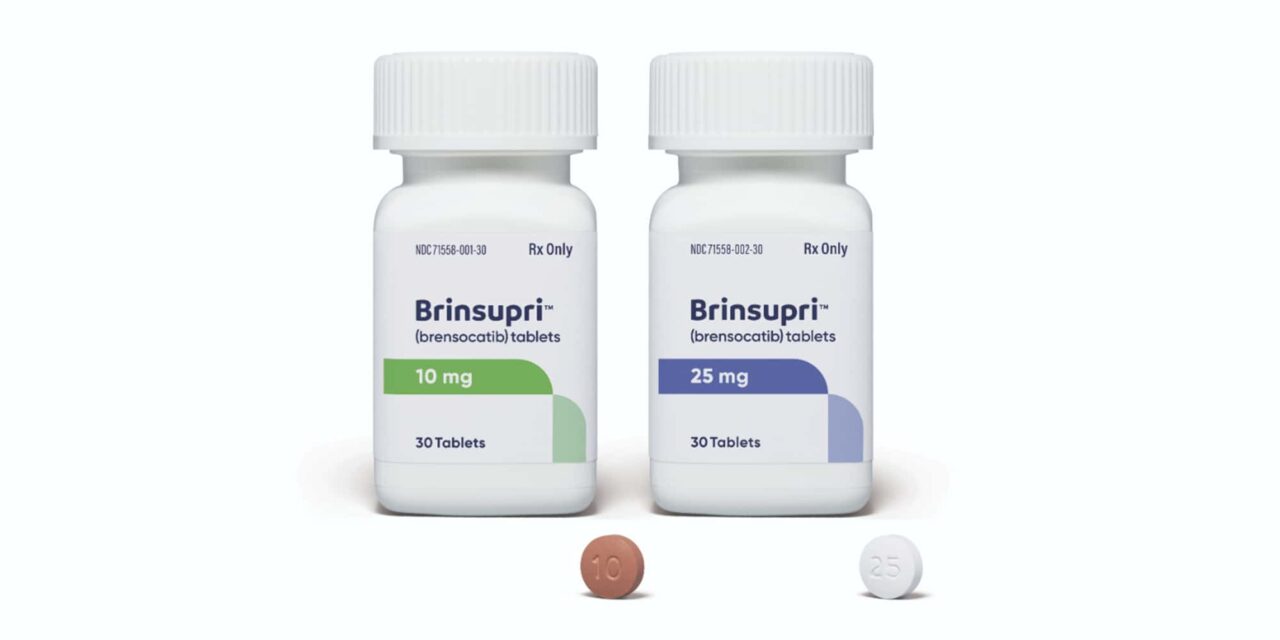
Brinsupri (brensocatib) is now the first and only authorized treatment for non-cystic fibrosis bronchiectasis in the EU for patients 12 and older with recurrent exacerbations.
RT’s Three Key Takeaways:
- First-in-Class Approval – The European Commission has approved Brinsupri as the first and only authorized treatment for non-cystic fibrosis bronchiectasis in the EU for patients ≥12 with recurrent exacerbations.
- Clinically Meaningful Benefits – Phase 3 ASPEN data showed that brensocatib 25 mg significantly reduced annual exacerbations, prolonged time to first exacerbation, improved lung function decline, and demonstrated a manageable safety profile.
- Major Milestone for Patients – The approval marks a major advancement for an underserved population and supports broader global regulatory reviews as Insmed works to secure patient access beginning in early 2026.
The European Commission approved Brinsupri (brensocatib 25 mg tablets) for the treatment of non-cystic fibrosis bronchiectasis (NCFB) in patients 12 years of age and older with two or more exacerbations in the prior 12 months, according to manufacturer Insmed Inc.
Brinsupri is a first-in-class therapy, offering the first and only approved treatment to date for NCFB in the European Union (EU). It was reviewed under accelerated assessment by the EMA as it is deemed to be of major interest for public health.2
NCFB is a chronic and progressive disease that can lead to permanent lung damage and lung function decline.i, iii Unlike other respiratory diseases that are characterized by airway narrowing, bronchiectasis causes airways to permanently widen, making it harder to clear mucus and bacteria, leading to persistent inflammation and infection.1,3 A hallmark of bronchiectasis is frequent exacerbations, or flares, when symptoms—such as coughing, increased mucus, shortness of breath and fatigue—worsen.4-5 An estimated 600,000 people in the EU are diagnosed with NCFB, with approximately two million additional people potentially undiagnosed.6-11
“Living with non-cystic fibrosis bronchiectasis profoundly alters daily life, taking a toll on both physical health and emotional well-being,” said ASPEN lead study investigator James Chalmers, MBChB, Ph.D., Professor and Consultant Respiratory Physician at the School of Medicine, University of Dundee, UK. “The European Commission’s approval represents a major milestone for patients and clinicians in Europe, offering a much-needed treatment that can help reduce exacerbations, potentially slow disease progression, and reshape the treatment landscape for this debilitating disease.”
This approval is based on a comprehensive scientific evaluation of the marketing authorization application, including data from the Phase 3 ASPEN and Phase 2 WILLOW studies, which were both published in the New England Journal of Medicine.12-13 In ASPEN, patients taking brensocatib 25 mg had a 19.4% reduction in annual rate of exacerbations, as compared to placebo.12 Brensocatib 25 mg also met several exacerbation-related secondary endpoints, including significantly prolonging the time to first exacerbation and significantly increasing the proportion of patients remaining exacerbation-free over the treatment period.12 Patients who received brensocatib 25 mg experienced statistically significant less decline in lung function, compared to placebo, as measured by forced expiratory volume in one second (FEV₁) after using a bronchodilator, at week 52.12 The safety was also evaluated in both studies. The most frequently reported adverse reactions are headache (9.2%), hyperkeratosis (5.9%), dermatitis (4.2%), rash (4.1%), upper respiratory tract infections (3.9%), and dry skin (3.0%).12-13
“At Insmed, our mission has always been to bring new therapies to underserved patient communities. With brensocatib, we now have the first treatment for non-cystic fibrosis bronchiectasis approved in the European Union—a historically overlooked population with long-standing unmet medical needs,” said Martina Flammer, MD, MBA, Chief Medical Officer of Insmed. “The accelerated approval reflects the strength of the data and the potential to become the new standard of care for treating patients with non-cystic fibrosis bronchiectasis who had at least two prior exacerbations. We are grateful to the patients, clinicians and partners who made this milestone possible.”
The EC approval follows a positive opinion from the Committee for Medicinal Products for Human Use of the European Medicines Agency (EMA) on 16 October 2025. Insmed will engage with authorities across the EU to secure access for eligible patients beginning in early 2026.
Applications for brensocatib are currently under review with the Medicines and Healthcare products Regulatory Agency in the UK and the Pharmaceuticals and Medical Devices Agency in Japan.
References from Insmed
- O’Donnell AE. Bronchiectasis—a clinical review. N Engl J Med. 2008;358(9):536–546 last accessed November 2025
- EMA. First treatment for serious chronic lung disease. Available at: https://www.ema.europa.eu/en/news/first-treatment-serious-chronic-lung-disease last accessed November 2025
- Flume PA, Chalmers JD, Olivier KN. Advances in bronchiectasis: endotyping, genetics, microbiome, and disease heterogeneity. Lancet. 2018 Sep 8;392(10150):880-890. doi: 10.1016/S0140-6736(18)31767-7. PMID: 30215383; PMCID: PMC6173801. last accessed November 2025
- Chalmers et al. Bronchiectasis in Europe: data on disease characteristics from the European Bronchiectasis registry (EMBARC). Lancet Respir Med 2023; https://doi.org/10.1016/S2213-2600(23)00093-0. Last accessed November 2025.
- NICE. Bronchiectasis (non-cystic fibrosis), acute exacerbation: antimicrobial prescribing. Available at https://www.nice.org.uk/guidance/ng117/documents/draft-guideline . Last accessed November 2025.
- IGES analysis (2024) of the InGeF claims data in Germany (2017-2022)
- Cegedim analysis (2024) of THIN® databases in France (2013-2022)
- IQVIA analysis (2024) of the LPD database (2017-2022)
- Cytel analysis (2024) of the Big-Pac database (2017-2023)
- CRA ‘Market Sizing’ market research, January 2023
- Insmed Analysis 2022: Potential Undiagnosed or Misdiagnosed (with COPD, Asthma) BE patients in US estimated based on Medical Experts driven insights, applied to Patient Level Claims Data
- Chalmers at al. Phase 3 Trial of the DPP-1 Inhibitor Brensocatib in Bronchiectasis. N Engl J Med 2025;392:1569-1581 DOI: 10.1056/NEJMoa2411664. https://www.nejm.org/doi/abs/10.1056/NEJMoa2411664. last accessed November 2025
- Chalmers et al. Phase 2 Trial of the DPP-1 Inhibitor Brensocatib in Bronchiectasis. N Engl J Med 2020;383(22):2127-2137. https://www.nejm.org/doi/full/10.1056/NEJMoa2021713. last accessed November 2025