The expanded clearance allows clinicians to use additional monitoring parameters for all patient populations and applications.
RT’s Three Key Takeaways:
- Expanded Regulatory Clearance: The Food and Drug Administration (FDA) has granted 510(k) clearance for delta hemoglobin parameters in Masimo O3 Regional Oximetry for use in neonatal, pediatric, and adult patients.
- Enhanced Clinical Insight: The monitoring of relative changes in hemoglobin components allows healthcare providers to identify the specific physiological reasons for changes in tissue oxygen saturation in cerebral and somatic applications.
- Multimodal Monitoring Integration: The integration of O3 with the Root platform provides a “multimodal view of the brain” when used alongside brain function monitoring, said Basil Matta, MD.
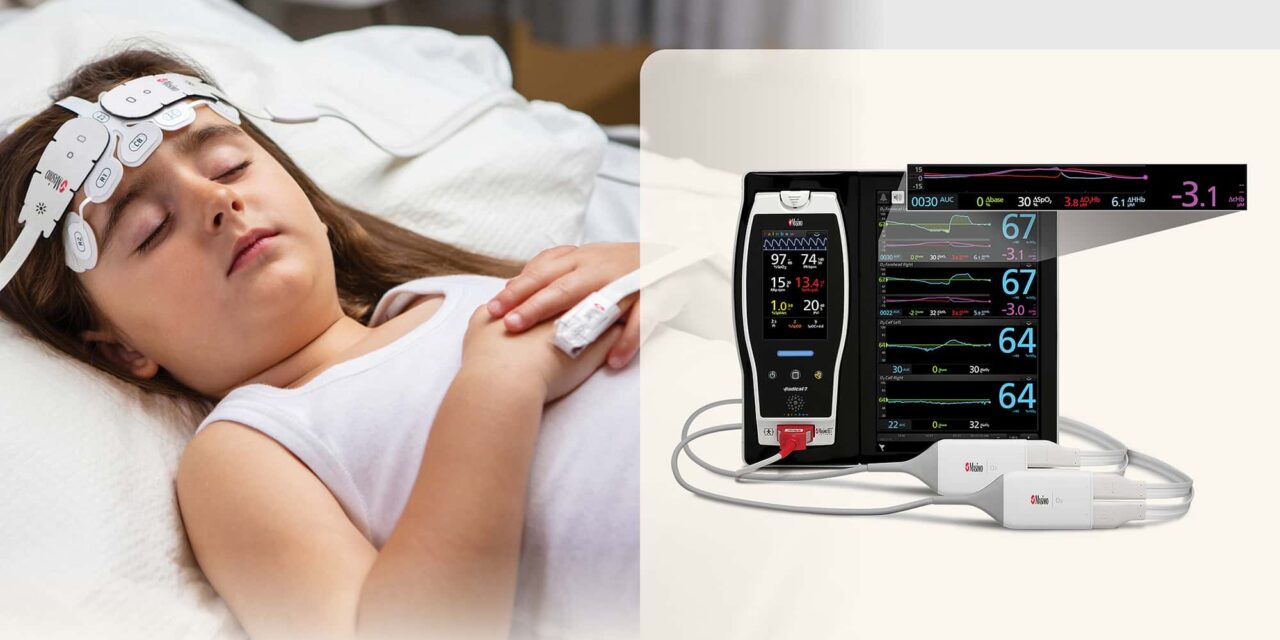
Masimo O3 Regional Oximetry is FDA-cleared for delta hemoglobin parameters, which include ΔcHb, ΔHHb, and ΔO2Hb, and are now available for both cerebral and somatic applications across all patient populations, including pediatric and neonatal patients.
O3 Regional Oximetry is available on the Root patient monitoring and connectivity platform. It utilizes near-infrared spectroscopy (NIRS) to monitor and display continuous regional oxygen saturation (rSO2) values in specific tissues. While rSO2 indicates the balance between oxygen delivery and metabolic demand, it may not always reveal the specific reason for an imbalance.
The addition of delta hemoglobin parameters allows clinicians to gain insight into why rSO2 is changing by monitoring relative changes in total hemoglobin (cHb), deoxygenated hemoglobin (HHb), and oxygenated hemoglobin (O2Hb). These data points support clinical assessments and interventions aimed at improving patient care.
Each parameter provides context for assessing various physiological conditions. For example, venous congestion, which is a slowing or pooling of blood, has been associated with negative outcomes like the failure of reconstructive flaps and can increase total hemoglobin in tissue, according to the company.
The delta hemoglobin parameters have been used in clinical practice and studied in various settings. A 2024 randomized controlled trial in Korea examined how these parameters could improve the maintenance of cerebral physiology in elderly patients undergoing surgery with general anesthesia. Researchers found that using this approach “may be crucial for ensuring optimal management of cerebral physiology” in this population.
These findings align with a 2022 article in Anesthesia & Analgesia regarding cardiac surgery. Researchers noted that traditional cerebral oximeters are limited because they cannot reveal the exact cause of cerebral desaturation. In contrast, the researchers determined that variations in ΔHHb, ΔO2Hb, and ΔcHb can be used to characterize desaturation based on changes in cerebral metabolism, oxygen blood content, arterial blood flow, and venous congestion.
“Ensuring vital organs and tissues are receiving enough oxygen to meet their metabolic needs is the cornerstone of optimal anesthesia and critical care,” said Basil Matta, MD, senior vice president of global clinical affairs and solutions for Masimo, in a news release. “Masimo Root with O3 and SedLine is a true Brain Health Platform and provides a truly multimodal view of the brain.”
The O3 system uses proprietary technology to provide trending and absolute accuracy. With the latest FDA clearance, these insights are now available for all applications and populations to support the physiology of individual patients.
Source:
- https://respiratory-therapy.com/products-treatment/monitoring-treatment/patient-monitoring-products/fda-expands-clearance-for-masimo-o3-regional-oximetry/
- https://www.masimo.com/technology/brain-monitoring/cerebral-oximetry/