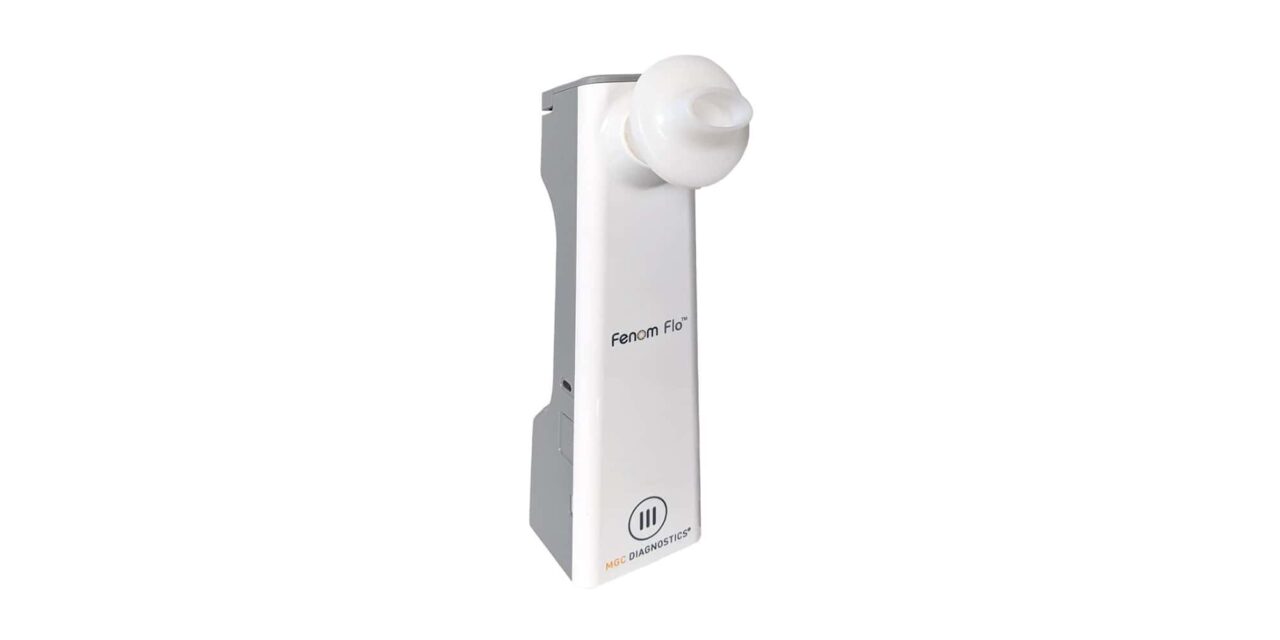
The handheld Fenom Flo allows for a 6-second breath test to measure airway inflammation in adults and children.
RT’s Three Key Takeaways:
- Six-Second Test: The device is the only portable fractional exhaled nitric oxide (FeNO) monitor approved for a 6-second breath maneuver, making it suitable for patients aged 7 years and older.
- Enhanced Portability: The handheld design allows healthcare professionals to conduct respiratory assessments in outpatient clinics and exam rooms without the need for fixed laboratory equipment.
- Clinical Utility: The system provides objective measurement of airway inflammation as an adjunct to clinical assessment, particularly for populations that struggle with longer exhalations.
MGC Diagnostics has announced the US availability of Fenom Flo, a handheld device designed for the objective measurement of fractional exhaled nitric oxide (FeNO), according to the company. The device is currently the only portable FeNO monitor approved for a 6-second breath test in adult and pediatric patients aged 7 years and older, according to MGC.
The device provides noninvasive, point-of-care FeNO measurement through a simplified breath maneuver. The shorter 6-second test is intended to enable testing for patients who may have difficulty with longer exhalations, such as pediatric or other difficult-to-test populations, the company stated.
“The US launch of Fenom Flo represents an important expansion of our respiratory diagnostics portfolio,” said Raul Carreras, president of MGC Diagnostics, in a news release. “By combining an Food and Drug Administration (FDA)-approved 6-second breath maneuver with true portability, Fenom Flo supports point-of-care FeNO testing and reflects our commitment to delivering clinically meaningful innovation for real-world care settings.”
According to MGC Diagnostics, traditional FeNO systems often rely on fixed laboratory setups or longer breath maneuvers. Fenom Flo is designed for use during routine patient visits in exam rooms and outpatient clinics without the need for specimen collection, preparation, or specialized laboratory space.
The system is intended to support respiratory evaluation across various practice settings as an adjunct to established clinical assessment. The introduction of the device reflects a focus on increasing access to objective respiratory insights through patient-friendly diagnostic solutions, according to the news release.