Patients who fail to meet initial Medicare adherence thresholds for CPAP therapy often continue to benefit from therapy after one year.
RT’s Three Key Takeaways:
- Adherence Prediction: Research indicates that poor early usage of CPAP devices does not accurately predict whether a patient will successfully continue therapy in the long-term.
- Medicare Thresholds: Current coverage policies requiring four hours of nightly use within the first 90 days may result in patients losing access to effective treatment, according to study authors.
- Clinical Benefit: Patients who used CPAP for at least two hours a night showed improvement in symptoms, even if they did not meet the official four-hour adherence mark.
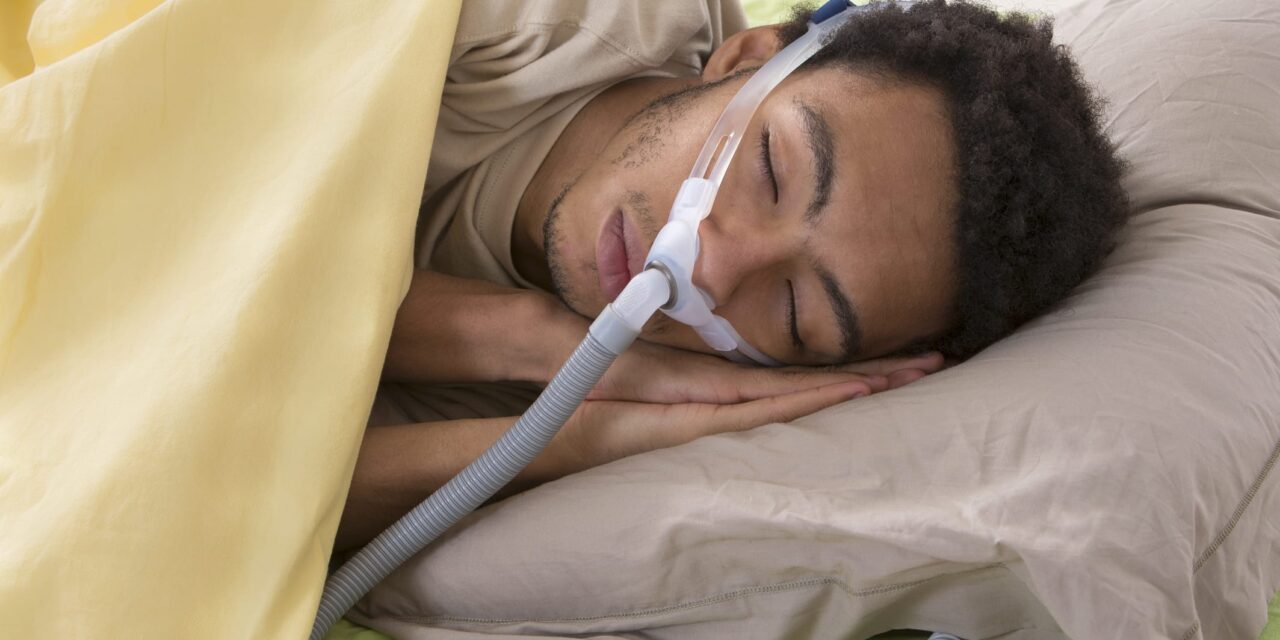
Many patients who initially struggle with continuous positive airway pressure (CPAP) therapy go on to use the devices successfully over the long-term, according to data presented at ATS 2026.
The findings challenge the Centers for Medicare and Medicaid Services (CMS) policy that requires patients with obstructive sleep apnea (OSA) to use CPAP for at least four hours a night on 70% of nights during a 30-day window within the first 90 days to maintain coverage.
Patients who do not meet these early-use thresholds often lose insurance coverage for their devices, which may prevent them from accessing effective treatment, said first author Dennis Hwang, a sleep and pulmonary physician at Kaiser Permanente Southern California.
“Our findings suggest clinicians and policymakers should not rely solely on Medicare-defined adherence, given its reliance on early CPAP use and an arbitrary four-hour threshold, when making long-term treatment decisions,” said Hwang. “Extending support and coverage beyond the first 90 days could help more patients achieve meaningful benefit.”
For the study, researchers analyzed data from more than 132,000 patients treated for OSA within the Kaiser Permanente Southern California healthcare system. Unlike many other systems, this network provides CPAP devices to patients regardless of whether they meet the CMS early-use threshold.
The analysis found that 51% of patients failed to meet the 90-day Medicare criteria for continued use. However, more than one-third of the patients who did not meet those early criteria were still using CPAP therapy one year later.
Hwang noted that even patients who did not meet the four-hour threshold were using the devices for at least two hours a night. This level of use is known to improve symptoms of sleep apnea, suggesting that early nonadherence is not synonymous with treatment failure, according to the study.
“These findings challenge a long-standing assumption in clinical practice and policy,” said Hwang. “While clinicians know some patients take time to adapt, the scale of continued use we observed in those that did not initially meet Medicare adherence was striking.”
The research team plans to conduct additional studies to identify which patients are most likely to become long-term users and to evaluate healthcare coverage policies that focus on patient outcomes rather than usage thresholds, according to Hwang.
More information
Session/Presentation: D97
When Treatment Meets Reality: Outcomes, Adherence, and Policy in Sleep Apnea Management
Reevaluating the Centers for Medicare and Medicaid Services 90-Day CPAP Adherence Requirement: Persistent Use Among Early Nonadherent Patients
Date and Time: 12:12 pm, May 20, 2026
Location: W312 (Level III, OCCC West Concourse)