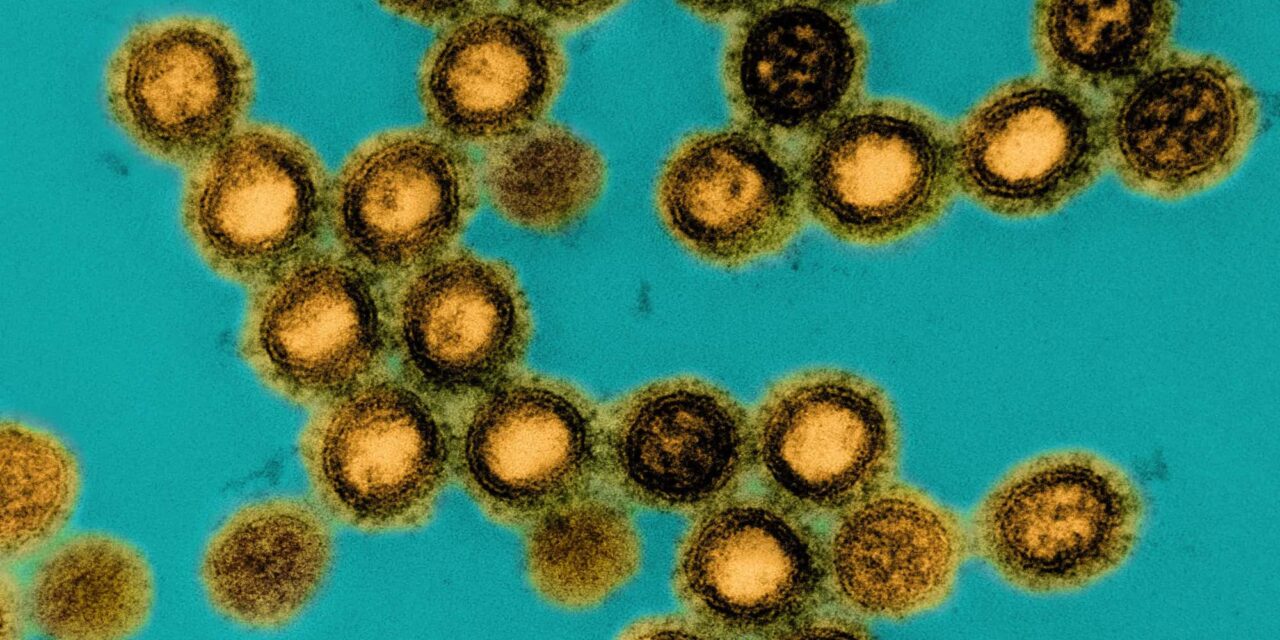
New research indicates that influenza D replicates in human respiratory tissue as effectively as influenza A, raising concerns about potential zoonotic transmission.
RT’s Three Key Takeaways:
- Spillover Potential: Genetically distinct strains of influenza D isolated from cattle and pigs replicate in human respiratory cells as effectively as influenza A viruses.
- Immune System Evasion: Influenza D does not trigger a robust antiviral immune response in human cells, potentially allowing the virus to replicate at high levels without detection.
- Surveillance Importance: Researchers suggest that monitoring the evolution of influenza D in animal hosts is necessary to prepare for potential future human emergence.
The influenza D virus can vigorously replicate in human cells and lung tissue samples, according to a study published in Proceedings of the National Academy of Sciences (PNAS).
The findings suggest the virus has a strong potential to spill over to humans. While influenza D antibodies have been identified in some cattle workers, no active human infections have been documented since the virus was first detected in animals in 2011.
“All of the viruses, despite their genetic distance from each other, had similar replicative capacity in these human cells and human tissues,” said Cody Warren, assistant professor of veterinary biosciences at The Ohio State University, in a news release.
Researchers tested several genetically different strains of influenza D isolated from cattle and pigs. The results showed these strains were as effective at replicating in human respiratory tract cells as influenza A viruses, which are responsible for seasonal illness and historic pandemics.
“It seems like there are many animal species that are susceptible to influenza D viruses, suggesting that maybe they can evolve differently in different hosts,” Warren said. “What’s obvious is that zoonotic infections are happening.”
The study utilized patient-derived lung epithelial cells to mimic the human airway. The team compared the growth of influenza types D and A in both human and swine lung tissues, finding that both viruses replicated efficiently in tissues from both species.
A key difference identified in the study was the immune response. Unlike influenza A, influenza D did not stimulate a robust interferon response in infected human cells. Interferon is a protein that typically produces inflammation and symptoms like fever to help the body fight infection.
“The virus replicates to really high levels but doesn’t elicit a robust interferon response. Would it behave differently in the body of a person versus in these cell or tissue-based systems? That’s up for debate,” Warren said.
The influenza D strains from pigs were collected during surveillance for swine flu led by Andrew Bowman, professor of veterinary preventive medicine at Ohio State.
“Flu D popped up in our samples and that led us to question what the risk is at the human-animal interface,” said Andrew Bowman, professor of veterinary preventive medicine at Ohio State, in a news release.
While cattle are considered the primary host for influenza D, researchers are investigating the role of pigs as a potential secondary host where the virus could adapt to become more transmissible in humans.
“Causing disease in some host species makes us somewhat concerned about what it might do in humans,” Bowman said. “It may not cause disease in this particular form, but in an evolved form, there may be that potential.”
The study was supported by the US Department of Agriculture, the National Institute of Allergy and Infectious Diseases (NIAID), and the National Institutes of Health (NIH).