UT Southwestern researchers identified a bacterial molecule that activates airway nerves to trigger coughing.
RT’s Three Key Takeaways:
- Bacterial Cough Mechanism: Researchers discovered that a tuberculosis molecule called phenolic glycolipid activates sensory nerves to trigger coughing, particularly in highly transmissible strains of the infection.
- Nerve Sensitization Pathway: The molecule stimulates the release of adenosine triphosphate, which acts on P2X3 nerve receptors and makes airway sensory nerves more excitable to routine exposures.
- Potential Treatment Target: In laboratory testing, the chronic cough drug gefapixant significantly reduced the neuronal response to the bacterial molecule, suggesting a possible method to ease symptoms and reduce transmission alongside standard antibiotics.
A molecule produced by highly transmissible strains of tuberculosis (TB) bacteria directly activates sensory nerves and triggers coughing, according to a study led by researchers at UT Southwestern Medical Center published in Nature Microbiology. The findings uncover a signaling pathway that could be targeted with existing chronic cough therapies, offering a potential strategy to relieve TB symptoms and reduce airborne spread.
Persistent cough is a primary symptom of pulmonary TB and represents the main route of transmission, as coughing expels infectious bacteria into the air. According to the study, TB remains the leading cause of death worldwide from a single infectious agent, while the existing Bacille Calmette-Guérin vaccine offers inconsistent protection against pulmonary TB in adolescents and adults.
“Tuberculosis can be deadly and can cause lasting damage to the lungs and other organs, even after successful treatment. If we understand how to intervene in TB transmission, it could have a substantial impact on the number of new cases,” said Michael Shiloh, MD, PhD, professor of internal medicine and microbiology at UT Southwestern Medical Center.
Identifying the Bacterial Trigger
Dr Shiloh and his team previously identified sulfolipid-1, a TB-produced molecule that stimulates sensory nerves to induce coughing. In the latest study, led by first author Kubra F Naqvi, PhD, a postdoctoral researcher at UT Southwestern, the investigators identified phenolic glycolipid (PGL) as a second and more potent sensory nerve activator. PGL is produced by select strains of TB, including HN878, which is recognized for high virulence and transmission rates.
When tested on sensory nerve cells isolated from mouse models and human donors, PGL activated cells from both sources and altered the electrical state of human nerve cells, increasing their excitability. Preclinical models exposed to aerosolized PGL demonstrated that inhalation of the molecule alone was sufficient to provoke cough, while combined exposure to PGL and sulfolipid-1 generated greater nerve activation than either substance independently.
“Every breath can bring irritants into the airways. By making sensory nerves more excitable, PGL could make otherwise harmless exposures more likely to provoke a cough,” said Shiloh.
Targeting the Receptor Pathway
The research team demonstrated that PGL triggers the release of adenosine triphosphate (ATP), which acts as an extracellular signaling molecule to stimulate P2X3 receptors located on sensory nerves, initiating the neural cough reflex.
To determine whether this reflex could be interrupted pharmacologically, the investigators applied gefapixant, a therapeutic agent that blocks P2X3 receptors. The drug significantly attenuated the cellular response to PGL. Gefapixant is currently approved in the European Union (EU) for adult patients diagnosed with unexplained or refractory chronic cough.
“Our finding that gefapixant reduces the neuronal response to PGL provides a rationale for testing drugs like it against TB-associated cough. If effective during infection, such treatment could potentially relieve symptoms and reduce infectious spread when used alongside antibiotics,” said Shiloh, professor of internal medicine.
The research was supported by grants from the National Institutes of Health, the Burroughs Wellcome Fund, The Welch Foundation, and the Nederlandse Organisatie voor Wetenschappelijk Onderzoek.
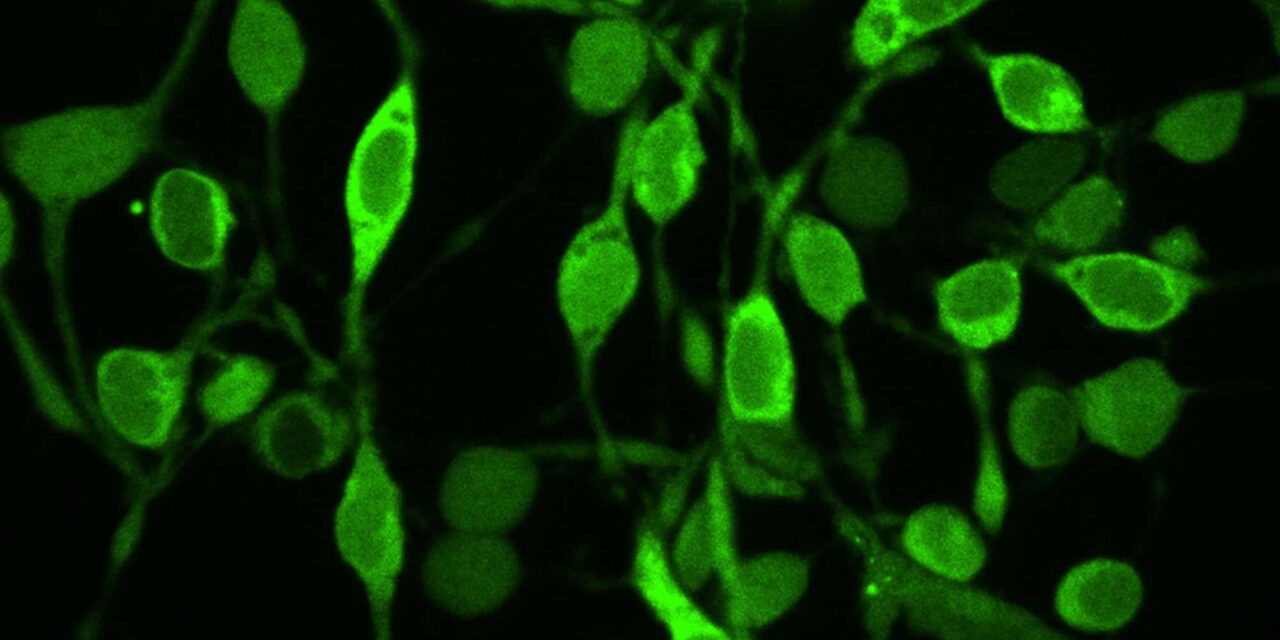
Image: This fluorescence microscopy image shows cultured sensory nerve cells exposed to sulfolipid-1. The green signal comes from a calcium-sensitive fluorescent indicator used to monitor neuronal responses. Credit: UT Southwestern