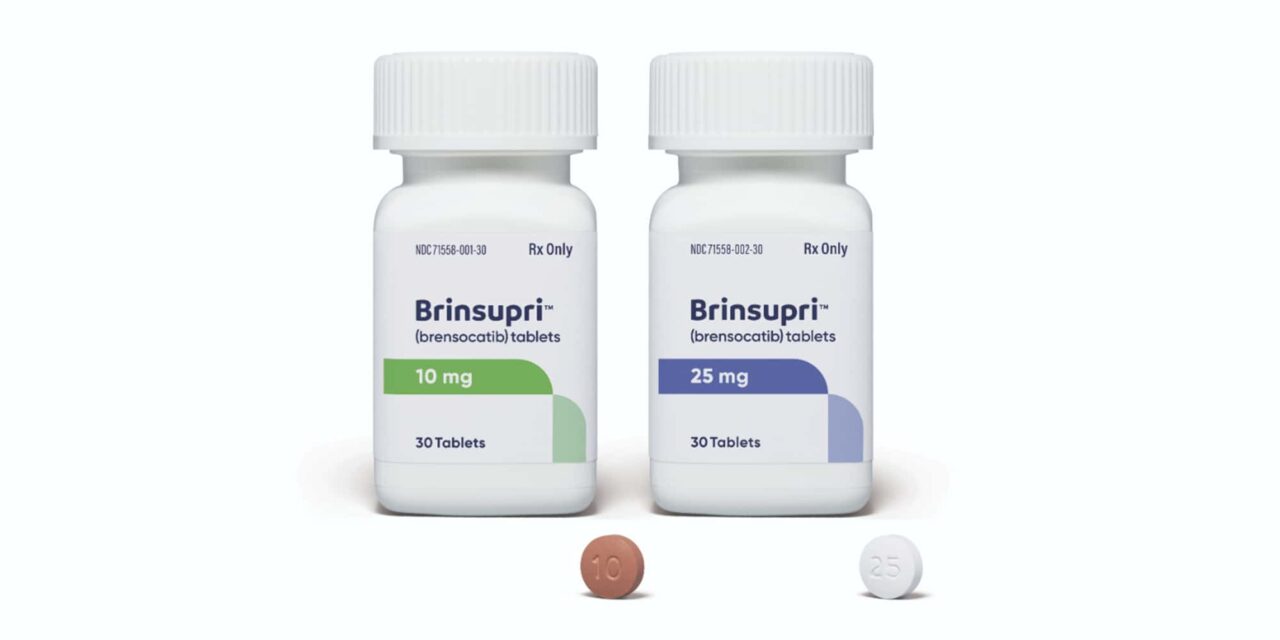
The phase 3 ASPEN trial revealed brensocatib (Brinsupri) 10 mg and 25 mg significantly reduced bronchiectasis exacerbations, prolonged time to first exacerbation, and improved quality-of-life scores.
RT’s Three Key Takeaways:
- Brensocatib efficacy: In the phase 3 ASPEN trial, brensocatib 10 mg and 25 mg significantly reduced pulmonary exacerbations, prolonged time to first exacerbation, and improved quality-of-life scores versus placebo in patients with non-cystic fibrosis bronchiectasis.
- Lung function preservation: Treatment with brensocatib slowed decline in FEV₁ and FVC and improved respiratory symptom scores, indicating sustained lung function benefits over 52 weeks.
- Consistent benefit in Asian patients: Subgroup analysis showed that Asian participants experienced similar efficacy and safety outcomes as the overall ASPEN population, reinforcing brensocatib’s potential across diverse patient groups.
In patients with non-cystic fibrosis bronchiectasis, brensocatib, an oral, selective, reversible inhibitor of dipeptidyl peptidase 1 (DPP1), reduced pulmonary exacerbations and improved symptoms compared with placebo, according to results from the phase 3 ASPEN trial.
Neutrophilic inflammation is a key driver of disease progression in non-cystic fibrosis bronchiectasis, contributing to lung damage and worsening outcomes. Brensocatib is a DPP1 inhibitor that prevents activation of neutrophil serine proteases—key mediators of tissue injury and inflammation.
The FDA approved brensocatib (Brinsupri) in August 2025 as an oral, once-daily treatment for non-cystic fibrosis bronchiectasis (NCFB) in adults and children 12 years and older.
In the phase 3, randomized, double-blind ASPEN trial (NCT04594369), brensocatib 10 mg and 25 mg significantly reduced the annualized rate of pulmonary exacerbations (PEx) and prolonged the time to first exacerbation versus placebo. This post hoc analysis evaluated the effect of brensocatib on symptom burden in patients who did or did not experience on-study pulmonary exacerbations.
The ASPEN trial enrolled adults (18–85 years) and adolescents (12–<18 years) with bronchiectasis and a history of ≥2 (adults) or ≥1 (adolescents) pulmonary exacerbations in the 12 months before screening. Participants were randomized to once-daily brensocatib 10 mg, brensocatib 25 mg, or placebo for 52 weeks. This post hoc analysis compared outcomes based on presence or absence of on-study exacerbations, including changes in Quality of Life–Bronchiectasis Respiratory Symptoms Domain (QOL-B RSS), FEV₁, and forced vital capacity (FVC) at Week 52.
Results show that Asian patients (n=191/1721) had a mean age of 64.0 years, were mostly female (59.2%), and 35.6% had ≥3 exacerbations in the prior 12 months. A larger proportion of Asian patients experienced ≥3 exacerbations in the prior 12 months vs the overall ASPEN population (n=502; 29.2%).
At baseline, Asian patients had higher postbronchodilator %-predicted FEV1 (mean [SD]; 81.6 [24.8]), less inhaled steroid use (37.7%), and higher macrolide use (39.3%) vs the overall ASPEN population (mean [SD]; 73.5 [23.4], 58.1%, and 19.1%, respectively).
Brensocatib reduced the annualized exacerbation rate (rate ratio [95% CI] 10mg: 0.40 [0.23-0.67]; 25mg: 0.41 [0.24-0.70]), prolonged time to first exacerbation (hazard ratio [95% CI] 10mg: 0.45 [0.26-0.77], 25mg: 0.47 [0.27-0.82]), and increased the odds of remaining exacerbation-free (odds ratio [95% CI] 10mg: 3.29 [1.46-7.40]; 25mg: 3.19 [1.43-7.13]) vs placebo.
Brensocatib reduced FEV1 decline (week 52 least squares mean (LSmean) difference in mL vs placebo [95% CI] 10mg: 18 [-27-63]; 25mg: 69 [24-114]). Brensocatib improved QOL-B RSS at week 52 vs placebo (LSmean difference vs placebo [95% CI] 10mg: 5.74 [0.66-10.82]; 25mg: 7.49 [2.48-12.50]). Brensocatib reduced FVC decline (week 52 LSmean difference in mL vs placebo [95% CI] 10mg: 97 [20-174]; 25mg: 123 [50-196]). Adverse events were similar across treatment groups and consistent with overall ASPEN results.
“Brensocatib is a selective, reversible DPP1 inhibitor that directly targets neutrophilmediated inflammation,” said Doreen Addrizzo-Harris, MD, FCCP, lead researcher and CHEST 2025 presenter. “These results demonstrate that brensocatib has a positive impact in Asian patients with bronchiectasis, consistent with the general ASPEN population, despite differences in baseline characteristics, leading to further understanding of bronchiectasis treatment in this population.”
Consistent with the overall ASPEN population, brensocatib reduced exacerbations, improved symptoms, and slowed lung function decline, including among patients of Asian race—helping to expand understanding of bronchiectasis treatment in diverse populations. Further results will be shared at the CHEST Annual Meeting 2025 as part of the Bronchiectasis and CF Scientific Abstract Original Investigation Posters titled, Efficacy and Safety of Brensocatib in Patients of Asian Race With Non-Cystic Fibrosis Bronchiectasis: A Subgroup Analysis of the Aspen Trial.
Source: Chest