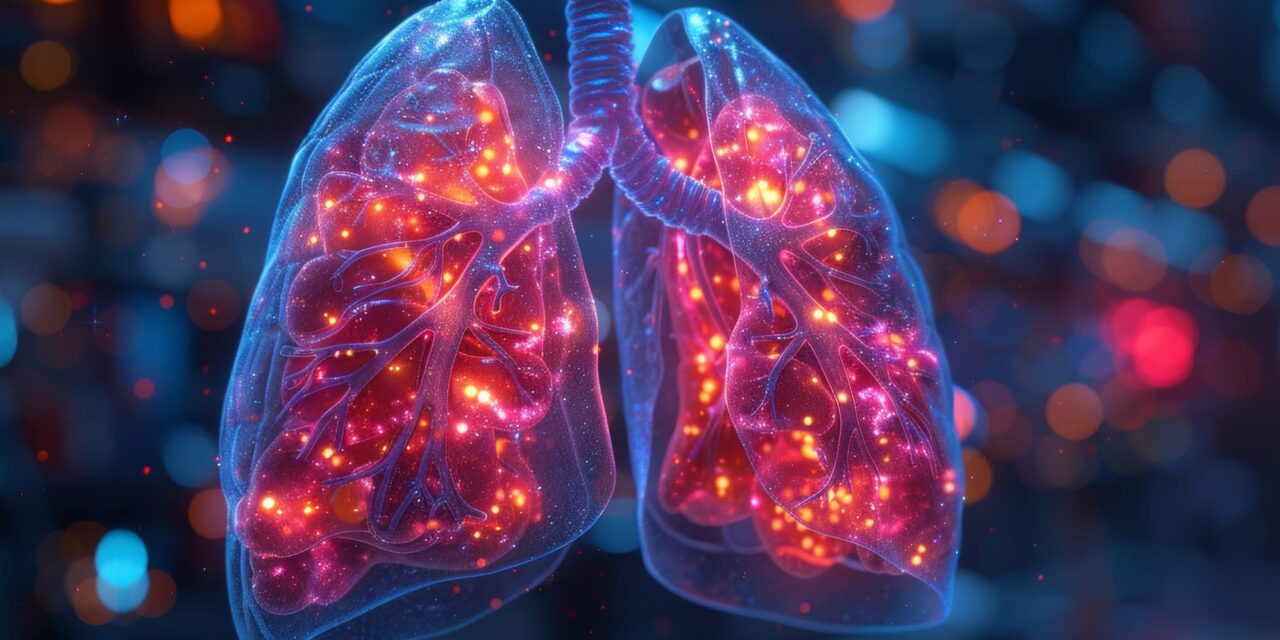
Researchers at Adelaide University developed a lipid-polymer vehicle that improves drug bioavailability and reduces systemic toxicity in preclinical models of lung cancer.
RT’s Three Key Takeaways:
- Increased Bioavailability: The hybrid nanoparticles improve the delivery of lung cancer medications by more than 30-fold while reducing exposure to healthy organs.
- Targeted Delivery: The delivery vehicle helps drugs circulate longer and directs them specifically to the lungs, preventing the liver from filtering out the treatment before it reaches the tumor.
- Future Clinical Applications: While currently in early-stage development, the researchers intend to move toward clinical trials to establish a new generation of precision treatments for lung cancer and other diseases.
Adelaide University researchers developed a nanoparticle delivery vehicle that precisely targets cancer drugs to the lungs, according to data published in the Journal of Controlled Release.
The hybrid nanoparticles, funded by Cancer Council SA and Tour de Cure, improve how cancer drugs behave in the body by increasing their bioavailability more than 30-fold while reducing exposure to healthy organs.
“One of the major challenges in treating lung cancer is that many drugs don’t stay in the body long enough, or they spread to healthy organs and cause toxic side effects,” said Paul Joyce, senior research fellow. “Normally, much of a drug ends up in the liver – the body’s filtering system – instead of reaching the lungs.”
The nanoparticles are composed of a combination of lipids and polymers, which are materials already utilized in various medicines. This vehicle encapsulates RB-012, a lung cancer drug. During laboratory experiments and preclinical models, the research team monitored how long the drug remained in the bloodstream, its travel path through the body, and its effectiveness in reaching lung tumors.
“We’ve developed nanoparticles that act like a delivery vehicle, helping the drug circulate for longer and directing it to the lungs, where it can have the greatest impact,” said Joyce. “The nanoparticles ensure that more of the drug actually gets to where it’s needed – instead of being lost in the body – or affecting other organs.”
In preclinical testing, the nanoparticle-delivered drug demonstrated stronger tumor-killing effects compared to the drug administered on its own. Joyce compared standard drug administration to pouring water into a leaky bucket, whereas the nanoparticle method acts as a seal that keeps 30 times more of the treatment inside.
“By improving how cancer drugs are delivered, we can potentially increase effectiveness while reducing harm to healthy tissue,” said Joyce.
The researchers noted that the project is currently in early-stage development. The next steps involve testing the nanoparticles in advanced preclinical models to confirm safety and effectiveness before moving toward clinical trials. If successful, the team suggested the approach could lead to new precision treatments for lung cancer and other diseases requiring targeted drug delivery. This development represents a potential shift in how healthcare providers may eventually manage lung cancer treatment.