Research using lung-on-a-chip technology shows that mechanical stress from asthma attacks causes tissue damage independently of inflammation.
RT’s Three Key Takeaways:
- Mechanical Tissue Remodeling: Researchers found that the mechanical stress from asthma attacks causes permanent changes to airway tissues, including fibrosis and angiogenesis, independent of inflammation.
- Extracellular Matrix Overproduction: The study showed that repeated mechanical forces during an attack lead to an overproduction of proteins in the extracellular matrix that connects cells.
- Lung-on-a-Chip Technology: Scientists used advanced microfluidic devices to replicate human lung conditions and test how medications might modulate cellular activity during an attack.
Asthma attacks induce mechanical forces that permanently alter airway tissue, causing damage that occurs independently of inflammation, according to research published in Nature Biomedical Engineering,
The study, led by researchers at Binghamton University, used lung-on-a-chip technology to demonstrate that repeated mechanical stress from asthma attacks triggers an overproduction of proteins for the extracellular matrix, which joins cells together. While asthma is typically associated with chronic lung inflammation caused by allergens, air pollution, and weather conditions, this research highlights a lesser-studied side effect of the physical forces involved in an attack.
“This is the first time that anyone has demonstrated the effect of a mechanical process on tissue remodeling — including both fibrosis and angiogenesis — in asthma patients,” said Jungwook “Jay” Paek, assistant professor at Binghamton University.
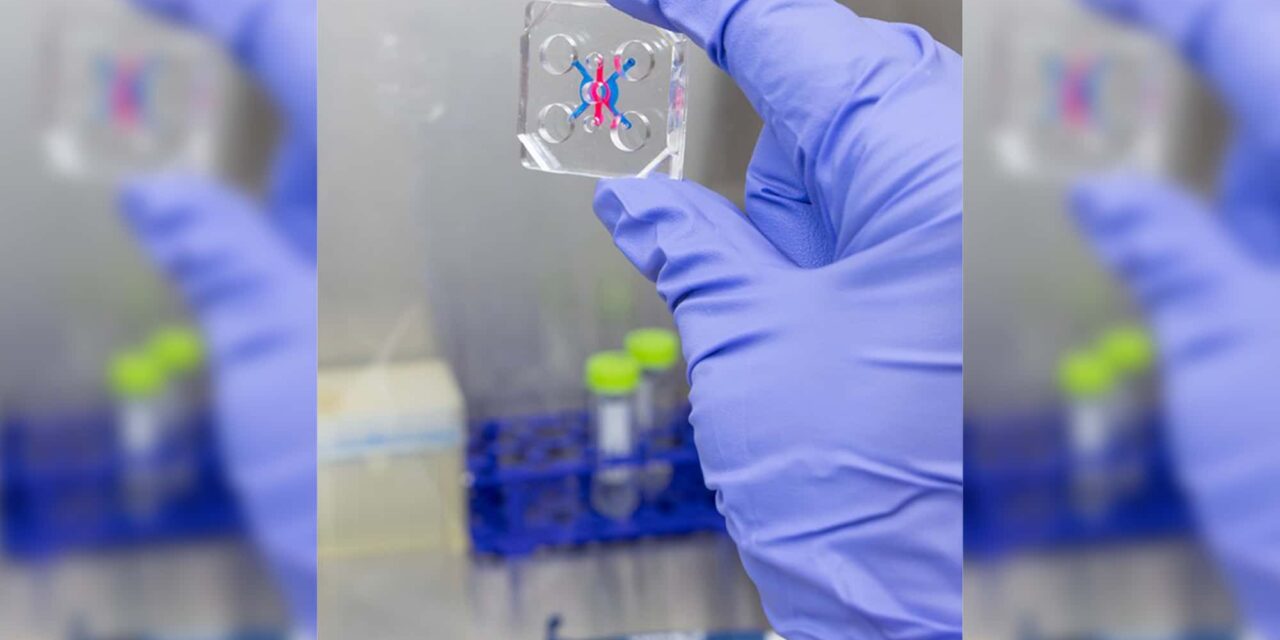
Approximately 25 million people in the US are diagnosed with asthma, a condition that can lead to coughing, wheezing, and shortness of breath. To study the impact of these symptoms on a cellular level, researchers utilized organ-on-a-chip technology. This method uses microfabrication techniques to reproduce human physiological conditions using a small culture of cells.
The research team built a microfluidic device that allowed the tissue to undergo structural deformation by pressurizing or evacuating a connecting chamber. This setup enabled the team to observe how airway tissues react specifically to mechanical forces.
“With this technology, we can see how our human body actually functions when asthma attacks happen,” said Anika Alim, PhD student at Binghamton University.
During the study, researchers also tested the potential for medication delivery to modulate cellular activity. These observations may lay the foundation for future asthma treatments that address tissue remodeling.
“This technology is at the intersection of biological science, biomedical engineering, electrical engineering, and mechanical engineering,” said Paek, who collaborated on the study with researchers from the University of Pennsylvania, the University of Toledo, and the Pacific Northwest National Laboratory.
Paek’s broader research at Binghamton University also includes investigations into Parkinson’s disease and other neurodegenerative conditions, supported by a grant from the National Institutes of Health (NIH).
Image: Assistant Professor Jungwook “Jay” Paek uses organ-on-a-chip technology to research biological systems. Credit: Binghamton University