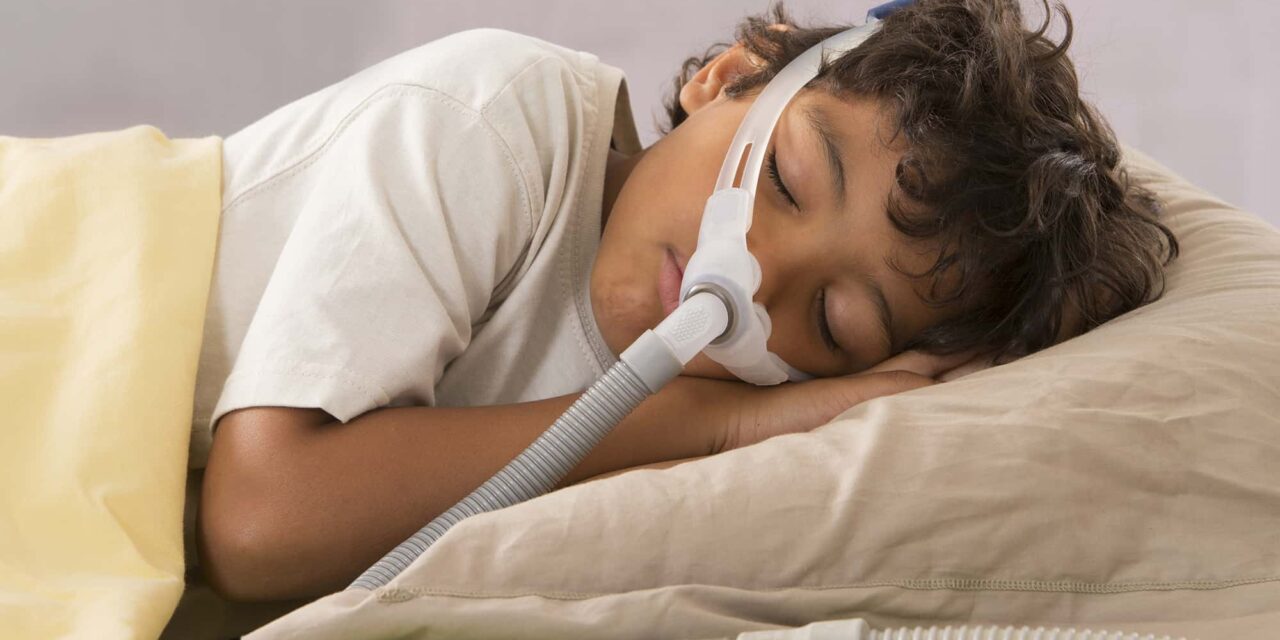
Secondhand tobacco smoke increased sleep interruptions in pediatric patients, even when traditional apnea measures remain unchanged.
RT’s Three Key Takeaways:
- Increased Sleep Fragmentation: Children exposed to environmental tobacco smoke exhibited a 67% higher arousal index compared to unexposed children, indicating significant interruptions in sleep continuity.
- Biomarker Correlation: Higher urinary cotinine levels were significantly associated with shorter total sleep time and lower sleep efficiency, providing a more objective measure of exposure than parental reports.
- Respiratory Independence: The study suggests that secondhand smoke impairs sleep quality through nicotine’s effect on arousal pathways and airway inflammation, independent of oxygen desaturation or respiratory event frequency.
Secondhand tobacco smoke is associated with greater sleep fragmentation in children evaluated for suspected sleep-disordered breathing, according to a prospective study published in Scientific Reports.
Researchers evaluated 30 children between the ages of 1 and 12 who were referred for suspected sleep-disordered breathing. The cohort had a mean age of 5.8 years, and approximately 73% were boys. The study utilized overnight polysomnography and urinary cotinine testing to measure exposure and sleep quality. Cotinine is a nicotine metabolite used as a biological marker of tobacco smoke exposure.
Children exposed to environmental tobacco smoke had a 67% higher arousal index than unexposed children. While average sleep duration and efficiency did not differ significantly between the groups in initial comparisons, analyses based on urinary cotinine revealed measurable associations. Higher cotinine concentrations correlated with shorter total sleep time and lower sleep efficiency.
The findings suggest that secondhand smoke may impair sleep quality independently of respiratory event frequency or oxygen desaturation. Environmental tobacco smoke was not associated with the apnea–hypopnea index, oxygen desaturation index, mean oxygen saturation, or lowest recorded oxygen saturation.
The researchers proposed that nicotine could influence arousal pathways and circadian regulation, while tobacco smoke-related airway inflammation may also contribute to disrupted sleep.
The study also highlighted a discrepancy in reported exposure. Nearly half of the children had at least one parent who smoked, and 82% of those parents reported smoking at least 10 cigarettes daily. However, 60% of those parents denied that their child experienced environmental tobacco smoke exposure. Urinary cotinine levels correlated with parent-reported exposure, supporting the use of biomarkers for objective assessment in healthcare settings.
The researchers noted that the findings support the routine assessment of environmental tobacco smoke exposure when evaluating children for suspected sleep disorders. Reducing exposure may offer a modifiable approach to improving pediatric sleep quality, even when conventional apnea measures are unchanged.
The study was limited by a small sample size, the inclusion of only nonobese children, and reliance on a single laboratory night. Additionally, medical factors such as asthma, atopy, prematurity, and medication use were not documented.
Reference
Arwas N et al. Environmental tobacco smoke and sleep fragmentation in children with suspected sleep apnea. Sci Rep. 2026;16:21616.
This article was originally published by AMJ and was made available under the terms of the Creative Commons Attribution-Non Commercial 4.0 License.