The Exsalta system uses low-flow technology to remove secretions from breathing tubes while reducing the risk of lung damage and low oxygen levels.
RT’s Three Key Takeaways:
- Low-Flow Technology: The device maintains a fixed flow rate to remove secretions without causing alveolar collapse or hypoxia.
- Clinical Performance: Research involving mechanically ventilated neonates showed that the system led to higher oxygen saturation levels and fewer instances of bradycardia compared to traditional wall suction.
- Regulatory Clearance: The Food and Drug Administration cleared the microprocessor-controlled tabletop device for use in clearing endotracheal tube secretions.
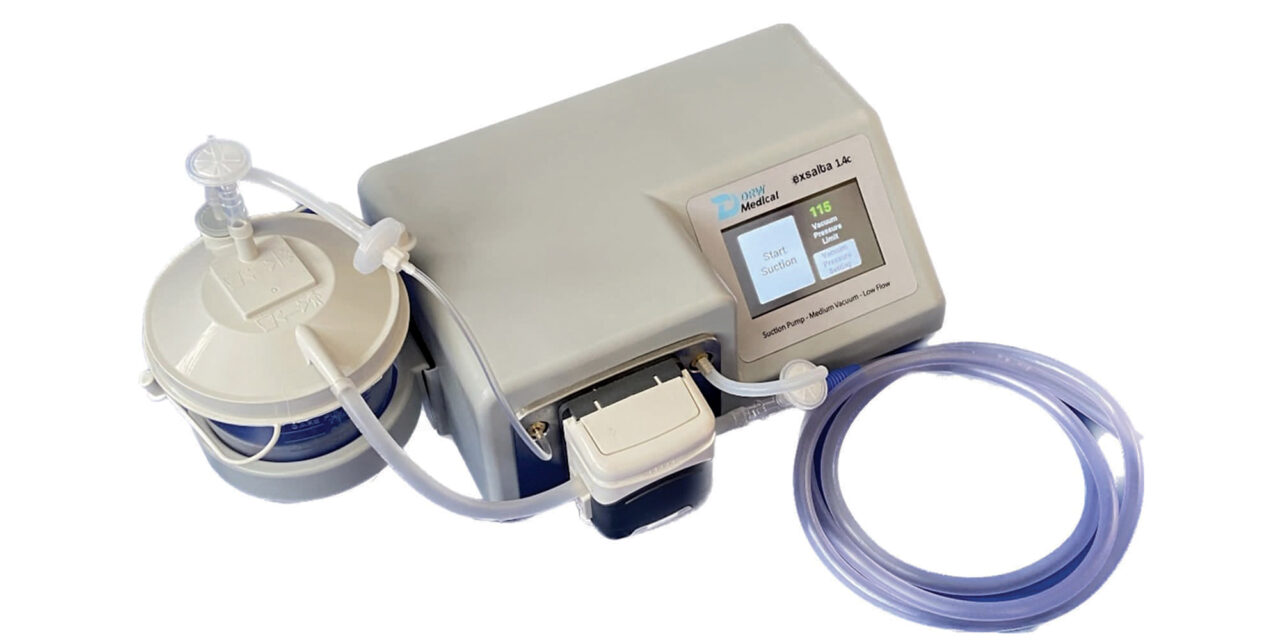
DRW Medical’s Exsalta secretion clearance device is an FDA-cleared peristaltic suction system designed to clear secretions from an endotracheal tube (ETT) for patients on ventilators. The microprocessor-controlled tabletop device uses a fixed flow rate of 1.4 liters per minute to move fluids to a collection canister. This low-flow technology is intended to reduce the risk of negative pressures in the lungs, which can lead to alveolar collapse and hypoxia.
Traditional wall suctioning often generates airflow between 4 and 24 liters per minute depending on the catheter size and regulator settings. This high flow can pull air from the lungs along with secretions, potentially causing desaturation, bradycardia, and airway mucosal damage. EXSALTA allows clinicians to select a vacuum level that remains independent of the flow rate, providing more control over the evacuation process.
Clinical evidence presented at the Pediatric Academic Societies meeting in April 2026 supported the use of the device in the neonatal intensive care unit. A study of 10 mechanically ventilated neonates compared the device to conventional wall suction across 40 crossover procedures. The study found that secretion withdrawal with the device resulted in significantly higher oxygen saturation, a lower incidence of bradycardia, and a shorter time to return to baseline oxygen levels.
The authors concluded that the controlled low flow “allows for effective removal of secretions while avoiding unnecessary negative pressure and preserving lung volume,” according to the study findings.
Additional research conducted at Texas State University compared the device to wall suction across ETT sizes ranging from 2.0mm to 8.0mm. The bench study found that the system generated significantly lower airflow and negative airway pressure while removing an equivalent amount of sputum compared to traditional methods.
The device is currently available for healthcare providers and is intended for patients in whom standard suctioning procedures may cause adverse events, such as tachycardia or atelectasis.
Source:
- https://respiratory-therapy.com/products-treatment/monitoring-treatment/therapy-devices/fda-clears-exsalta-secretion-clearance-device/
- https://www.drwmedical.com/products/exsalta/