Cryospray Improved Chronic Bronchitis Symptoms
Patients with chronic bronchitis experienced better quality of life and fewer severe hospitalizations after Metered CryoSpray (MCS) therapy.


Patients with chronic bronchitis experienced better quality of life and fewer severe hospitalizations after Metered CryoSpray (MCS) therapy.

Patients with chronic bronchitis experienced better quality of life and fewer severe hospitalizations after Metered CryoSpray (MCS) therapy.
Read More
The FDA’s Expedited Investigational New Drug (IND) Pilot pairs drug sponsors with research institutions to reduce startup delays for early human studies.
Read More
The American Lung Association initiative seeks to address mistrust, reduce disparities, and expand lung cancer trial participation among underrepresented patient populations.
Read More
A multiyear clinical trial found that OM-85 did not reduce severe wheezing episodes or early childhood asthma diagnoses.
Read More
A clinical trial will evaluate a weekly dry powder nasal spray’s ability to boost natural defenses and prevent asthma infections.
Read More
The BEST-BE observational study will track 1,000 bronchiectasis patients to measure the impact of brensocatib on pulmonary exacerbations and patient quality of life.
Read More
The multicenter study will evaluate an artificial intelligence module designed for rapid tissue assessment during bronchoscopic procedures.
Read More
Results from the HOPE-3 trial found that an investigational cell therapy called deramiocel preserved heart and muscle function in boys and young men with Duchenne muscular dystrophy (DMD).
Read More
Windward Bio is evaluating WIN378, a monoclonal antibody designed for twice-yearly dosing in patients with moderate-to-severe COPD.
Read More
Grifols enrolled the first patient in its Phase 3 SWIFT-SC clinical trial to evaluate its subcutaneous Alpha1-Proteinase Inhibitor for the treatment of alpha1-antitrypsin (AAT) deficiency.
Read More
Enanta Pharma advanced zelicapavir into a registrational Phase 2b/3 clinical trial for adults at high risk of severe RSV outcomes.
Read More
Insilico Medicine initiated a Phase 3 clinical trial for Rentosertib, an oral medication discovered using artificial intelligence to treat idiopathic pulmonary fibrosis (IPF).
Read More
Once-daily treprostinil palmitil inhalation powder improved exercise capacity and reduced mortality risk for pulmonary arterial hypertension.
Read More
Phase 3 clinical trial data shows improvements in walking distance and duration for patients with autoimmune pulmonary alveolar proteinosis treated with inhaled molgramostim.
Read More
Phase 3 trial results show ralinepag significantly reduced the risk of worsening symptoms and improved exercise capacity in pulmonary arterial hypertension patients.
Read More
Phase 3 trial results show significant reductions in clinical worsening and acute exacerbations for patients with idiopathic pulmonary fibrosis (IPF).
Read More
Phase 1 data for the investigational inhaled nitric oxide therapy Alx1 demonstrated the treatment was well tolerated with no serious side effects in healthy volunteers.
Read More
AERO-007 demonstrated significant lung function improvements over 24 hours in patients with moderate-to-severe COPD.
Read More
Phase 2 data for efdoralprin alfa demonstrate the recombinant protein maintains normal protein levels with less frequent dosing than current standards of care for patients with alpha-1 antitrypsin deficiency (AATD)-related emphysema.
Read More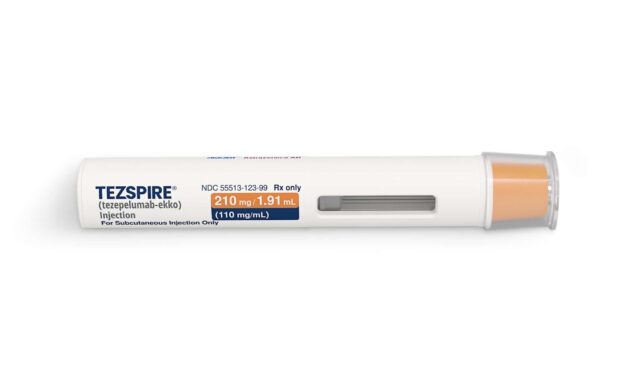
A new study shows tezepelumab (Tezspire) reduced asthma exacerbations by 70% across all patient subgroups, including smokers and those with comorbid conditions.
Read More
Enanta Pharmaceuticals will present data on its RSV therapy zelicapavir and on EPS-3903, an oral STAT6 inhibitor, at ATS 2026.
Read More
Data from clinical trials investigating treatments for pulmonary hypertension and pulmonary fibrosis will be highlighted at ATS 2026.
Read More
The once-weekly INNA-051 treatment from ENA Respiratory aims to prime the immune system to protect high-risk patients from influenza, RSV, and other respiratory viruses.
Read More
The COPD-OMA trial will examine if the asthma drug omalizumab (Xolair) benefits COPD patients with sensitivities to indoor allergens.
Read More