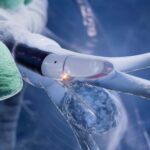

The minimally invasive procedure utilizes a single incision to remove tumors, potentially reducing recovery time and postoperative pain.
RT’s Three Key Takeaways:
- Single-Port Technology: UT Southwestern is the first in North Texas to implement single-port robotic-assisted thoracoscopic lobectomy for select patients with early-stage lung cancer.
- Enhanced Recovery: By using a single inch-long incision below the rib cage, the procedure may facilitate shorter hospital stays and reduced postoperative pain compared to traditional methods.
- Precision Imaging: The surgical team utilizes 3D reconstruction and near-infrared technology to localize lung nodules that are not visible with standard imaging.
UT Southwestern Medical Center is the first healthcare provider in North Texas to offer single-port robotic-assisted thoracoscopic lobectomy, a minimally invasive procedure for select patients with early-stage lung cancer, according to the organization.
Since March, surgeons at UT Southwestern have performed 13 single-port pulmonary resections, including lobectomies and segmentectomies. These procedures utilize the da Vinci SP, a single-port robotic surgical system that received FDA clearance in 2024 for certain urologic and thoracoscopic procedures. The platform allows surgeons to remove tumors and surrounding tissue through a single inch-long incision below the rib cage.
“Our goal is to provide patients with lung cancer an efficient, complete, and timely treatment pathway. Adopting this new technology is a welcome extension of our comprehensive thoracic oncology program,” said Takashi Eguchi, MD, PhD, assistant professor of cardiovascular and thoracic surgery at UT Southwestern.
The procedure is performed by Eguchi and Aitua Salami, MD, MPH, assistant professor of cardiovascular and thoracic surgery and a member of the Harold C Simmons Cancer Center at UT Southwestern.
To ensure precise resections, the thoracic surgeons use advanced imaging techniques, including 3D reconstruction and near-infrared technology. These tools help localize lung nodules that may not be visible using traditional white light imaging.
“When we see patients with suspicious lung nodules, we implement an accelerated treatment pathway,” said Salami. “In some cases, we can move patients from nodule identification to definitive treatment within a few days, compared to several weeks or months at lower-volume centers.”
For select patients, the single-port technique may lead to earlier recovery, shorter hospital stays, reduced pain, and a lower risk of specific postoperative complications.
“Patients may experience less pain after single-port robotic resection because we access the lung below the rib cage instead of through the chest,” said Salami.
The institution emphasizes that lung cancer is highly treatable when diagnosed at an early stage and managed by a multidisciplinary team.
“At UT Southwestern, thoracic surgery, interventional pulmonology, medical, and radiation oncology are integrated into one team, ensuring that every patient gets an individualized treatment plan,” said Eguchi. “Offering single-port lobectomy expands our treatment options and supports our goal of delivering precise, individualized care.”