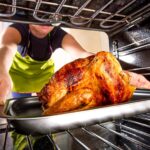
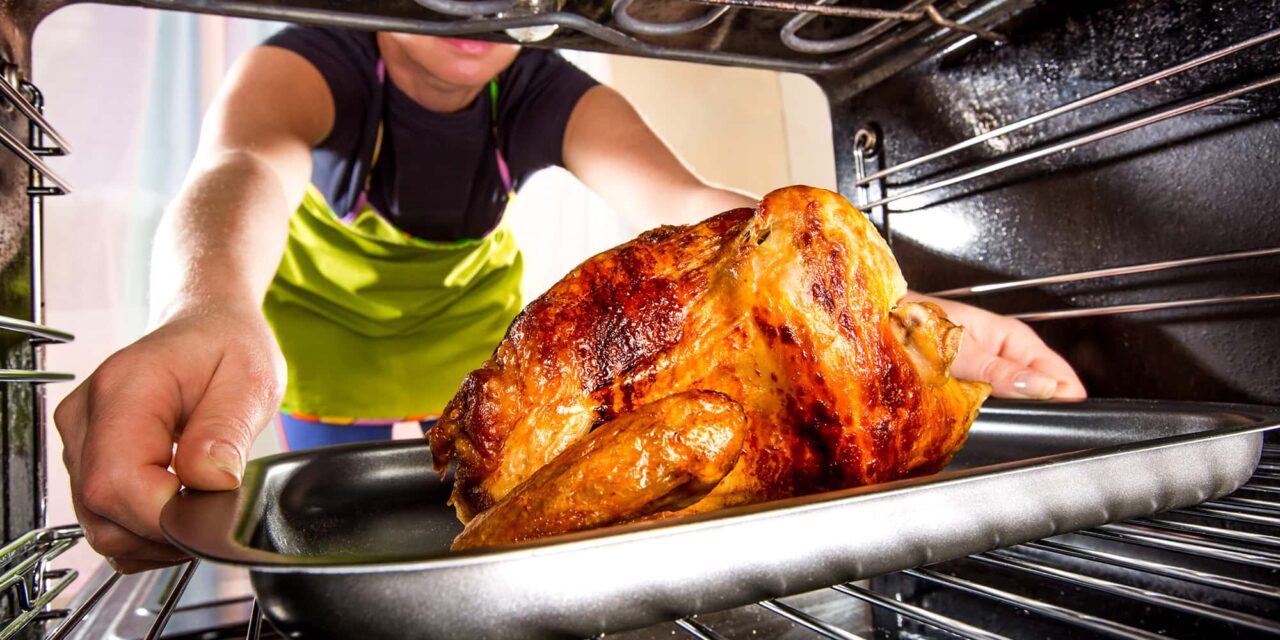
Preparing large meals like Thanksgiving dinner can release high levels of particulate matter and chemical pollutants that irritate the respiratory system.
RT’s Three Key Takeaways:
- Elevated Particulate Matter: Preparing a traditional holiday dinner can generate particulate matter concentrations that exceed health-based air quality standards.
- Respiratory Irritation Risks: Extended exposure to high concentrations of cooking emissions and gas combustion byproducts can trigger respiratory symptoms, such as coughing and shortness of breath.
- Ventilation Mitigation Measures: Running kitchen exhaust fans on high settings, opening windows, and utilizing portable air purifiers can substantially reduce airborne pollutants during prolonged meal preparation.
Preparing a holiday dinner can introduce severe indoor air pollution into residential settings, according to Virginia Tech researchers Marina Vance and Linsey Marr. According to their research, cooking a full holiday meal can generate substantial quantities of particulate matter, reaching concentrations that exceed established health-based air quality standards.
“It can be like a smoggy day caused by emissions from industry and vehicles,” said Marr, an air quality expert and university distinguished professor at Virginia Tech. “But it’s inside your home and comes from cooking emissions instead.”
According to Marr, airborne particles stem primarily from fats and oils released into the air as food heats in ovens or on stovetops. As these emissions cool, they condense into microscopic airborne particles that persist indoors.
The presence of gas cooking appliances further compounds exposure risks. “Natural gas stoves and ovens generate particles on their own, along with a gaseous pollutant, nitrogen dioxide,” said Marr.
At high concentrations, indoor air pollution can produce acute respiratory irritation, such as coughing and shortness of breath, presenting concerns for healthcare professionals and individuals managing underlying pulmonary diseases. Because holiday food preparation often extends over several hours, sustained kitchen emissions represent an important environmental respiratory challenge.
Emission levels correlate strongly with preparation techniques rather than purely the volume of food. “It depends more on the type of dishes and how they’re cooked than the number of them,” said Marr. “High-temperature frying, broiling, and roasting of dishes with high oil and fat content produce the highest emissions.”
To manage indoor exposure without overhauling cooking routines, Marr outlined several practical ventilation measures:
- Operate Exhaust Fans: Run your kitchen exhaust fan on its highest setting while cooking. If utilizing countertop appliances, such as toasters or air fryers, occupants should place them under the range hood during operation.
- Introduce Outdoor Air: Opening windows when weather conditions permit helps introduce fresh air, which aids in diluting indoor concentrations of airborne pollutants.
- Deploy Air Purifiers: Placing portable air purifiers inside or adjacent to the kitchen can capture airborne particulate matter during intensive cooking periods.
“A little ventilation and a few changes in how air moves through the kitchen can go a long way toward keeping the focus on the holiday instead of the indoor air pollution,” said Marr, a professor of civil and environmental engineering at Virginia Tech.