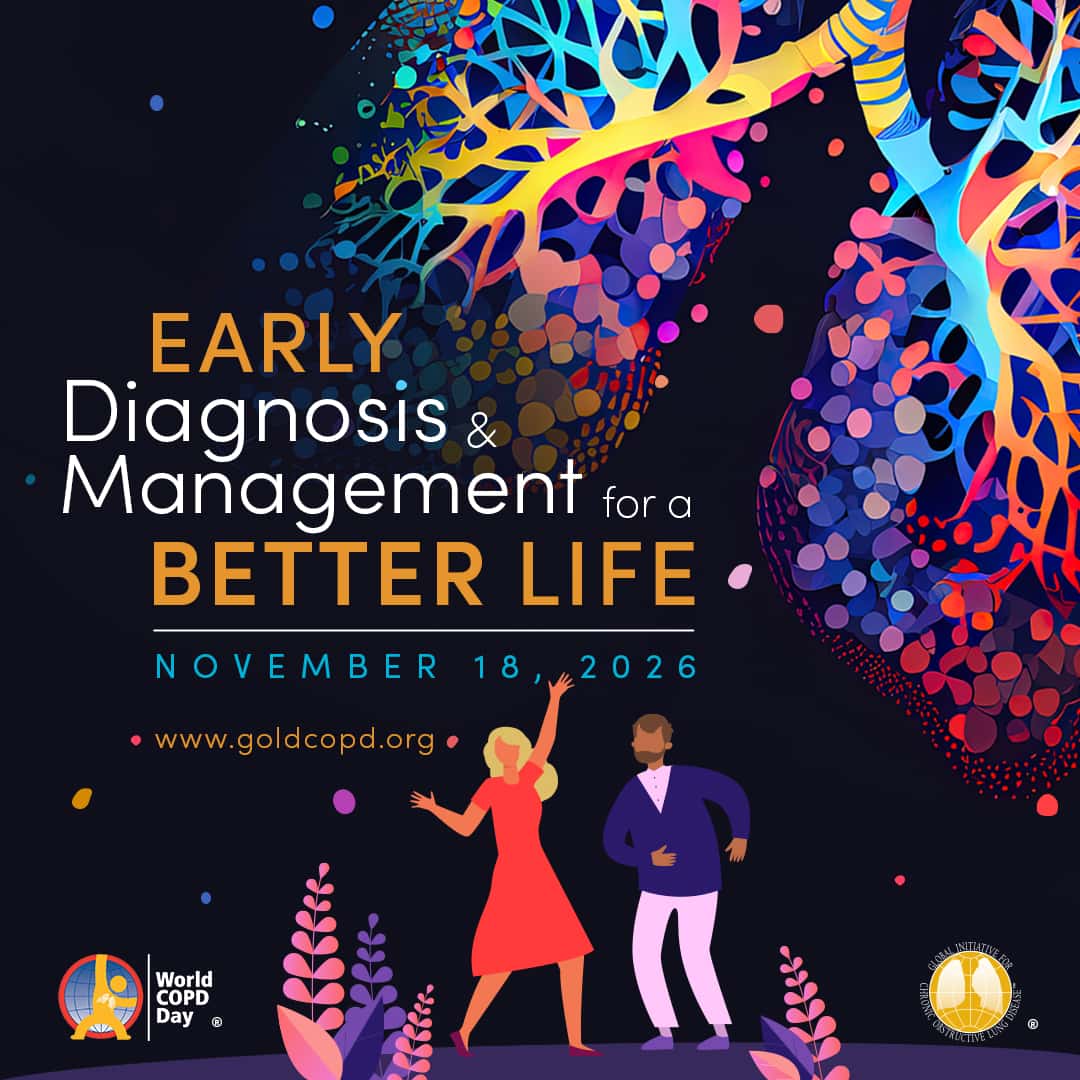
World COPD Day on November 18 highlights the importance of recognizing lung disease early and expanding access to diagnostic testing.
RT’s Three Key Takeaways:
- Global Awareness Campaign: World COPD Day takes place on November 18, 2026, centering on the theme “Early Diagnosis and Management for a Better Life” to combat widespread underdiagnosis and misdiagnosis of COPD.
- Early Intervention Value: Recognizing precursor conditions and non-tobacco environmental risk factors allows clinicians to initiate prompt bronchodilator therapy, smoking cessation support, and risk reduction to preserve lung function.
- Systemic Solutions: Addressing delayed diagnosis requires broader access to routine spirometry, expanded healthcare staff training in respiratory assessment, and public health policies addressing air quality and smoking rates.
The Global Initiative for Chronic Obstructive Lung Disease (GOLD) has designated “Early Diagnosis and Management for a Better Life” as the theme for World COPD Day on November 18, 2026, according to the organization.
Organized by GOLD in collaboration with healthcare professionals and patient groups worldwide, the annual event aims to raise awareness, share knowledge, and discuss strategies to reduce the global burden of COPD. First held in 2002, activities are now organized each year across more than 50 countries by healthcare professionals, educators, and community advocates, according to GOLD.
Addressing Diagnostic Delays and New Precursor Markers
According to GOLD, although COPD is common, preventable, and treatable, extensive underdiagnosis and misdiagnosis continue to delay medical management until advanced stages of the disease.
The organization noted that diagnostic delays stem from patient-, healthcare system-, and provider-related factors, including inaccurate symptom reporting by patients, limited resources to train staff in respiratory health within healthcare systems, and poor provider understanding of COPD diagnostic criteria.
GOLD highlighted that emerging evidence regarding environmental factors beyond tobacco smoking, early-life onset in younger individuals, and identified precursor conditions—such as pre-COPD and preserved ratio impaired spirometry (PRISm)—presents crucial new opportunities for prevention, early detection, and prompt intervention.
Improving Clinical Outcomes Through Earlier Care
Earlier diagnosis allows clinicians to implement evidence-based management strategies that alter long-term patient trajectories. According to GOLD, timely intervention in symptomatic individuals or those with evidence of airflow limitation can slow disease progression, reduce symptom burden, and prevent future exacerbations.
The organization stated that promptly initiating appropriate bronchodilator therapy, smoking cessation support, and risk-factor reduction measures can preserve lung function and enhance patient quality of life.
Stakeholder Steps Toward Better Respiratory Health
Because there is currently no cure for COPD, GOLD outlined specific actions across multiple sectors to improve disease management and long-term health outcomes:
- Patients and Families: Advocate for expanded clinical research and increased access to care, including routine spirometry screenings and remote telehealth services.
- Providers and Policymakers: Collaborate to increase access to spirometry testing and support its adoption as a routine health marker across all stages of life.
- Healthcare Systems: Expand academic training programs dedicated to respiratory health, and improve clinician education on diagnostic criteria, including the execution and interpretation of spirometry.
- Government Agencies: Implement public health measures to lower smoking rates, reduce fossil fuel reliance to improve ambient air quality, support clean energy transitions, and improve healthcare infrastructure for timely diagnosis and care.
More information is available on the GOLD website.