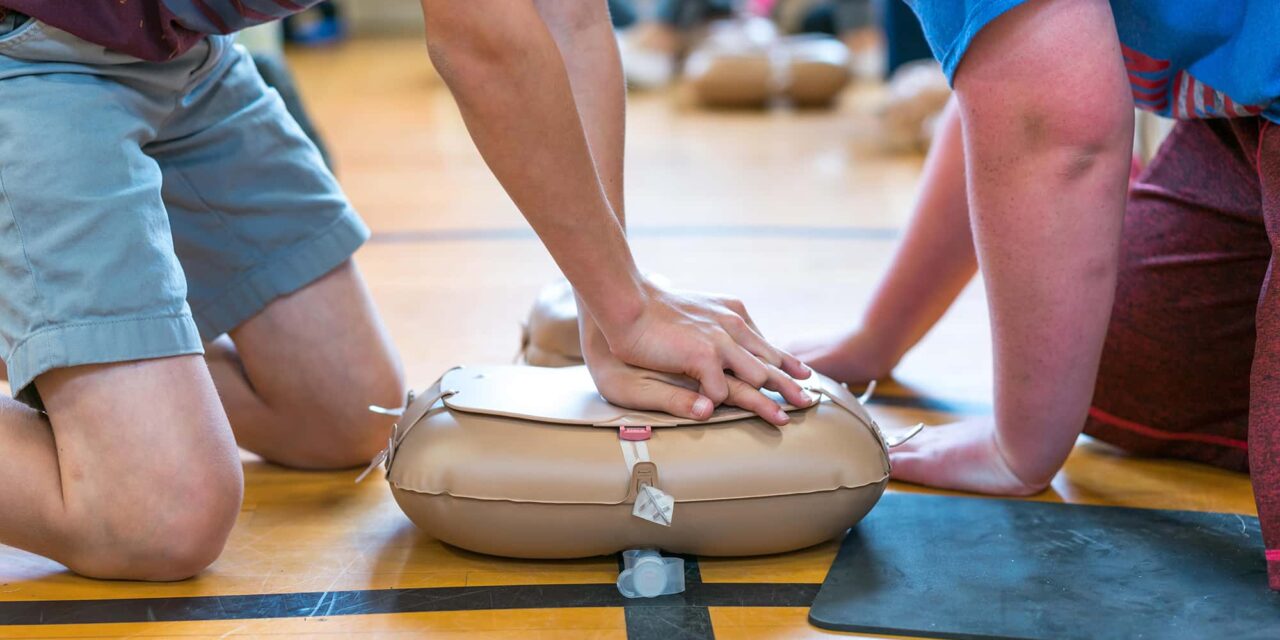
The Revive & Survive San Diego program trained 1,011,034 individuals in hands-only CPR between January 2024 and August 2026.
RT’s Three Key Takeaways
- Milestone Reached: The Revive & Survive San Diego program trained 1,011,034 individuals in hands-only cardiopulmonary resuscitation across 25,138 free training events between January 2024 and August 2026.
- Survival Impact: Simulation modeling indicates that the regional initiative could increase bystander cardiopulmonary resuscitation (CPR) participation by 40%, potentially saving 400 additional lives over a five-year period.
- Critical Care Link: Prolonged bystander chest compressions maintain vital blood flow until emergency medical services arrive and advanced hospital life support, such as extracorporeal membrane oxygenation (ECMO), can be initiated.
A regional public health campaign in Southern California has achieved its goal of training more than 1 million people in hands-only cardiopulmonary resuscitation (CPR), according to the University of California San Diego and the County of San Diego.
Launched in January 2024 by the County of San Diego and the Herbert Wertheim School of Public Health and Human Longevity Science at UC San Diego, the Revive & Survive San Diego initiative reached its milestone in August 2026 by training 1,011,034 individuals. Across the campaign, organizers conducted 25,138 free educational events alongside 49 partner organizations representing local public health, public safety, business, education, and community groups, the release stated.
Within a jurisdiction encompassing 3.3 million permanent residents and 32 million annual visitors, campaign leadership targeted having roughly 1 in 3 regional residents prepared to administer chest compressions during sudden cardiac arrest.
“When we envisioned a community CPR education program, we set the ambitious goal of training 1 million people because of the strength of public health partnerships in San Diego,” said Cheryl AM Anderson, PhD, MPH, dean of the UC San Diego Herbert Wertheim School of Public Health and Human Longevity Science, in a news release. “This community could quickly grasp the importance of having 1 in 3 residents in our region being ready to save a life if someone’s heart stops beating.”
Improving Out-of-Hospital Bystander Response
According to regional emergency medical services (EMS) data cited in the release, 46% of people who suffered an out-of-hospital cardiac arrest in San Diego County in 2025 received bystander CPR before emergency crews arrived on scene.
“Cardiac arrest can happen to anyone, anywhere, at any time,” said Kristi L Koenig, MD, emergency medical services medical director for the County of San Diego, in a news release. “Nearly half of the people who suffered an out-of-hospital cardiac arrest in San Diego County last year received CPR from a bystander before emergency responders arrived. Training more than 1 million people in hands-only CPR means more people are now prepared to act when every second counts.”
First responders emphasize that rapid bystander intervention remains essential to prevent irreversible neurological damage and death while EMS units are en route.
“Every second matters when it comes to cardiac arrest,” said Jeff Collins, director of San Diego County Fire, in a news release. “Brain death begins to occur within four to six minutes after cardiac arrest without CPR. And, for every minute that it is delayed the chances of survival decrease by 7 to 10 percent.”
Long-Term Survival and Acute Care Implications
To assess population-level outcomes, Natasha Martin, DPhil, professor of medicine at UC San Diego School of Medicine, evaluated the program using simulation modeling, according to the news release. Martin estimated that over a five-year timeframe, the community training could prompt more than 1,600 additional bystanders to initiate CPR—representing a 40% increase—and save an estimated 400 additional lives while improving post-arrest functional outcomes.
The clinical benefit of immediate compressions is underscored by survivor cases outlined by the health system. In April 2025, San Diego resident Tim Winter collapsed from sudden cardiac arrest and received 15 minutes of immediate bystander CPR from a trained companion before paramedics arrived, the release reported. In total, Winter underwent 72 minutes of CPR before clinical teams placed him on extracorporeal membrane oxygenation (ECMO) to support pulmonary and cardiovascular perfusion. After two weeks in a medically induced coma, Winter survived and recovered.
Educational events conducted during the campaign included school-based outreach, such as a session organized by the Sweetwater Union High School District that trained 1,651 students at Rancho Del Rey Middle School, according to the release.
Organizers noted that hands-only CPR consists of two core steps: immediately calling 911 and administering continuous chest compressions on a bare chest at a rate of 100 to 120 beats per minute without rescue breaths.