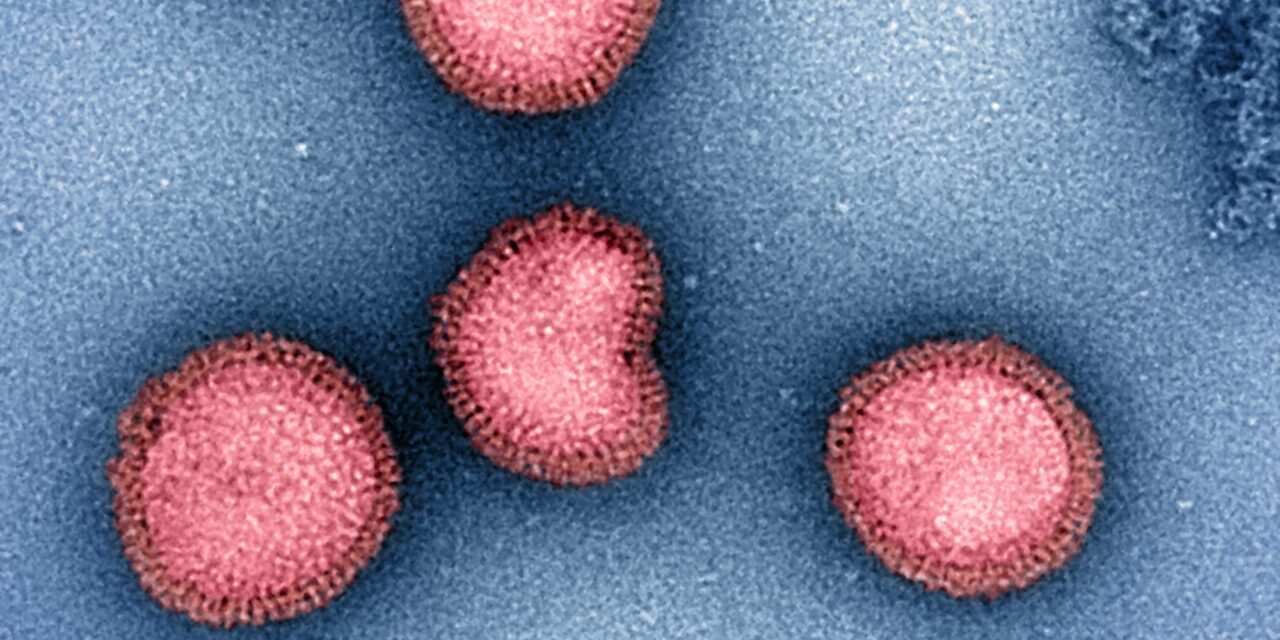
Backed by approximately $500 million in investment from Big Tech, the Intercept initiative will back broad-spectrum preventatives and air-cleaning technologies to reduce the global health burden of respiratory infections.
RT’s Three Key Takeaways:
- Broad-Spectrum Focus: The $500 million Intercept fund will support the development of treatments and technologies designed to protect against multiple respiratory pathogens simultaneously, including the common cold and influenza.
- Clinical De-risking: The initiative aims to shepherd at least two therapies through Phase I and Phase II clinical trials to encourage pharmaceutical companies to invest in the final stages of market approval.
- Environmental Mitigation: Beyond pharmaceutical interventions, the fund will back research into large-scale air filtration and ultraviolet light systems to remove pathogens from public spaces like schools, offices, and airports.
A new $500 million philanthropic initiative called Intercept launched to eliminate respiratory infections through investments in medical research and air-cleaning technology. The fund, backed by tech companies including Stripe, Anthropic, OpenAI Foundation and others, aims to make the common cold and flu a thing of the past, according to the organization.
Respiratory viruses kill approximately 1 million people annually and cost the global economy $600 billion each year, according to data from Intercept. Despite this burden, pharmaceutical companies often avoid developing treatments for the common cold because it is caused by more than 200 different viruses, making individual vaccines commercially unattractive.
“I think we treat respiratory infections as a minor nuisance, but have really underweighted the burden that they impose on society,” Nan Ransohoff, head of public goods at Stripe and a leader of the initiative said in an interview with Time.
Intercept intends to address this by funding broad countermeasures that work against many viruses at once. This includes research into RNA drugs, antibodies, and computational protein design. One potential application involves engineered virus-grabbing proteins that can be sprayed into nasal passages to prevent infection.
The fund’s strategy involves “de-risking” drug development by financing Phase I and Phase II clinical trials, which can cost between $20 million and $30 million per drug. The goal is to move at least two treatments through these initial stages so that larger pharmaceutical companies are more likely to fund the expensive Phase III trials required for Food and Drug Administration (FDA) approval.
“That is the theory—we will see in practice where we get with that,” Ransohoff told Time.
In addition to medical therapies, Intercept is supporting the adoption of physical air-cleaning technologies. While the evidence for air filtration and ultraviolet light reducing infection is strong, retrofitting public infrastructure is often expensive and complex. The fund has enlisted a “network of future buyers,” including Mastercard and JP Morgan, to run pilots and test air filtration systems in their offices.
“Part of our initiative is getting corporate partners to agree to [run] pilots and to give us feedback,” said Charlie Petty, co-head of Intercept.
The initiative is advised by experts including Moncef Slaoui, who led the US coronavirus vaccine effort, and Peter Marks, a former top FDA official. The project takes inspiration from the rapid development of vaccines and antivirals during the COVID-19 pandemic.
While $500 million is a significant investment, organizers noted that the scale of the problem may require more capital in the future.
Sources:
- https://www.interceptfund.com
- https://time.com/article/2026/06/24/500-million-intercept-fund-eliminate-common-cold
- https://www.technologyreview.com/2026/06/24/1139621/stripe-anthropic-and-openai-are-backing-an-effort-to-stop-respiratory-infections/