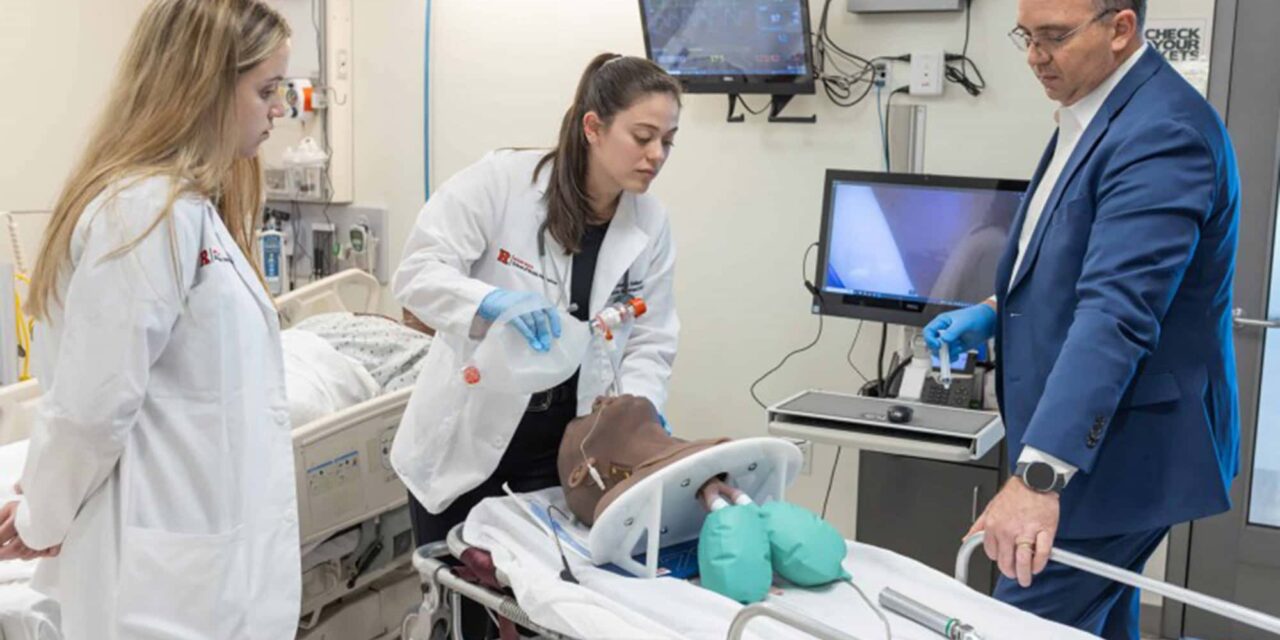
A Rutgers medical simulation initiative uses advanced manikins to train students from its pharmacy, medicine, nursing, and health professions on clinical scenarios in a team-based environment.
RT’s Three Key Takeaways:
- Interprofessional Collaboration: The SCARLET initiative brings together students from pharmacy, medicine, nursing, and health professions to practice clinical scenarios in a team-based environment.
- Immersive Simulation Technology: Trainees utilize advanced electronic manikins and standardized patients to perform procedures like endotracheal intubation and trauma resuscitation without risk to real patients.
- Psychological Safety: The program provides a controlled setting for learners to make mistakes and engage in debriefing sessions to improve clinical reasoning and communication skills.
Rutgers Health has developed an interprofessional simulation initiative designed to provide students and faculty with immersive clinical training, according to the university. The program, known as Simulation Collaboratory Advancing Research, Learning, Education and Technology (SCARLET), operates as a virtual hub connecting simulation labs across the New Brunswick and Newark campuses.
Developed through a partnership between the Ernest Mario School of Pharmacy, Robert Wood Johnson Medical School, the School of Nursing, and the School of Health Professions, the initiative allows medical residents, fellows, and students to practice technical and nontechnical skills. The program aims to prepare healthcare providers for real-world clinical environments including simulated exam rooms, trauma bays, and hospital rooms.
“SCARLET is envisioned as this catalyst to bring together all the different professions at creating highly immersive healthcare simulation,” said Les Barta, the director of simulation technology at the school of pharmacy and the acting executive director of SCARLET.
Trainees work with medical manikins, which are advanced electronic patient simulators, as well as standardized patients. These standardized patients are actors, some trained in partnership with the Mason Gross School of the Arts, who represent the diverse demographics students will encounter in clinical settings.
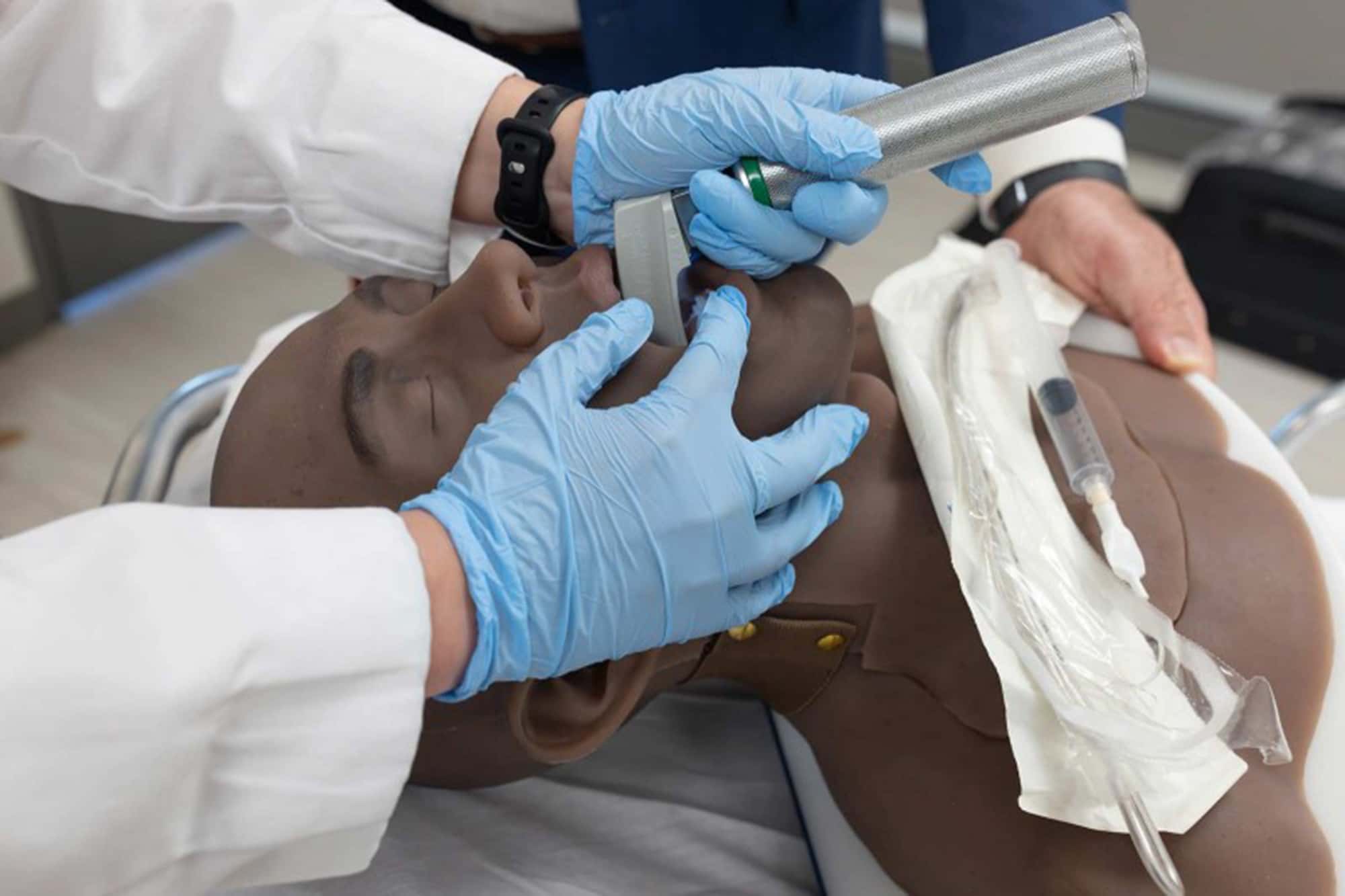
The simulations allow students to practice high-stakes procedures, such as direct laryngoscopy for endotracheal intubation, in a setting that prioritizes psychological safety. This environment allows for “productive struggle,” where learners can make mistakes without risk to a patient.
“If a mistake or error is made, it doesn’t reach a patient,” said Barta. “This allows them to be as ready as they can be before they actually get to real patients.”
The program also emphasizes the importance of interprofessional teams. Students from pharmacy, medicine, nursing, and health professions work side-by-side during scenarios like trauma resuscitation to mirror real-world healthcare settings.
“The beauty of simulation is that it puts you into that provider mindset while still being in a very friendly learning environment,” said Amanda Sallemi, a student pursuing a master of science degree in physician assistant studies, in a news release.
Following each training session, students and educators participate in a debriefing. This process allows participants to analyze their decisions, communications, and clinical reasoning to better understand expert thought processes.
The initiative also supports the Rutgers Health Simulation Fellowship, a program designed to train future leaders in emergency medicine. Ashley Asensio, an emergency medicine physician and a simulation fellow, said the training is beneficial for all levels of experience because it provides a space to grow without the ramifications of making mistakes on real people.
“It’s all just learning,” said Asensio. “Truly, it just boils back to we want to be better for all our patients.”
Images:
- In a simulation lab in the Ernest Mario School of Pharmacy at Rutgers-New Brunswick, Alex Bell (left) watches Amanda Sallemi provide air to a manikin under the guidance of Les Barta. Credit: Jeff Arban/Rutgers University
- Amanda Sallemi practices a direct laryngoscopy for endotracheal intubation (or, in other words, placing a breathing tube) on an airway task trainer manikin. Credit: Jeff Arban/Rutgers University