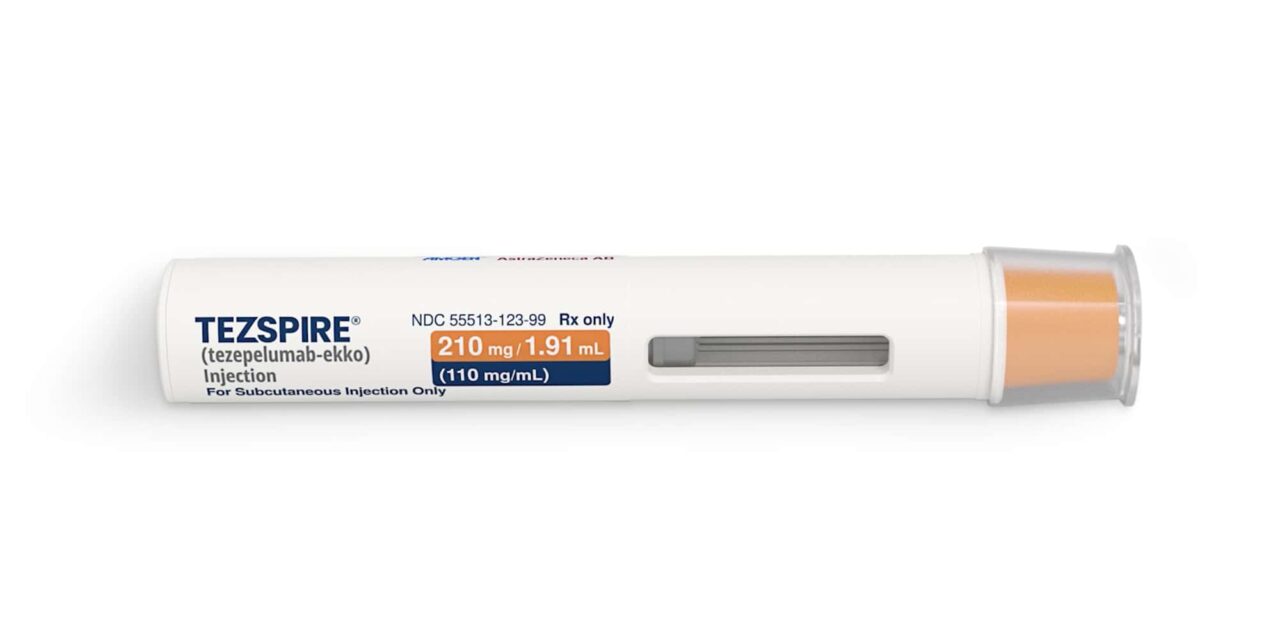
A new study shows tezepelumab (Tezspire) reduced asthma exacerbations by 70% across all patient subgroups, including smokers and those with comorbid conditions.
RT’s Three Key Takeaways:
- Broad Efficacy: The phase 4 PASSAGE study found that tezepelumab reduced asthma exacerbations by 70% across all patient subgroups, including smokers and those with comorbid conditions.
- Underrepresented Populations: Researchers observed positive outcomes in adolescents, Black/African American patients, and individuals with overlapping asthma and COPD, groups typically excluded from traditional clinical trials.
- Improved Clinical Metrics: Beyond exacerbation reduction, patients experienced improved lung function, better asthma control, and a reduced need for systemic corticosteroids to manage symptoms.
Tezepelumab (Tezspire) significantly reduces exacerbations in a diverse, real-world population of patients with severe asthma, according to data from the phase 4 PASSAGE study presented at ATS 2026.
The findings, published in the American Journal of Respiratory and Critical Care Medicine, indicate that the therapy is safe and effective for patients who are frequently underrepresented in or excluded from clinical trials, such as smokers and those with overlapping COPD.
“The premise of PASSAGE was to focus on underrepresented populations, and to gather more evidence so that we can be more confident in using tezepelumab in these patients,” said Njira Lugogo, MD, clinical professor of medicine in the Division of Pulmonary and Critical Care Medicine at the University of Michigan. “The study results were really reassuring in terms of both safety and efficacy.”
Tezepelumab is a monoclonal antibody therapy that received approval in 2021 for severe asthma treatment. The PASSAGE study was designed as a phase 4, multicenter clinical trial to evaluate the drug’s performance across a broader patient demographic than previous studies.
Researchers enrolled 286 adults and adolescents who received treatment for 12 months. The data showed a 70% reduction in asthma exacerbations, a benefit that remained consistent across all patient subgroups. Participants also demonstrated improved lung function, better asthma control, higher quality of life scores, and a decreased reliance on systemic corticosteroids to manage symptoms.
Safety profiles remained consistent with previous data, with no new or unexpected side effects reported. Qualitative interviews also indicated high levels of patient satisfaction with the treatment.
Lugogo noted that while the drug was effective across all asthma phenotypes, it showed particular efficacy in patients with Type 2 asthma, a subtype characterized by systemic inflammation. She emphasized the importance of the results for patients with comorbid conditions that affect lung function.
“It worked well in smokers and people with comorbid COPD,” said Lugogo. “That was very important to me, because I see these patients in clinical practice, and I wanted to feel confident that treating them with tezepelumab would be successful.”
Patients with overlapping asthma and COPD often face more complications and higher disease severity, yet they are frequently omitted from both asthma and COPD research.
“In clinical trials, they’re always excluded — they’re excluded from asthma studies, and they’re excluded from COPD studies,” said Lugogo.
While controlled clinical trials are the standard for healthcare research, Lugogo added that the PASSAGE results highlight the necessity of studying underrepresented groups to provide “real-world evidence.”
More information
Session: B32 – Rise of the Biologics: A New Hope for Breathing Easier
Date and Time: Monday, May 18 at 9:15 a.m.
Location: Area H, Halls WA2-WA3 (Level II, OCCC West Concourse)