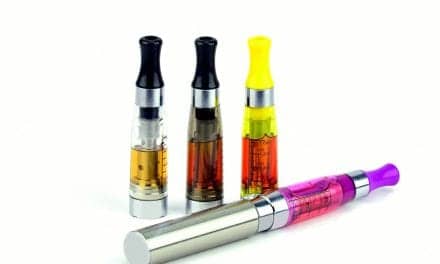
A chemical cocktail of metal nanoparticles and reactive peroxides in aged e-cigarette aerosols creates a unique profile of respiratory health risks.
RT’s Three Key Takeaways:
- Toxic Aged Aerosols: Aged secondhand vape plumes contain metal nanoparticles and reactive peroxides that combine to form harmful radicals capable of damaging lung tissue.
- Ultrafine Particle Risk: The smallest vape particles carry higher concentrations of metals and peroxides and generate up to 100 times more radicals, allowing them to penetrate deep into the lungs.
- Public Health Implications: Repeated exposure to indoor secondhand vapor, even under non-smoking conditions, may pose serious respiratory risks, especially for people with asthma or COPD.
Researchers studying lingering vape plumes in indoor environments found that aged vapor contained fine particles with several metals and highly reactive compounds, which together produce radicals that might damage lung tissue if inhaled, according to a study in Environmental Science & Technology.
“Our study reveals that the chemical cocktail of metal nanoparticles and reactive peroxides in aged e-cigarette aerosols creates a unique profile of respiratory health risks, highlighting that secondhand vapor is something by-standers shouldn’t have to breathe,” says Ying-Hsuan Lin, the corresponding author of the study from the University of California, Riverside.
Unlike traditional cigarettes, e-cigarettes don’t create smoke; they create vapors that could expose non-users to harmful substances. Early studies showed that these secondhand vape aerosols contain volatile organic compounds that react with indoor ozone, creating new compounds, such as peroxides. Additionally, vape liquids and puffs commonly contain heavy metals, as well as other metals that could easily react with peroxides to produce potentially damaging compounds like free radicals.
In another step toward understanding the potential health effects of secondhand vape plumes, Lin and colleagues examined how ozone indoors impacts the metal and peroxide composition of vape aerosols. They also wanted to see what happens when these substances react in wet environments, simulating what might happen inside the lungs.
For their experiments, the researchers created a simplified vape liquid with one flavoring ingredient (a floral-smelling terpene) and no nicotine, loaded it into two different vape pens with refillable cartridges, and puffed it into a chamber with ozone in the air. After 90 minutes, they collected the aged aerosols for analysis. The particles from both pens contained iron, aluminum and zinc ions, as well as trace amounts of heavy metals such as lead, arsenic and tin. And the two sets of aged aerosols had similar levels of peroxides. The smallest particles, classified as ultrafine particles, contained higher percentages of metals and peroxide compounds compared to larger aerosols.
To preliminarily understand how aged aerosols react with lung fluids, the researchers placed the samples in a water-based solution. The aged aerosols created radicals with the ultrafine particles producing 100 times more radicals relative to their weight as compared to larger particles. Because ultrafine particles can get deep into humans’ lungs and enter the sensitive, fluid-lined alveoli, the researchers say the results indicate these particles’ potential to damage lung tissues and lower respiratory function.
The researchers acknowledge that the study was done under controlled laboratory conditions, and more research is needed using real-world indoor environments and commercially available e-cigarette liquids. Regardless, these results suggest that repeated exposure to aged vape plumes could negatively impact lung health, especially for individuals with pre-existing lung conditions such as asthma or chronic obstructive pulmonary disease, commonly referred to as COPD.