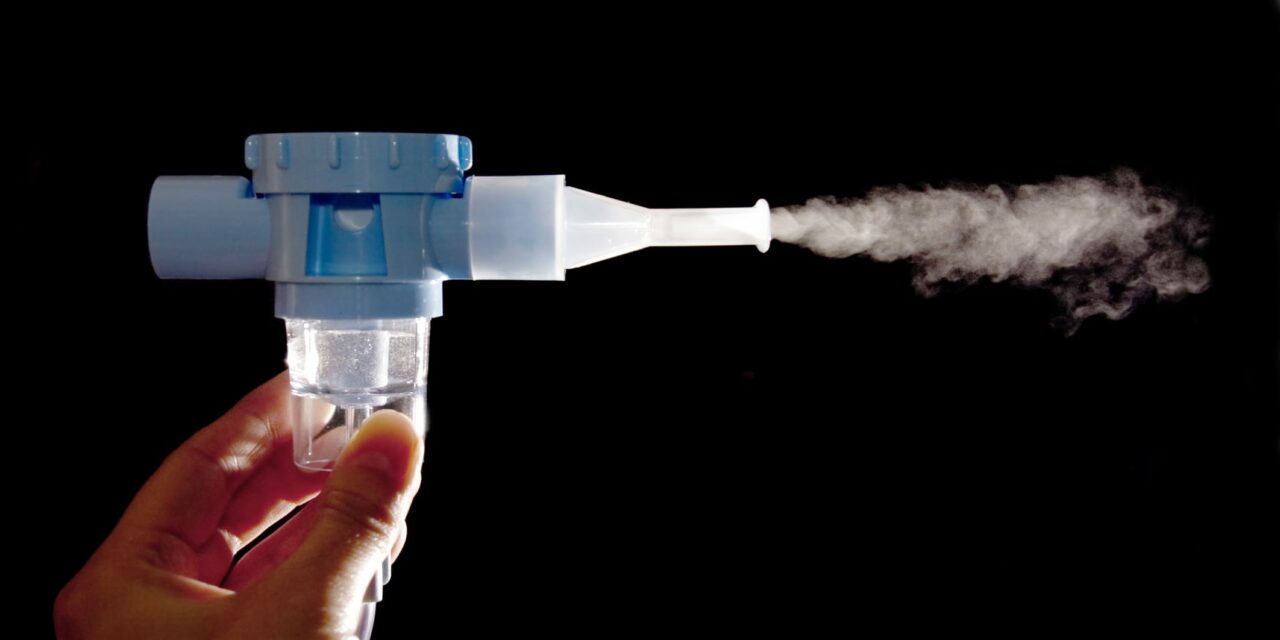
A new delivery system allows four standard tuberculosis medications to be inhaled directly into the respiratory tract, potentially reducing side effects and improving treatment adherence.
RT’s Three Key Takeaways:
- Direct Lung Delivery: The inhalable nanosystem transports four standard tuberculosis medications directly to the lungs, bypassing the bloodstream and liver to increase local drug concentration at the infection site.
- Improved Patient Adherence: By combining multiple drugs into a single formulation and reducing systemic side effects like liver damage, the technology aims to shorten treatment times and improve patient compliance.
- Targeting Latent Infection: The nanocarrier is designed to reach “hidden” pockets in the lungs where Mycobacterium tuberculosis typically evades conventional oral therapies.
Researchers at the Wits Advanced Drug Delivery Platform (WADDP) are developing an inhalable nanosystem designed to deliver tuberculosis (TB) medications directly to the site of infection in the lungs, according to a news release from Newswise.
The technology uses a biocompatible nanocarrier to encapsulate the four standard TB drugs—rifampicin, isoniazid, ethambutol, and pyrazinamide—in a single formulation. By delivering medicine directly into the respiratory tract, the system is engineered to bypass the liver and bloodstream, reduce drug loss, and increase local concentration in the lung tissue.
“TB is clever,” said Lindokuhle Ngema, postdoctoral researcher, in a news release. “It hides in lung pockets where oral drugs can’t reach. Our system is designed to be smarter and to go exactly where it’s needed.”
Addressing Global TB Challenges
Mycobacterium tuberculosis remains a significant global healthcare challenge, causing approximately 10 million new infections and 1.8 million deaths annually. In South Africa, the disease claimed more than 56,000 lives in 2023. While the BCG vaccine is administered to infants, its protection often wanes by adolescence, leaving many adults vulnerable to infection.
The World Health Organization (WHO) End TB Strategy calls for an 80% reduction in new cases and a 90% reduction in deaths by 2030. Achieving these targets requires new delivery methods to overcome the limitations of current oral regimens.
“If we want to end TB, we must also address the limitations of one-size-fits-all drug delivery,” said Yahya Choonara, director of WADDP, in a news release. “Precision nanomedicine like this allows us to treat smarter, faster and with greater impact, which is exactly what the WHO’s End TB Strategy is calling for.”
Improving Treatment Adherence
Standard TB treatment involves a six-month regimen of multiple oral drugs, which often leads to challenges with patient adherence. Side effects such as nausea, liver damage, and neuropathy frequently cause patients to discontinue therapy. This incomplete treatment contributes to the rise of multidrug-resistant (MDR) and extensively drug-resistant (XDR) forms of the disease.
The WADDP team believes that inhalation therapy could provide a solution by concentrating the drug where it is needed most, from the bronchi to the alveoli.
“We hope that this could shorten treatment time, improve adherence, and help limit the rise of drug resistance,” said Ngema, postdoctoral researcher, in a news release.
Tracking and Translation
The nanocarrier is engineered at the molecular level to be non-toxic and biocompatible. Working with the Nuclear Medicine Research Institute (NuMeRI), the researchers plan to use nuclear imaging to track how the nanoparticles move through the lungs in real time. These studies are intended to confirm if the drug reaches the specific areas where the bacteria thrive.
“The beauty of nanoscale science is that you can design a system that responds to the environment inside the body. We can control where and when the drugs are released,” said Ngema, postdoctoral researcher, in a news release.
The project was conceptualized at WADDP and included experiments conducted at the RWTH Aachen University Hospital in Germany to optimize drug release profiles. The research team is now working to translate these early results into real-world clinical use to reduce the burden on patients and healthcare systems.