
The updated system provides clinicians with faster brain activity assessment during anesthesia induction and under low signal conditions.
RT’s Three Key Takeaways:
- Regulatory Clearance: Masimo has received USFDA 510(k) clearance for smartSedLine, an advanced brain function monitoring solution designed to track patient response to anesthesia.
- Enhanced Signal Tracking: The technology features an updated algorithm that delivers faster response times during induction and improved stability under low electroencephalography (EEG) power conditions.
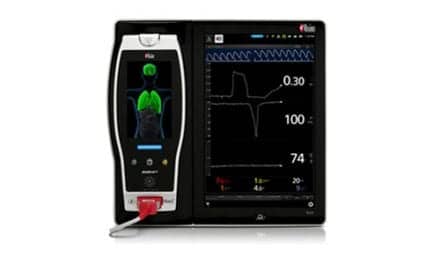
- Platform Integration: The system uses a new module and sensor compatible with the Root platform, allowing it to function alongside regional oximetry for perioperative patient management.
Masimo has received USFDA 510(k) clearance for smartSedLine, a next-generation brain function monitoring solution developed to help healthcare clinicians assess changes in depth of sedation faster and more consistently. The clearance represents Masimo’s seventh FDA milestone in 2026, according to the company.
Interpreting raw electroencephalography (EEG) signals can be technically demanding and often requires specialized clinical training, according to the release. To address this, smartSedLine and the existing SedLine platform convert EEG signal data into simplified parameters, including the Patient State Index (PSi) and Density Spectral Array (DSA). The PSi calculation uses multiple processing engines to evaluate EEG power and patterns, generating a single value that helps anesthesia providers assess sedation levels during surgical procedures, according to Masimo.
“Every patient responds differently to anesthesia, and understanding those individual responses is critical to optimizing depth of sedation and informing care,” said Dr Basil Matta, chief medical officer at Masimo, in a news release. “By providing clinicians with more responsive and stable information about brain activity, smartSedLine’s faster PSi response allows clinicians to optimize anesthesia from induction throughout the intraoperative period. This earlier insight into a patient’s sedation state makes it easier to provide individualized patient care, which may improve hemodynamic stability in high-risk patients and those with vulnerable brains. This is truly a novel approach to care.”
Clinical Updates and Sensor Compatibility
The cleared smartSedLine algorithm includes improvements designed to deliver a faster PSi induction response, as well as increased calculation stability under low-power EEG conditions, according to the company. Masimo noted that these features are intended to help clinicians tailor sedation depth for vulnerable patient populations, including elderly, pediatric, and high-risk surgical patients.
The updated system is offered through a new smartSedLine module and dedicated EEG sensor, the company reported. Similar to the previous SedLine hardware, the module functions on a plug-and-play basis with compatible patient monitors such as Masimo Root. When connected to the Root monitor, smartSedLine can be deployed alongside O3 Regional Oximetry to give surgical teams combined depth-of-sedation and tissue oxygenation parameters during perioperative care.