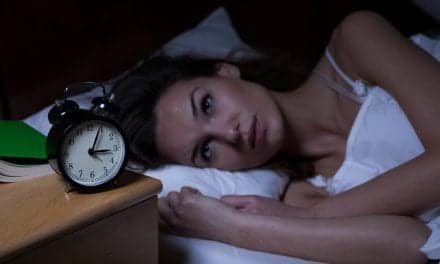

Adults who jolt awake when falling asleep report worse insomnia and increased emotional distress.
RT’s Three Key Takeaways:
- Frequent Disruptions: Adults who experience sleep starts at least weekly report poorer sleep quality, greater insomnia severity, and higher anxiety compared to those who rarely experience them.
- Psychological Influence: The frequency of jolting awake is strongly associated with emotional strain and unhelpful sleep beliefs, while sleep deprivation appears less influential.
- Clinical Next Steps: Future research will examine whether clinical interventions that reduce bedtime worry and arousal can help alleviate distressing sleep starts for affected patients.
People who frequently startle awake while falling asleep report poorer sleep quality, greater insomnia severity, and higher anxiety than those who do not, according to a study published in Plos Mental Health.
Sleep starts, clinically referred to as hypnic jerks, are sudden jolts occurring in the transition between wakefulness and sleep. The phenomenon is most frequently experienced as a sudden muscle jerk or twitch that can jolt an individual fully awake, the authors reported. The experience can also encompass a sudden sensation of falling, electric-shock sensations, numbness, tingling, flashes of light, or brief dream-like imagery, often accompanied by emotional reactions such as alarm, confusion, fear, or physical signs of a startle response, including rapid breathing and a racing heart.
Study Compares Frequent Sleep Starts to Controls
In the study, investigators evaluated an online survey of 194 adults in Austria and Germany who answered questions regarding sleep quality, daytime sleepiness, insomnia severity, dysfunctional sleep-related beliefs, and symptoms of anxiety and depression. The researchers compared 96 participants who experienced abrupt awakenings and at least one other symptom weekly against a control cohort of 98 participants.
Compared with the control group, individuals in the sleep-starts group reported statistically significant increases in insomnia severity, poorer sleep quality, more dysfunctional sleep beliefs, and higher depressive and anxiety symptoms, according to the study. The frequency of sleep starts was linked to anxiety, sleep beliefs, and sleep quality, but not depression. These factors, alongside gender and age, accounted for 26.9% of the differences in sleep start frequency between individuals.
Study participants also reported more frequent sleep starts during periods of emotional strain and psychological stress, whereas sleep loss was less influential on symptom frequency, the researchers noted.
“Because there is no established questionnaire for sleep starts, we developed our own items based on the clinical literature. This allowed us to capture a broad range of experiences – but it also means that our findings now need to be confirmed with validated instruments and objective sleep recordings,” said first author Tanja Grünberger.
“Sleep starts are much more than a simple muscle twitch when falling asleep. Participants described not only jerks, but also sensations of falling, a racing heart, flashes of light or loud bangs, and strong feelings of alarm or fear – and those who reported sleep starts at least once a week also reported poorer sleep quality, more unhelpful beliefs about sleep and more anxiety symptoms,” said Grünberger.
Cognitive-Emotional Links and Next Steps
The authors indicated that while cross-sectional survey data cannot demonstrate causality, the results demonstrate connections between sleep starts and cognitive-emotional processes, supporting the view that sleep starts fit into broader frameworks of sleep-related hyperarousal.
“What we found most interesting was how closely sleep starts are linked to how people think and feel about sleep. The more strongly participants held unhelpful beliefs about sleep and the more anxious they were, the more often they reported sleep starts – and in the moment itself, many described a strong pressure to finally fall asleep. Our data cannot show what causes what, but this pattern resembles what we know from insomnia,” said Grünberger, first author, in a news release.
Senior author Manuel Schabus emphasized the need to determine whether healthcare interventions targeting sleep-related worry can benefit patients with distressing symptoms.
“For most people, sleep starts are a harmless feature of falling asleep. For a subgroup, however, they go along with distress and a longer time to fall asleep. Whether approaches that reduce arousal and sleep-related worry also help with distressing sleep starts has not yet been tested – that is an important next step,” said Manuel Schabus, senior author, in a news release.