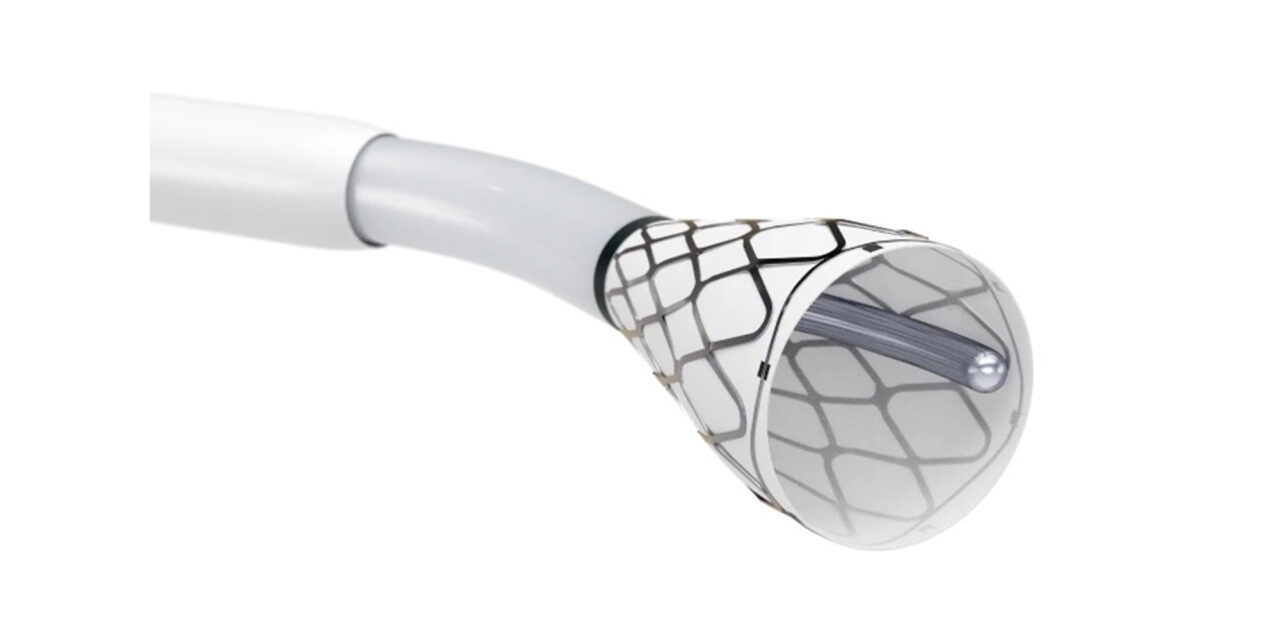
The newly cleared device uses suction and agitation to extract lung clots while protecting delicate blood vessel walls.
RT’s Three Key Takeaways:
- Regulatory Clearance: The FDA has cleared the Hēlo Thrombectomy System to remove blood clots from the lungs in patients with chronic venous thromboembolism.
- Innovative Mechanism: Unlike traditional extraction techniques that risk tearing fragile vascular structures, the technology utilizes gentle suction, an agitator to thin the clot, and vacuum extraction to clear vessels safely, according to developers.
- Clinical Validation: Commercialized by medical device startup Endovascular Engineering, the system attained regulatory clearance following positive findings from its multicenter ENGULF clinical trial, according to company reports.
The FDA has cleared to the Hēlo Thrombectomy System, a minimally invasive catheter device engineered to remove blood clots from pulmonary arteries in patients experiencing pulmonary embolism, according to the University of Michigan.
Pulmonary embolism, a severe manifestation of venous thromboembolism, frequently leaves patients in critical need of acute intervention. However, conventional mechanical methods of pulling clots through the vasculature can exert excessive traction and damage delicate vessel walls.
To mitigate these procedural complications, the Hēlo system uses targeted suction to draw the clot into the catheter tip, engages an internal agitator to stretch and thin the thrombus, and vacuums the fragmented material out of the body, according to university engineers.
The technology was developed through an interdisciplinary collaboration between engineering and clinical teams at the University of Michigan Biomedical Manufacturing and Design Lab. The project was led by Albert Shih, professor of mechanical engineering and biomedical engineering, alongside neurosurgeons Luis Savastano and Aditya Pandey, and former engineering doctoral researchers Yihao Zheng, Yang Liu, and Jeffrey Plott.
“It has been incredible seeing the impact of the Hēlo system on patients’ lives with pulmonary embolism by providing them with a minimally invasive treatment, which was not possible before,” said Albert Shih, professor of mechanical engineering and biomedical engineering.
Originally designed for acute ischemic stroke interventions, researchers adapted the platform to treat large-vessel pulmonary blockages as an initial clinical application before expanding into more complex neurovascular procedures, according to the developers.
“The FDA clearance of the Hēlo Thrombectomy System marks a transformative advancement for pulmonary embolism patients,” said Kelly Sexton, associate vice president for research—innovation partnerships and economic impact at the University of Michigan.
The clearance follows positive clinical outcomes reported in the company’s ENGULF trial, a pivotal study evaluating the safety and efficacy of the device for pulmonary embolism, according to the announcement. Commercialization of the technology is being directed by Endovascular Engineering, a university startup established in 2020 that has secured $122 million across Series B and Series C venture financing rounds.
Image info:
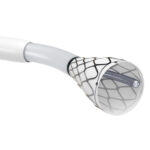
1) Endovascular-Engineering E2 Helo thrombectomy system. The illustration shows the wider, flexible cone—deployed on arrival at the clot—and the agitator that spins inside the cone to soften the clot so that it can be extracted through a smaller catheter. Image courtesy of Endovascular Engineering via Univ of Michigan via https://www.newswise.com/articles/embolism-treatment-developed-at-u-m-receives-fda-clearance
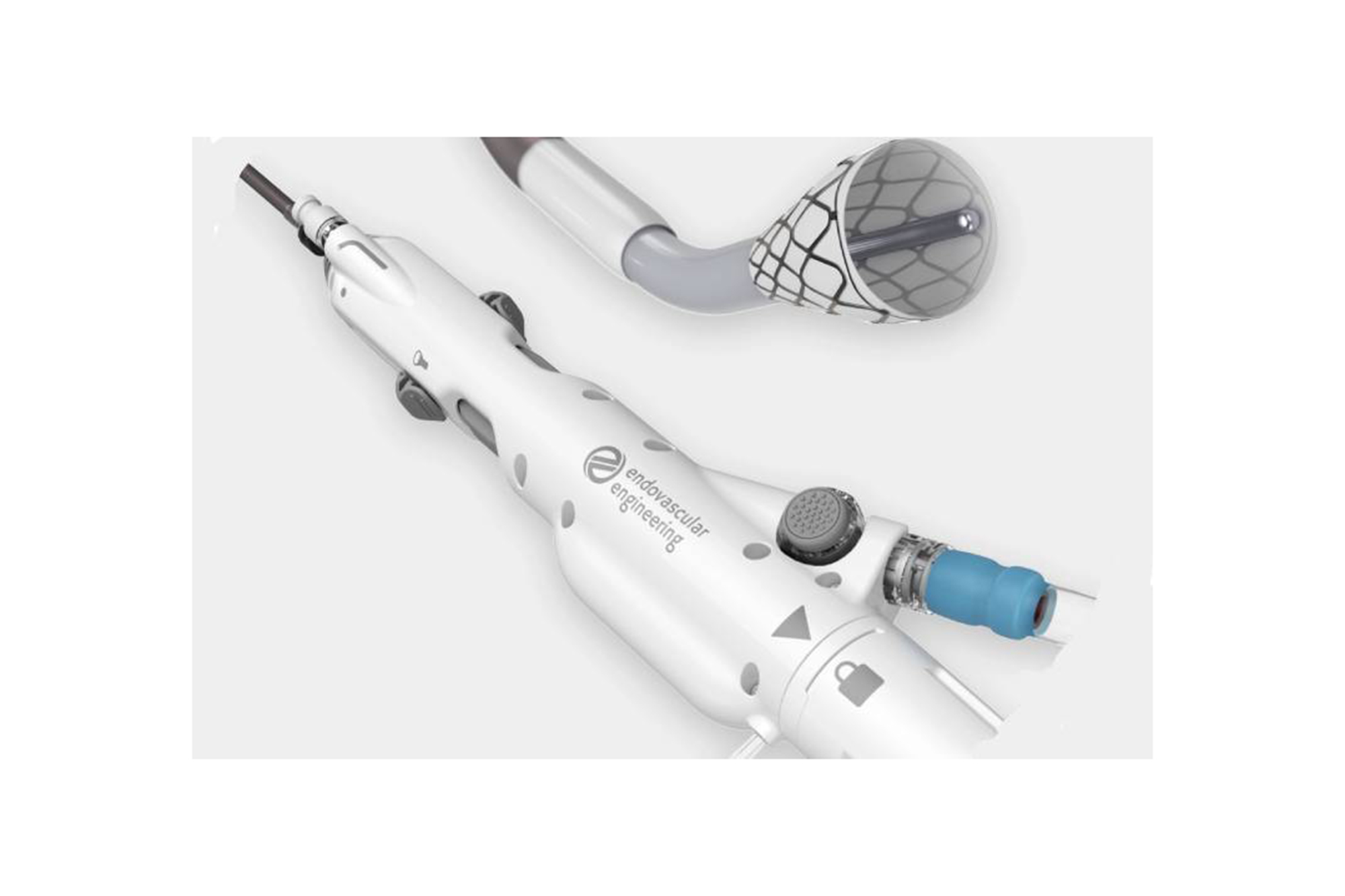
2)) Illustration of the Endovascular Engineering E2 Helo thrombectomy system. Image courtesy of Endovascular Engineering via Univ of Michigan via https://www.newswise.com/articles/embolism-treatment-developed-at-u-m-receives-fda-clearance