Surgeons used small incisions and robotic instruments instead of dividing the breastbone or ribs to reduce pain and accelerate patient recovery.
RT’s Three Key Takeaways:
- Minimally Invasive Technique: Surgeons used small incisions and robotic instruments instead of dividing the breastbone or ribs to reduce pain and accelerate patient recovery.
- Successful Patient Outcome: A man in his 70s with pulmonary fibrosis successfully underwent the procedure and was discharged from the hospital to continue his recovery.
- Expanded Surgical Options: This procedure marks the first robotic lung transplant for the healthcare system in the US, adding to its existing expertise in robotic kidney and liver transplantation.
In May 2026, surgeons at Cleveland Clinic successfully completed the health system’s first robotic lung transplant in the United States, marking a significant advancement in minimally invasive organ transplants. Cleveland Clinic is among only a small number of centers worldwide offering this surgical approach and was the first in Ohio to complete this type of procedure. Robotic lung transplants have rarely been performed because they require advanced robotic capabilities and a skilled surgical team.
Gregory Jones, MD, a thoracic surgeon at Cleveland Clinic’s Heart Vascular and Thoracic Institute, led the surgical team for the single lung transplant procedure, which also included Kenneth McCurry, MD, a cardiothoracic surgeon and surgical director of lung transplantation and enterprise director of transplantation.
“This achievement reflects the collaboration and innovation across our transplant and surgical teams,” said Dr. McCurry. “As these technologies continue to evolve, they will play an increasingly important role in improving patient outcomes and advancing the future of transplantation. Indeed, our kidney and liver transplant programs in Ohio have also been at the forefront of robotic organ transplantation with great success.”
In a traditional lung transplant, surgeons commonly gain access to the chest by dividing the breastbone or ribs to access the lungs. This is often associated with significant pain, which can prolong recovery. In a robotic lung transplant, surgeons use small incisions and robotic instruments and 3D visualization to perform the procedure with a less invasive approach. This approach is designed to help reduce postoperative pain, shorten hospital stays, and accelerate recovery.
“This milestone reflects an important step forward in how we approach lung transplantation,” said Dr. Jones. “It builds on our experience with both robotic surgery and transplant care and adds another option for some patients who may benefit from a minimally invasive approach.”
Robotic surgery has transformed many types of cardio-thoracic procedures over the past decade. By bringing this technology to lung transplantation, Cleveland Clinic is expanding access to advanced, minimally invasive transplant care.
The surgery was performed on a man in his 70s with pulmonary fibrosis, a progressive lung disease that causes scarring of the lungs and can make breathing increasingly difficult. Following the transplant, he was discharged from the hospital and is recovering well.
Cleveland Clinic’s Lung Transplant Program is a national leader in advanced lung transplant care, having performed more than 2,500 transplants since 1990. In 2025, Cleveland Clinic performed 146 lung transplants in the US. The program is known for its expertise in caring for complex transplant patients, many of whom have been turned down elsewhere, and for advancing new approaches in transplant care.
In addition to the US, Cleveland Clinic is also a leader globally in transplantation. A team at Cleveland Clinic Abu Dhabi performed the enterprise’s first robotic lung transplant last year. It was also the first procedure of its kind performed in the Gulf region.
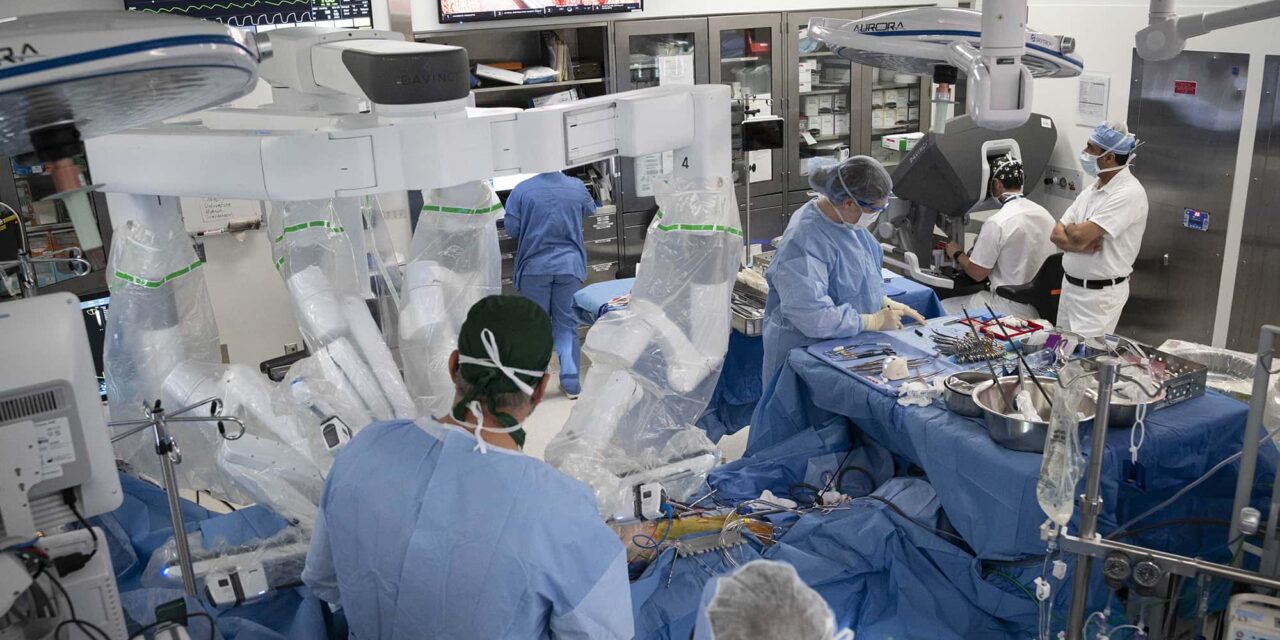
Image: Cleveland Clinic staff performing their first U.S. robotic lung transplant surgery. Image credit: Cleveland Clinic