Lung transplantation in people with HIV may be feasible yet CD4 counts can temporarily drop under 200 during transplant evaluation.
By Anaya Malik
A new letter reports a single center experience assessing lung transplantation in people living with HIV whose absolute CD4 positive T cell counts fell below 200 cells per microliter during evaluation. The authors note that an absolute CD4 threshold of 200 cells per microliter is commonly used when considering candidacy, but CD4 counts can fluctuate and may decline during acute illness or corticosteroid exposure.
Across September 2018 to March 2025, the center performed eight lung transplants in people living with HIV. Two candidates had absolute CD4 counts under 200 cells per microliter while undergoing workup, and both were inpatient transfers during acute exacerbations of interstitial lung disease. Each had a previously suppressed viral load and an absolute CD4 count above 200 within the 6 months before admission, alongside recent corticosteroid treatment during their pulmonary deterioration.
The team obtained infectious diseases consultation for both candidates before and after lung transplantation and repeated CD4 assessment during evaluation. In one case, CD4 reassessment occurred during a prolonged corticosteroid taper in hypersensitivity pneumonitis. In the other, the patient received intravenous methylprednisolone at 1.5 mg per kilogram daily for 5 days. In both cases, the clinicians attributed the low absolute CD4 counts to critical illness and corticosteroid exposure.
After completing the center evaluation protocol, both patients were considered acceptable candidates and were placed on the wait list, with eventual lung transplantation. Induction therapy included basiliximab 20 mg given intraoperatively and again on postoperative day 4, along with intraoperative methylprednisolone 1000 mg.
For clinicians caring for people living with HIV and end stage lung disease, the report emphasizes that a single absolute CD4 result below 200 during an acute pulmonary decompensation may not reflect baseline immune status. The authors highlight the value of integrating recent viral suppression history, prior CD4 trends, and the clinical setting when assessing lung transplantation candidacy in people living with HIV, particularly when transient lymphopenia is suspected.
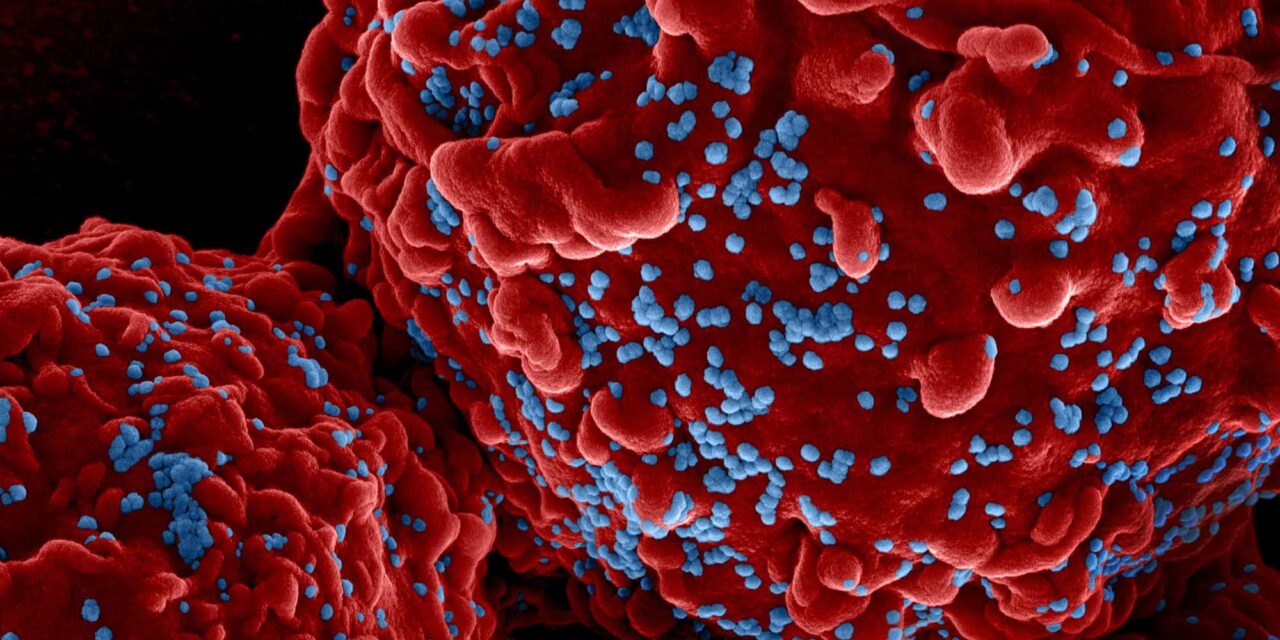
Image: HIV Virus. Colorized scanning electron micrograph of HIV-1 virus particles (blue) both budding and attached to the surface of Hut-78/human lymphocyte cells (red). Image captured at the NIAID Integrated Research Facility in Fort Detrick, Maryland. Credit: NIAID
Reference
Yuen AD et al. Lung Transplantation in People Living With HIV With Absolute CD4+ T Cell Counts Under 200 Cells per Microliter. Transpl Infect Dis. 2025; doi:10.1111/tid.70164.Author:
This article was originally published by AMJ and was made available under the terms of the Creative Commons Attribution-Non Commercial 4.0 License.