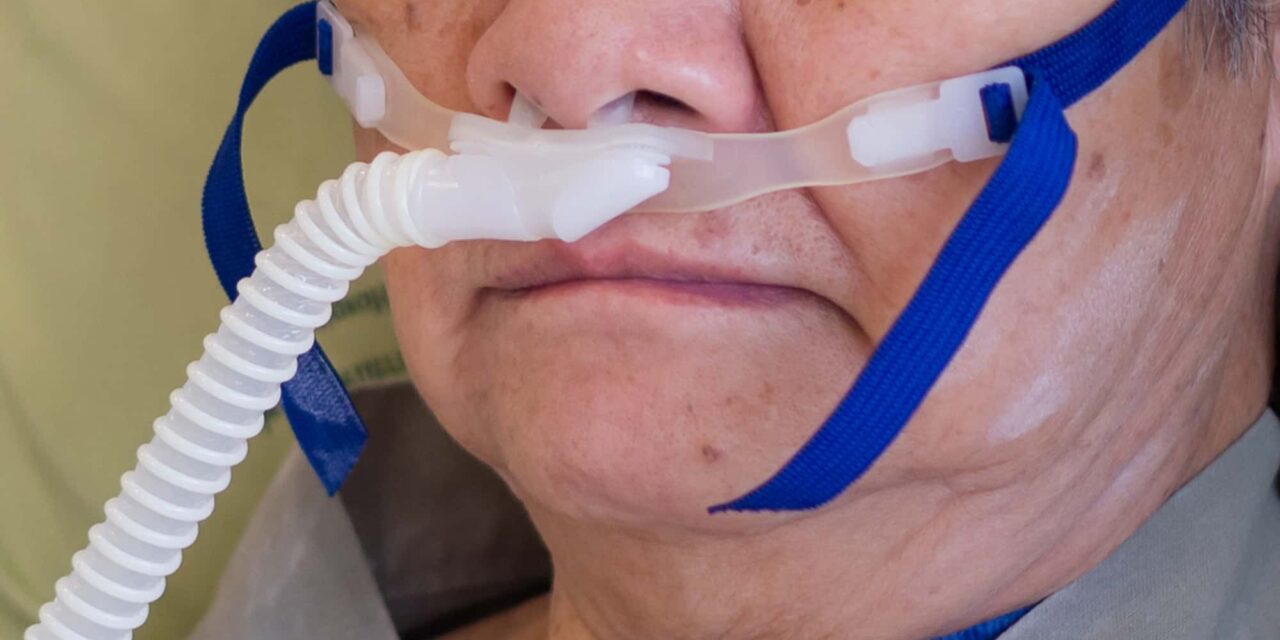
Compared to standard O2 therapy, high-flow nasal cannula did not lower mortality in in acute hypoxemic respiratory failure but may reduce the need for intubation, according to new data from the SOHO trial.1
RT’s Three Key Takeaways:
- Mortality Comparison: The SOHO trial found no significant difference in 28-day mortality between patients treated with high-flow nasal cannula and those receiving standard oxygen therapy, with both groups experiencing a 14.6% death rate.1
- Intubation Incidence: Patients receiving high-flow oxygen had a lower incidence of intubation at 42.4% compared to 48.4% in the standard oxygen group, suggesting a potential benefit in avoiding invasive mechanical ventilation.1
- Clinical Benefits: High-flow oxygen therapy significantly improved patient-perceived dyspnea and reduced respiratory rates more effectively than standard oxygen masks within one hour of treatment initiation.1
Use of high-flow nasal cannula (HFNC) oxygen does not significantly reduce 28-day mortality compared to standard oxygen therapy in patients with acute hypoxemic respiratory failure, according to results from the SOHO trial published in The New England Journal of Medicine.1
The multicenter, open-label, randomized clinical trial, conducted across 42 intensive care units (ICUs) in France, evaluated 1110 patients admitted with acute hypoxemic respiratory failure.1 Eligible participants had a respiratory rate of more than 25 breaths per minute, pulmonary infiltrates on chest imaging, and a ratio of partial pressure of arterial oxygen to the fraction of inspired oxygen (PaO2:FiO2) of 200 mm Hg or less.1
The primary outcome, death by day 28, occurred in 14.6% of patients in both the high-flow-oxygen group and the standard-oxygen group. Researchers reported an absolute difference of -0.05 percentage points (95% CI, -4.21 to 4.10; P = 0.98).1
“Among patients with acute hypoxemic respiratory failure, the use of oxygen delivered through a high-flow nasal cannula did not significantly reduce mortality at day 28,” said the study authors.1
While mortality rates were identical, the incidence of intubation by day 28 was lower in the high-flow group at 42.4% compared to 48.4% in the standard-oxygen group. High-flow oxygen also appeared to improve physiological measures more rapidly.1 One hour after treatment initiation, the mean respiratory rate was 26 breaths per minute with high-flow oxygen versus 29 breaths per minute with standard oxygen. Additionally, the mean level of carbon dioxide was lower in the high-flow group.1
Patient-perceived comfort also favored high-flow therapy. An improved grade of dyspnea was reported by 49.5% of patients in the high-flow group compared to 34.7% in the standard-oxygen group.1 However, the researchers noted that 4.3% of patients across the trial discontinued their assigned treatment due to discomfort, including 30 patients who switched from high-flow to standard oxygen.1
Regarding safety, serious adverse events during spontaneous breathing were infrequent.1 Pneumothorax occurred in 10 patients in the high-flow group and four patients in the standard-oxygen group, while cardiac arrest leading to intubation occurred in three and two patients, respectively.1
The trial population was primarily composed of patients with pneumonia, which accounted for 88.1% of cases.1 This included 53.3% with viral pneumonia, many of whom were treated during the coronavirus disease 2019 (Covid-19) pandemic.1 The study authors noted that the frequent use of glucocorticoids during the trial may have contributed to the lower-than-expected mortality rates observed in both groups.1
The researchers suggested that clinicians should weigh the uncertainty of mortality effects against practical factors, including patient comfort, risk of intubation, and local healthcare resources, when selecting oxygenation strategies for critically ill patients.1
Reference
- Frat JP, et al. High-Flow or Standard Oxygen in Acute Hypoxemic Respiratory Failure. NEJM. March 17, 2026. https://www.nejm.org/doi/full/10.1056/NEJMoa2516087